Bilingual Shop Floor Dynamic Leadership: Shadow Leaders
By New Heights Languages ·
Address informal bilingual gatekeepers on your factory floor. Build direct communication, prevent safety errors, and strengthen supervisor leadership.
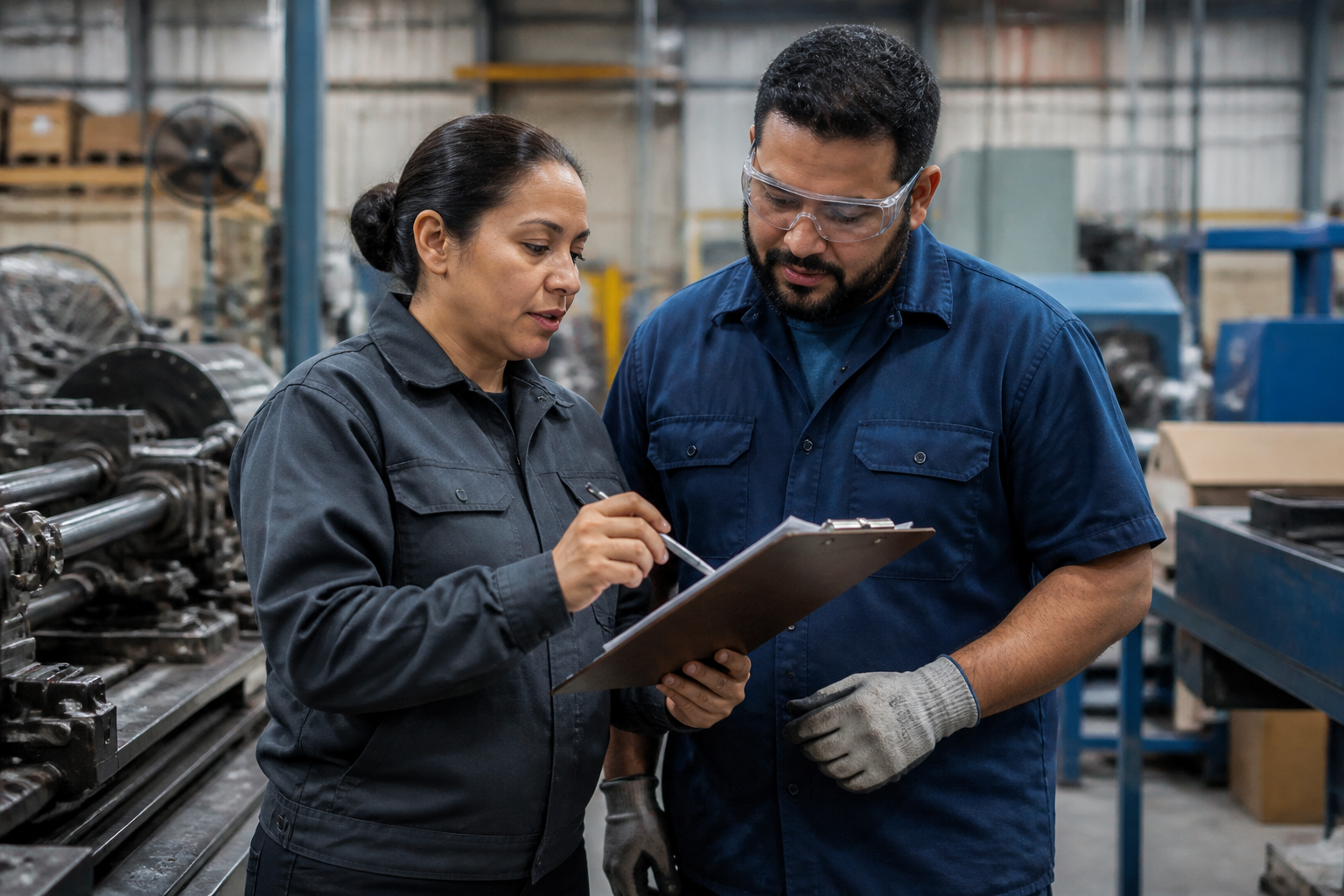
On busy manufacturing lines, supervisors frequently rely on a handful of bilingual operators to relay instructions, safety updates, and daily production quotas to non-English speaking crews. Over time, these unofficial translators evolve into informal gatekeepers—or shadow leaders—who control how, when, and what information reaches the rest of the team. While this arrangement may feel like a convenient short-term solution, achieving true bilingual shop floor dynamic leadership requires moving away from informal gatekeeping and toward structured, direct communication channels between frontline management and every worker on the floor.
When language barriers force supervisors to manage through intermediaries, operational control erodes. Relying on unofficial translators creates single points of failure, distorts manager-employee relationships, and introduces significant safety and quality risks. Plant managers and HR leaders must recognize the dynamics of shadow leadership and take proactive steps to build a direct, transparent communication infrastructure.
The Mechanics of Shadow Leadership on the Factory Floor
Shadow leadership emerges naturally when there is a language gap between management and frontline crews. A bilingual employee, often a senior machine operator or material handler, steps up to assist. Because they are the sole bridge between management and non-English speaking workers, their influence expands rapidly.
Filtered Information Flow
When supervisors deliver instructions through an informal translator, the original message is rarely conveyed word-for-word. The informal gatekeeper interprets, summarizes, or selectively edits the instruction based on their own understanding, workload, or personal relationships. Critical context regarding quality specifications, cycle times, or engineering changes can easily be lost in transit.
Shift in Authority
When workers realize that their daily assignments, schedule changes, and technical guidance originate from an informal gatekeeper rather than the shift supervisor, their allegiance shifts. Operators begin taking grievances, PTO requests, and operational questions to the bilingual peer instead of management. This undermines supervisor authority and creates a parallel command structure on the plant floor.
The Hidden Operational Costs of Informal Gatekeeping
Allowing shadow leadership to persist creates hidden bottlenecks that harm productivity, safety culture, and employee retention across manufacturing operations.
- Informal Translator Burnout: Bilingual workers are hired to operate machinery, manage changeovers, or perform quality checks. Forcing them to constantly interrupt their core tasks to translate for peers leads to high stress, cognitive overload, and drop-offs in their individual machine output.
- Safety and Compliance Risks: Unofficial translators are rarely trained in technical safety terminology. Paraphrasing complex lockout/tagout steps, chemical handling instructions, or machine guarding protocols can lead to severe OSHA violations or catastrophic site accidents.
- Morale and Isolation: Limited-English proficient (LEP) workers who depend entirely on a peer for information often feel isolated from company culture. They miss out on direct feedback, recognition, and clear pathways for career advancement.
- Quality Discrepancies: When job specifications or engineering adjustments are filtered through an untrained third party, rework rates rise. A single miscommunicated tolerance parameter can cause an entire shift run to fall out of spec.
Reframing Bilingual Shop Floor Dynamic Leadership
Building a healthy bilingual shop floor dynamic leadership framework requires plant executives to shift their perspective. The goal is not to eliminate bilingual peer support entirely, but to formalize communication so that supervisors lead directly while bilingual workers serve as empowered peer mentors rather than sole information bottlenecks.
Empowering Frontline Supervisors
Supervisors must be equipped with command of foundational workplace Spanish—or the site-specific language of their crew—to conduct standard daily interactions. A supervisor who can deliver a shift start huddle, perform direct safety observations, and give immediate feedback builds trust and maintains clear operational control.
Developing Direct English Proficiency for Operators
Simultaneously, limited-English workers must receive targeted, job-specific English training. Teaching operators the core vocabulary of machine operations, defect reporting, and emergency protocols enables them to speak up directly when machine anomalies or safety hazards occur.
Practical Steps to Transition Away from Shadow Gatekeepers
Eliminating reliance on shadow translators requires a structured approach that combines targeted language instruction with clear operational protocols.
1. Conduct a Communication Audit
Map out how information currently flows on your shop floor. Identify which shifts, cells, or departments rely on informal translators. Determine whether critical messages—such as daily targets, scrap reviews, and safety alerts—reach workers directly from supervisors or through third parties.
2. Implement Job-Specific Language Training
Generic language courses fail on the factory floor because they do not cover industrial terminology. Implement functional, site-specific workplace English programs for non-native operators that focus on tools, equipment parts, quality terms, and safety procedures. Concurrently, provide functional Spanish training for English-speaking supervisors focused on operational commands and huddle conversations.
3. Formalize the Role of Bilingual Peer Mentors
If bilingual employees excel at helping their peers, formalize their role within structured onboarding or mentorship programs. Give them explicit boundaries: mentors assist with cultural integration and peer coaching, but official directives, performance evaluations, and safety sign-offs remain strictly between the supervisor and the employee.
4. Standardize Visual and Multilingual SOPs
Support direct communication by standardizing visual work instructions, bilingual standard operating procedures (SOPs), and clear color-coded signages across all production cells. Visual cues reduce ambiguity and allow operators to verify expectations independently.
Elevating Long-Term Productivity and Retention
When plants dismantle shadow leadership, operational clarity improves dramatically. Supervisors regain control over line management, safety compliance rates increase, and quality deviations drop. Furthermore, limited-English workers who receive direct communication and language support demonstrate higher engagement and lower turnover rates.
A robust bilingual shop floor dynamic leadership strategy ensures that every worker on the floor has a direct voice and clear direction, eliminating communication gaps and driving sustainable operational excellence.
Modernize Your Plant Floor Communication
Break down information bottlenecks and empower your frontline supervisors to lead every worker directly. At New Heights Languages, we design customized, industry-specific English and Spanish training programs for manufacturing and construction employers. Protect your plant throughput, strengthen safety compliance, and elevate frontline leadership. [Book a free consultation](/contact) with our team today to discuss your site needs.
<!-- featured image alt: A manufacturing supervisor discussing production targets directly with a machine operator on an industrial floor. -->