
Build a Workplace English Glossary for Your Floor
By New Heights Languages ·
Learn how to build a targeted workplace english glossary to standardize technical terms, reduce production errors, and upskill frontline workers.
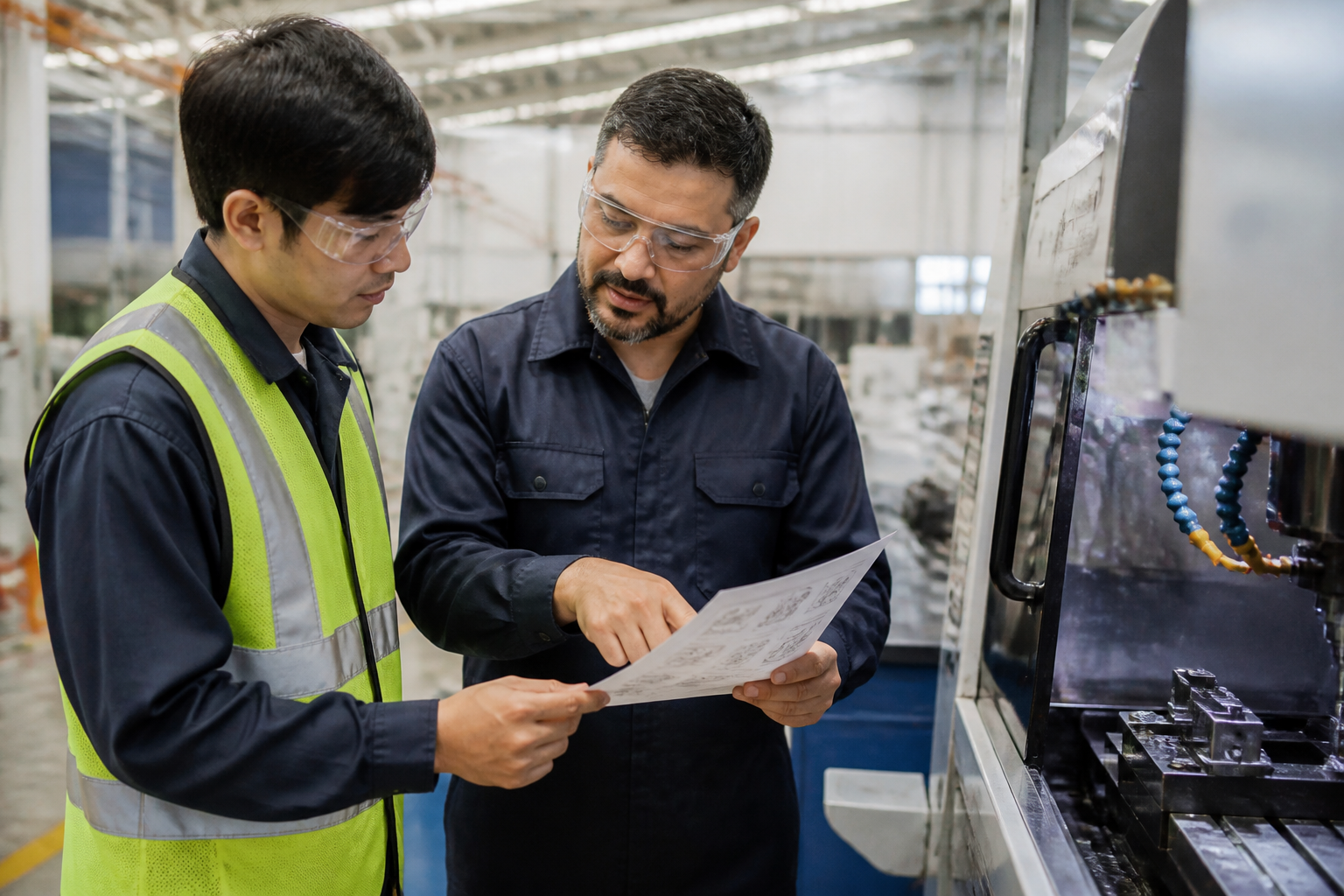
When non-native English speakers join a manufacturing or assembly line, standard English dictionaries rarely help them navigate the job. Every production floor relies on specialized jargon, acronyms, equipment nicknames, and site-specific safety terminology. Creating a custom workplace english glossary is one of the fastest ways to bridge the gap between technical SOPs and daily operational execution.
Without a single source of truth for plant terminology, frontline employees are left guessing what supervisors or machine operators mean. A word like 'flash' might mean a lighting issue to a layman, but on an injection molding line, it signifies a major plastic defect. Here is how HR leaders, operations managers, and safety coordinators can construct an effective, plant-specific glossary that improves accuracy and throughput.
Step 1: Audit Floor Vocabulary Beyond Technical Manuals
Standard operating procedures (SOPs) are a good starting point, but they do not reflect how people actually talk on the line. To build a practical reference, you need to capture both formal engineering terms and informal floor slang.
Spend time walking the floor across different shifts. Pay close attention to the vocabulary used during machine setups, quality checks, and maintenance calls. Talk directly to leads, line operators, and maintenance techs to identify terms that routinely cause confusion.
What to Collect
- Tool and Equipment Names: Calipers, torque wrenches, jigs, dies, fixtures, and pneumatics.
- Defect Terminology: Burr, pitting, warping, flash, scrap, chatter, and misruns.
- Action Verbs: Lockout, purge, index, align, seat, torque, and stage.
- Plant Acronyms and Abbreviations: PPE, OEE, FIFO, QA, LOTO, and WIP.
Step 2: Standardize Definitions with Context and Visuals
Direct translation of complex technical terms often falls flat. Many specialized industrial terms do not have a 1:1 translation in Spanish or other native languages. Instead of relying solely on translated text, define words using simple English in the context of your specific machines.
Pairing clear definitions with visual aids accelerates comprehension for non-native English workers. Incorporating a workplace english glossary into your onboarding materials with photos of actual parts or tools ensures everyone shares the same reference points.
Formatting Tips for Maximum Clarity
- Keep Definitions Short: Use 10 to 15 words maximum per definition using simple present tense.
- Include Visuals: Add clear photographs of the specific tool, machine component, or defect on your plant floor.
- Provide Phonetic Guides: Help workers pronounce unfamiliar terms (e.g., Cal-i-per or Torque).
- Show Right vs. Wrong: For defect terms, show an image of a acceptable part next to a part exhibiting the defect.
Step 3: Organize Terms by Work Station and Role
An alphabetical list of 200 terms can overwhelm an employee on day one. To make the document usable, break it down into logical categories tied to daily workflow.
Divide the list by production cells, department roles, or critical operational tasks. A press operator needs immediate access to tooling and quality terms, while a warehouse material handler needs terminology focused on staging, staging locations, and shipping labels.
Recommended Grouping Categories
- General Floor Safety: Mandatory signs, emergency stops, eye wash stations, and hazard warnings.
- Quality Control & Inspection: Measurement terms, defect classifications, and visual inspection callouts.
- Machine Operation & Setup: Buttons, control panels, cycle start procedures, and common error codes.
- Material Handling & Logistics: Pallet types, staging zones, lot numbers, and bill of materials (BOM).
Step 4: Integrate the Glossary into Daily Operations
Once compiled, your workplace english glossary shouldn't sit in a binder on an HR shelf. It must be actively integrated into shift handovers, daily huddles, and ongoing training programs.
Distribute printed pocket guides for new hires during their first week. Display laminated wall charts at key work stations, tool cribs, and quality benches where terms are used most frequently. When supervisors introduce new machinery or updated SOPs, use the glossary to review key terms before line start.
Ideas for On-the-Floor Deployment
- Pocket Reference Cards: Compact, laminated cards attached to lanyards or clipboards.
- Workstation Visual Boards: Poster-sized sheets mounted directly above assembly stations.
- Digital Tablet Access: Pre-loaded PDFs on tablets used for quality checks or digital work instructions.
- Pre-Shift Review: Dedicate two minutes of daily stand-up meetings to review one floor term.
Step 5: Maintain and Update Your Glossary Regularly
Manufacturing processes change constantly. Engineering revisions bring new machinery, new raw materials, and new quality standards. Your vocabulary documentation must evolve alongside your operations.
Assign an owner—such as a training coordinator, safety manager, or bilingual shift lead—to review the glossary quarterly. Gather feedback from frontline supervisors and workers to see which terms are helping and which critical words are still missing.
When a targeted workplace english glossary bridges the gap, machine downtime drops, scrap rates decline, and frontline employees gain the confidence needed to communicate effectively with leadership.
Build an Empowered Frontline Workforce
A custom glossary is a powerful foundation, but true operational fluency requires structured practice. At New Heights Languages, we design customized, industry-specific English and Spanish training programs tailored directly to your plant's workflows, equipment, and safety rules.
Ready to transform communication on your production floor? [Book a free consultation](/contact) with our team today to discuss your workforce language goals.
<!-- featured image alt: A manufacturing supervisor showing a non-native English worker a technical glossary sheet next to a production machine. -->