Combustible Dust Safety: Multilingual Plant Guide
By New Heights Languages ·
Protect grain and wood processing plants from catastrophic flash fires. Master combustible dust safety multilingual training for frontline crews.
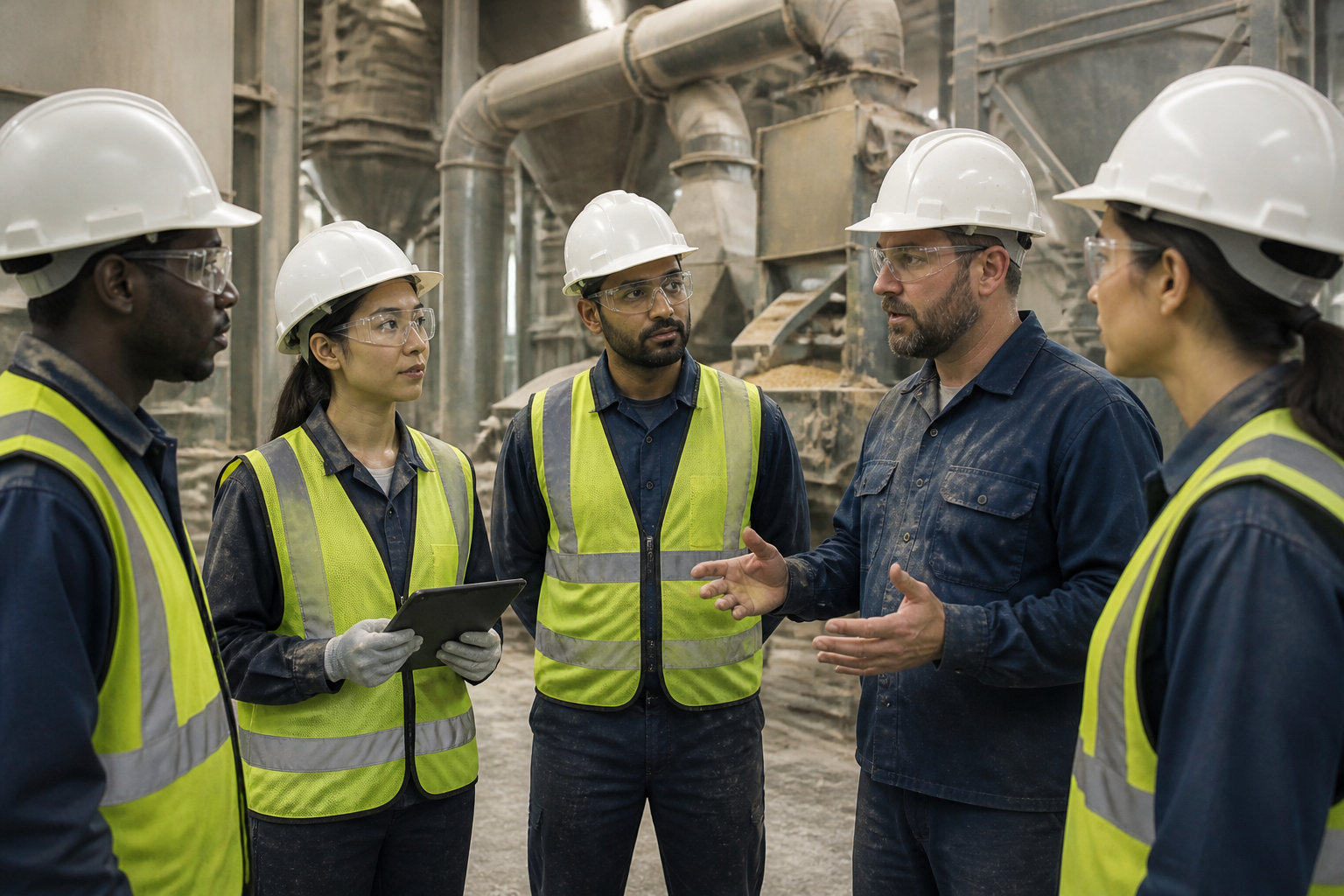
In grain elevators, feed mills, sawmills, and woodworking facilities, fine particulate matter settles across every flat surface. While a thin layer of sawdust or grain dust might look like standard industrial mess, it poses an immediate catastrophic threat. When fine organic dust disperses into an enclosed space and encounters an ignition source, the resulting blast can level an entire building. For facilities with diverse workforces, establishing combustible dust safety multilingual protocols is essential to stopping catastrophic deflagrations before they start.
Secondary explosions cause the most fatalities in these facilities. A small primary flash fire—often inside a bucket elevator leg, hammer mill, or baghouse—shakes dust loose from overhead beams, cable trays, and ductwork. This airborne dust cloud ignites instantaneously, tearing through the plant. Preventing this chain reaction requires your frontline cleaning crews, machine operators, and material handlers to understand the mechanics of dust hazards in their primary working language.
The Failure of Generic Translation in Dust Control
Many plant managers rely on generic translation apps or standard regulatory posters to communicate dust risks. This creates severe operational gaps. In everyday speech, words like "cleaning" or "dusting" imply using brooms, rags, or compressed air hoses.
In a grain or wood processing facility, sweeping aggressively or using compressed air to blow dust off equipment is often the exact trigger that causes an explosion. It suspends settled particles directly into the air, creating the precise fuel-to-air concentration needed for a blast.
Effective combustible dust safety multilingual training moves past generic safety words. It establishes clear, operational vocabulary around equipment, acceptable cleaning methods, and ignition hazards. Your employees must know not just what to do, but why specific common habits are lethal in dusty environments.
Housekeeping Protocols: Clarifying Tools and Techniques
Housekeeping is the first line of defense against secondary explosions under NFPA 652 and industry-specific standards. However, your team must be trained on how tools interact with combustible particulate.
If non-native English-speaking sanitation workers are told to "clean the mezzanine," they may grab an unrated shop vacuum or an air nozzle to clear the area quickly. Standard utility shop vacuums contain unsealed electric motors that spark internally, turning the vacuum into an ignition source the moment it pulls in dry grain or wood flour.
Core Housekeeping Terms to Train
- Explosion-Proof / Dust-Ignitionproof Vacuum (Aspiradora a prueba de explosión): Only certified Class II, Division 1 or 2 equipment should touch combustible dust layers.
- Soft Sweeping vs. Vigorous Sweeping (Barrido suave vs. barrido agresivo): Workers must learn sweeping techniques that minimize airborne clouds, utilizing sweeping compounds or specialized soft-bristle brushes.
- Compressed Air Blowdown Restrictions (Restricciones de aire comprimido): Employees must understand that blowdown procedures require written permits, downstream equipment shutdowns, and all ignition sources eliminated.
- Dust Layer Depth Thresholds (Límite de acumulación de polvo): Teach the real-world threshold—often 1/32 of an inch, or the thickness of a paperclip or dime—over which immediate mitigation is mandatory.
Critical Plant Zones and Early Hazard Reporting
Processing facilities contain hidden ledges where dust settles unseen. Line operators focus on ground-level workflow, often missing hazardous buildups overhead. Training must direct attention to the specific structures that harbor fuel.
Conduct plant walkthroughs with maintenance and production employees to identify problem areas in their everyday language. Overhead joists, piping runs, lighting fixtures, and the tops of cyclone collectors must be checked daily.
Equally important is training employees to recognize mechanical failures that act as ignition sources. In wood and grain plants, mechanical friction ignites dust far more often than open flames. Workers should immediately report:
- Overheating bearings on conveyor belts or grain legs.
- Misaligned belts rubbing against metal casings.
- Unusual grinding sounds inside hammer mills, planers, or chippers.
- Missing or damaged magnets designed to catch tramp metal before it strikes processing blades.
When implementing combustible dust safety multilingual audits, ensure floor workers possess the functional English or Spanish phrases needed to halt production when they spot these early warning signs. A machine operator who hears a bearing squeal must feel confident saying, "Stop the line; the bearing is hot," rather than waiting for scheduled maintenance.
Bridging Shift Handoffs Between Operations and Maintenance
Dust control failures frequently happen during shift changes. If a sanitation crew clears ductwork during third shift but cannot communicate an equipment issue to the English-speaking maintenance team arriving at 6:00 AM, risks compound rapidly.
For example, if an operator notices an explosion venting panel on an outdoor baghouse is loose or covered in debris, that information must reach maintenance immediately. If language barriers delay the report, an internal deflagration could rupture the collector body instead of venting safely outside.
Create standardized, bilingual shift-log templates. Use visual checklists where operators verify bearing temperatures, dust accumulation levels, and dust collector differential pressure gauges. Standardized phrasing eliminates ambiguity across shifts.
Moving from Passive Compliance to Floor-Level Action
OSHA and insurance inspections check paperwork, but real safety lives in daily floor behaviors. Classroom training delivered once a year via English-language slide decks leaves your non-native English employees unprepared for real-time hazards.
To build genuine hazard awareness:
1. Use Physical Demonstrations: Show workers the difference between a heap of sawdust failing to catch fire from a match and that same sawdust flashing instantly when dropped through a flame as a loose cloud. Visual demonstrations break through language barriers immediately.
2. Establish Reference Targets: Mark overhead beams with high-visibility color bands or gauge sticks so employees can instantly judge whether dust accumulation exceeds safe operating limits without guessing.
3. Practice Emergency Scenarios: Run practical drills where workers rehearse what to do when a dust collector alarm sounds or an abort gate trips. Every second spent translating an evacuation order is lost time.
When your frontline workforce understands the physics of dust, the limits of their cleaning tools, and the language of plant safety, your entire facility gains a proactive defense against industrial disasters.
Strengthen Your Plant's Safety Communication
Protecting your facility from combustible dust disasters requires every employee to speak the same operational language. At New Heights Languages, we build custom workplace language programs specifically for manufacturing, wood processing, and grain operations.
Whether you need your English-speaking supervisors to direct operations more effectively or your Spanish-speaking floor crews to master NFPA-aligned safety terminology, we deliver practical, site-specific training that protects your team and your plant.
Ready to eliminate safety communication gaps on your production floor? [Schedule a consultation with our team today](/contact).
<!-- featured image alt: An industrial grain processing facility interior showing dust collection ducts and conveyor equipment. -->