Food Allergen Safety Multilingual Training
By New Heights Languages ·
Prevent costly allergen cross-contamination on food packaging lines with targeted English and Spanish training for line operators and QA staff.
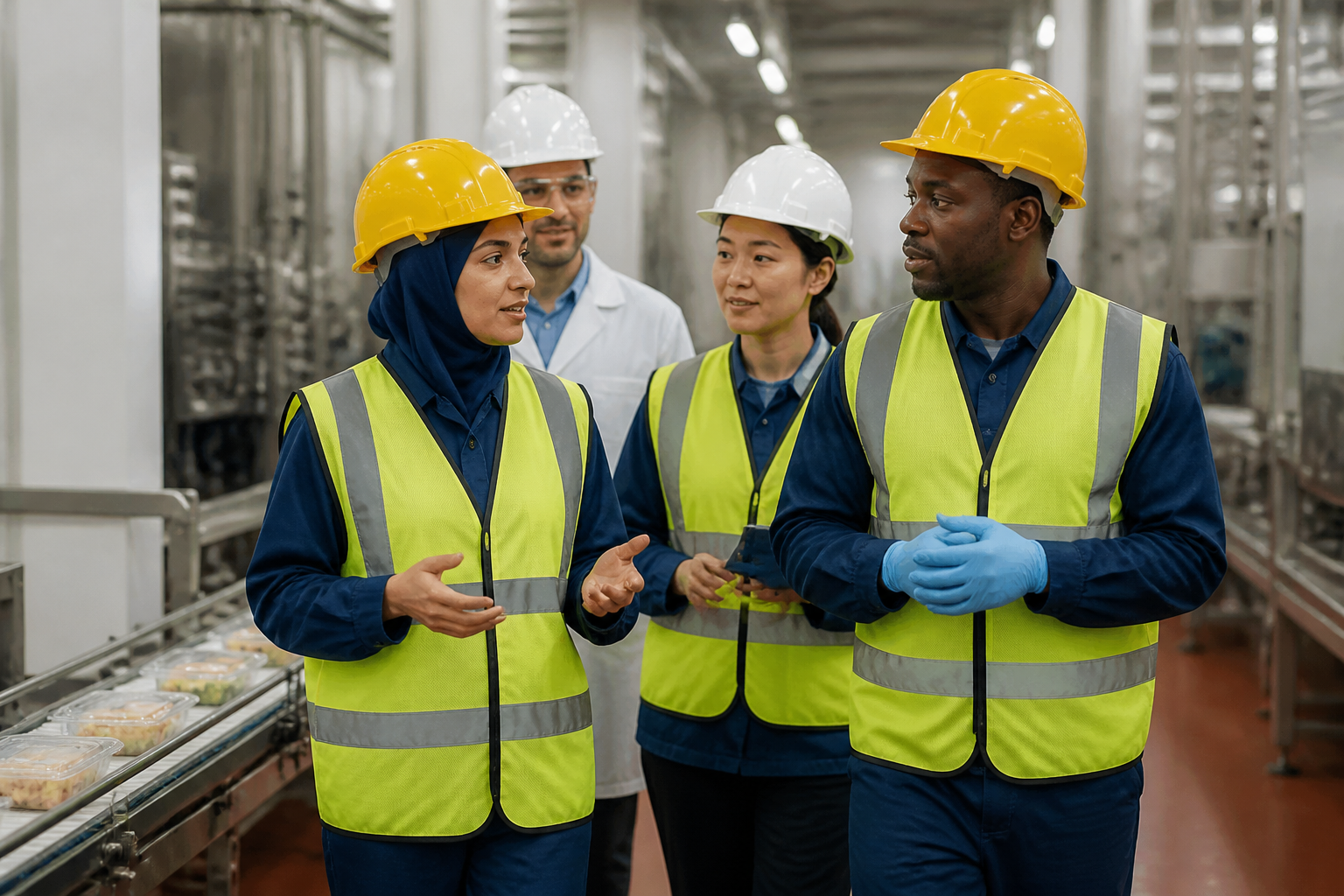
In high-speed food packaging operations, a single mislabeled pouch or incomplete line clearance can lead to a costly product recall. When line operators lack clear communication around critical control points, allergen run orders, and sanitation verifications, financial and regulatory risks skyrocket. Implementing practical food allergen safety multilingual training ensures that non-native English and Spanish-speaking workers fully understand allergen control protocols on the packaging floor, protecting consumers and your facility's operational efficiency.
The High Stakes of Allergen Control in Packaging
Packaging lines represent the final defense against undeclared allergens. While food manufacturing plants maintain strict raw ingredient separation, cross-contact and mislabeling frequently occur during the packaging stage. Common triggers include running a product containing soy immediately after a non-allergen product without proper washdown, or loading incorrect rollstock film into a vertical form-fill-seal machine.
Generic language translations or translated wall posters are rarely sufficient for complex line operations. Standard automated translations often confuse technical terminology like "line clearance," "ATP swab test," or "label reconciliation." When limited-English proficient (LEP) workers do not fully grasp why a step matters or how to verify it, compliance breaks down.
To build a robust safety culture, plants need structured food allergen safety multilingual training that teaches exact job-site language directly in the context of daily packaging routines.
Critical Communication Touchpoints on the Packaging Floor
Preventing cross-contamination requires clear, bidirectional communication between quality assurance (QA) technicians, shift supervisors, and packaging operators. Three primary operational touchpoints require precise language mastery.
Line Changeovers and Sanitation Verification
Changeover routines demand precise execution. Workers must communicate the exact status of line equipment during washdowns and blowdowns. If an operator is unsure how to report residual powder caught in a conveyor hinge or a hopper chute, the next production run is compromised. Operators need specific workplace English and Spanish vocabulary to report residual debris, confirm rinse cycles, and request secondary inspections before restarting a line.
Packaging Rollstock and Label Verification
Mislabeling remains the leading cause of food recalls in North America. Line operators loading corrugated boxes, clamshell containers, or printed film must verify that the label matches the exact batch sheet formulation—especially when dealing with Major 9 allergens like wheat, peanuts, milk, tree nuts, or sesame. Operators must be trained to speak up immediately using standardized phrases when label artwork, ingredient lists, or date codes do not match the production order.
Swab Testing and Quarantine Procedures
When QA conducts swab tests for allergen proteins, line crews must understand the status of the equipment. If a swab returns a positive result, line operators must know how to mark equipment as quarantined, communicate the hold status across shift changes, and execute secondary cleaning protocols without confusion.
Workplace Vocabulary for Multilingual Packaging Crews
Generic language classes teach conversational grammar, but plant floors require targeted technical vocabulary. Packaging workers must master key operational terms in both English and their native languages to maintain seamless control.
Essential operational terms include:
- Line Clearance: Verifying that all previous product, packaging film, labels, and caps are completely removed from the area before introducing new materials.
- Allergen Run Order: Scheduling production sequence from non-allergenic products to allergen-containing products to minimize deep cleaning cycles.
- Cross-Contact: The accidental transfer of an allergen from a food or surface containing an allergen to a food that does not contain it.
- Purge / Flush: Running a dedicated non-allergenic material or water cycle through filling equipment to clear out residual product.
- Label Reconciliation: Accounting for every printed label issued, used, damaged, or discarded to ensure no incorrect labels remain on the floor.
- Hold / Quarantine: Physically isolating product or machinery suspected of allergen contamination until QA release.
Integrating these terms into routine workplace food allergen safety multilingual training equips workers to act decisively when safety issues arise.
Practical Strategies for Supervisors and QA Leaders
Bridging the language gap on the packaging floor does not require supervisors to become fluent in multiple languages. Instead, leaders can implement operational strategies that reinforce clear communication across every shift.
Implement the "Teach-Back" Method
Never rely on a simple head nod or asking, "Do you understand?" Workers often nod out of respect or fear of delaying production. Instead, ask operators to demonstrate and explain the task back to you. For example: "Show me how you check the rollstock label against the batch record before loading the machine." This verifies comprehension regardless of native language background.
Standardize Visual and Verbal Cues
Combine color-coded visual management with standardized English and Spanish phrases. If yellow scoops and bins are designated for allergen-containing lines, train operators to use exact verbal cues like "Yellow tool only" or "Allergen bin check" during huddles and changeover sign-offs.
Conduct Pre-Shift Allergen Briefings
Use 5-minute pre-shift huddles to highlight specific allergen risks for the day's production schedule. If a line is transitioning from plain corn chips to a cheese-flavored product containing milk solids, review the specific changeover hazards with the crew before production starts. Applying food allergen safety multilingual training during daily huddles keeps safety protocols fresh and top-of-mind.
Building Long-Term Compliance in Food Manufacturing
Workplace language barriers should never compromise food safety or plant productivity. When operators understand the technical details of allergen control, changeover speed improves, scrap rates drop, and recall risks are mitigated.
Investing in targeted food allergen safety multilingual training bridges the communication gap between shift managers, QA departments, and packaging crews. By training your frontline workforce on site-specific terminology, visual checks, and verification routines, you protect your brand reputation and foster an accountable safety culture across every shift.
Protect Your Plant with Customized Language Solutions
New Heights Languages delivers practical, site-specific language programs tailored for food manufacturing plants and packaging facilities. We train your non-native English and Spanish-speaking workers directly on your facility's SOPs, allergen control plans, and equipment terminology.
Ready to strengthen allergen compliance and clear language barriers on your packaging floor? [Book a free consultation with our workplace language experts](/contact) today.