Heat Stress Prevention: Spanish-Speaking Construction Crews
By New Heights Languages ·
Protect roofing and concrete crews from heat illness. Learn practical heat stress protocols and communication strategies for Spanish-speaking crews.
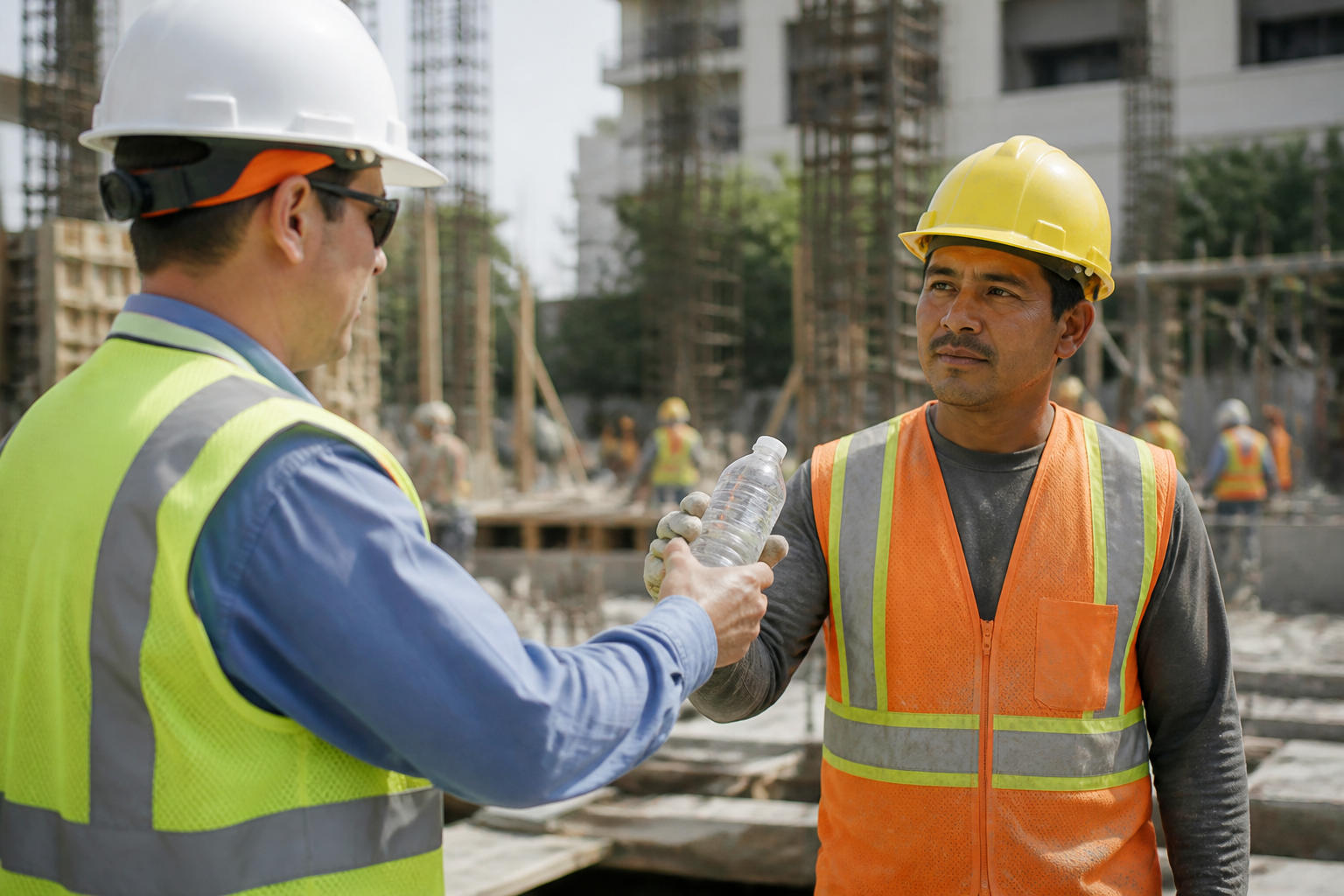
Roofing and concrete operations carry some of the highest risks for occupational heat illness on any jobsite. Commercial roofs trap radiative heat, driving surface temperatures far above ambient air, while concrete pours demand continuous, time-sensitive physical labor under direct sunlight. In these high-intensity environments, implementing effective heat stress prevention Spanish speaking construction crews rely on requires more than hanging a bilingual poster near the jobsite trailer.
To keep crews safe during peak summer months, contractors and safety managers must build structured heat stress protocols around active, bidirectional communication. When workers understand how to identify symptoms, voice concerns without fear of slowing down production, and execute emergency steps in their primary language, jobsite safety increases and heat-related injuries decline dramatically.
Why Roofing and Concrete Trades Face Elevated Heat Hazards
Thermal Retention and Radiative Heat
Roof surfaces, particularly dark EPDM or asphalt membranes, act as giant heat sinks. They radiate thermal energy directly back onto workers long after ambient air temperatures peak. Similarly, curing concrete generates exothermic heat, creating localized microclimates that rapidly accelerate dehydration.
Time-Sensitive Work Pressure
Concrete cannot wait for cooler weather once transit mix trucks arrive on site. Roofers face tight weather windows to tear off and dry in a building before afternoon storms hit. This inherent operational urgency often creates an unwritten pressure where employees push through early warning signs of heat strain to finish a pour or seal a roof section.
Essential Spanish Heat Safety Terminology for Daily Standups
Generic safety slogans rarely translate into actionable field habits. Integrating targeted vocabulary into daily heat stress prevention Spanish speaking construction crews execute on site ensures that safety callouts are understood instantly by every crew member.
Core Safety Vocabulary
Supervisors and foremen should incorporate these key terms into morning tool box talks:
- Golpe de calor: Heat stroke (an immediate emergency)
- Agotamiento por calor: Heat exhaustion
- Deshidratación: Dehydration
- Sombra: Shade or covered rest area
- Mareo / Vértigo: Dizziness or lightheadedness
- Calambres: Muscle cramps
Action-Oriented Field Phrases
In addition to individual terms, foremen should practice short, clear commands during peak heat hours:
- "Toma agua cada quince minutos, no esperes a tener sed." (Drink water every fifteen minutes; do not wait until you are thirsty.)
- "Descansa en la sombra durante tu pausa." (Rest in the shade during your break.)
- "Avisa a tu compañero si sientes mareo o dolor de cabeza." (Tell your buddy if you feel dizzy or have a headache.)
- "Necesitamos mojar la nuca y las muñecas." (We need to cool down the neck and wrists.)
Structuring Acclimatization and Hydration Protocols
The Acclimatization Plan for New and Returning Workers
Unacclimatized employees face the highest risk of heat-related illness. When hiring new general laborers or bringing workers back after an absence, implement a phased workload schedule. A practical plan for heat stress prevention Spanish speaking construction crews can follow without hesitation begins with limiting new hires to 20% of normal workload intensity on day one, increasing exposure by 20% each subsequent day.
Mandated Rest Cycles vs. Self-Pacing
Relying on workers to self-pace during heavy concrete finishing or membrane installation is unreliable. When heat index levels cross threshold limits, supervisors must mandate scheduled work-rest cycles. For example, during high-heat alerts, enforce a 15-minute shaded rest period for every 45 minutes of continuous physical labor.
Establishing a Buddy System for Real-Time Symptom Monitoring
Overcoming Culture-Based Reluctance
In heavy civil and trade construction, workers frequently take pride in high physical endurance. Many Spanish-speaking employees may hesitate to ask for extra breaks because they fear looking weak to peers or losing standing with their foreman. A formal buddy system removes this stigma by making peer monitoring an official job requirement.
Visual Signs Buddy Pairs Must Monitor
Pair experienced workers together on the roof or pour deck, instructing them to watch for clear visual cues:
- Profuse sweating that suddenly stops
- Confusion, slurred speech, or clumsy movement while handling materials
- Irritability or unusual changes in behavior
- Pale, clammy skin or sudden weakness
If a worker notices any of these signs in their partner, the protocol mandates taking the worker to a shaded, cooled area immediately and notifying the safety lead.
Training Supervisors for Clear, Bidirectional Check-Ins
Language barriers can create dangerous blind spots when supervisors attempt to evaluate worker health. A simple question like "Are you OK?" often yields a standard nod of agreement due to deference to authority or misunderstanding.
Supervisors must be trained to ask open-ended questions in basic Spanish that force an informative answer. Instead of asking, "¿Estás bien?" (Are you fine?), foremen should ask:
- "¿Cómo te sientes del 1 al 10?" (How do you feel on a scale of 1 to 10?)
- "¿Cuántas botellas de agua has tomado hoy?" (How many bottles of water have you had today?)
- "¿Cuándo fue la última vez que fuiste al baño?" (When was the last time you went to the bathroom?)
This tailored approach to heat stress prevention Spanish speaking construction crews put into practice every day transforms routine check-ins into reliable field diagnostic tools.
Protecting Your Workforce with Customized Language Training
Standard safety manuals do not eliminate jobsite risk if your crew cannot apply them in real time under extreme weather conditions. Building clear, trade-specific communication protocols keeps your concrete and roofing crews safe, protects project schedules, and ensures compliance with occupational safety regulations.
New Heights Languages provides practical, customized workplace English and Spanish training designed specifically for construction and manufacturing environments. We help your supervisors and field crews bridge communication gaps, master critical safety vocabulary, and maintain high productivity on the job.
To learn how we can tailor a language training program for your field teams, [book a free consultation with our team today](/contact).
<!-- featured image alt: A construction supervisor handing a bottle of cold water to a Spanish-speaking concrete worker on a sunny jobsite. -->