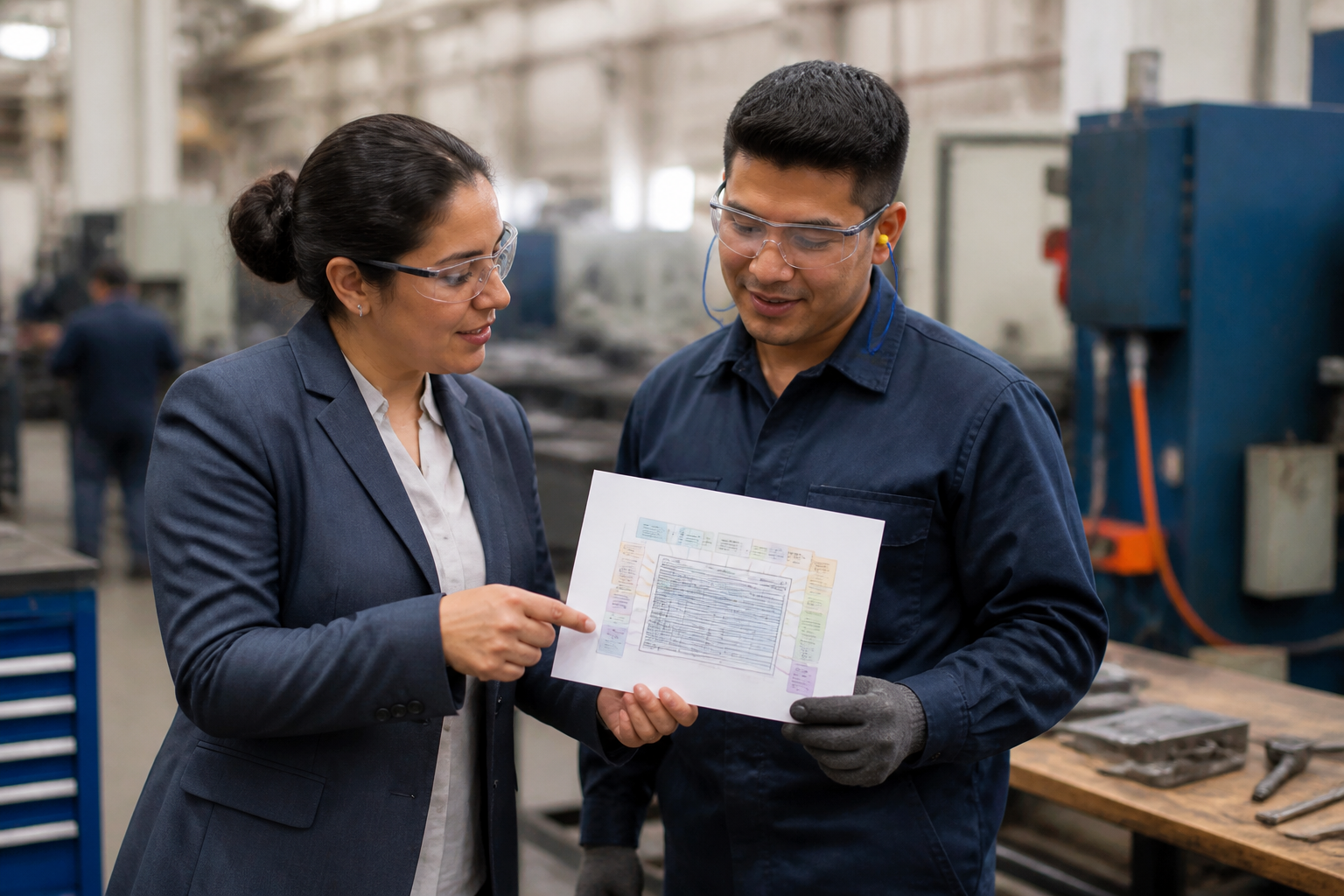
How to Build Accountability in Workplace Training
By New Heights Languages ·
Why Accountability Is the Hidden Engine of Effective Training

Why Accountability Is the Hidden Engine of Effective Training
In fast-paced industries like manufacturing, even the best training programs can fall short without one critical element: accountability. Many organizations invest heavily in onboarding, safety training, and upskilling—but without consistent follow-through, that investment often fails to deliver real results. Accountability is what transforms training from a one-time event into lasting performance improvement.
Consider this: employees may complete a safety protocol course, but if no one verifies they’re applying those procedures on the shop floor, knowledge doesn’t translate into behavior. That’s where accountability transforms training from passive learning into active results. It ensures that skills taught are skills practiced, monitored, and improved over time.
Turning Knowledge into Action
Employees may complete courses and pass assessments, but that doesn’t guarantee they’ll apply what they’ve learned on the job. Accountability ensures that training translates into behavior. When supervisors actively verify skill application—whether it’s safety procedures or communication protocols—employees are more likely to retain and use new knowledge. This leads to fewer errors, improved efficiency, and stronger compliance.
Setting Clear Expectations from the Start
Effective workplace training begins with clarity. Define measurable goals for each program, such as reducing safety incidents or improving communication accuracy. Employees should understand their responsibilities and how their performance impacts overall operations. When expectations are transparent, accountability becomes a shared standard—not just a management tool.
Tracking Progress and Reinforcing Learning
One of the most common gaps in training programs is the lack of progress tracking. Without systems to monitor completion, retention, and real-world application, it’s difficult to measure success. Implementing tools like progress dashboards, follow-up assessments, and regular check-ins helps ensure employees stay on track. Consistent feedback also reinforces learning and allows for timely course correction.
The Role of Leadership in Accountability
Managers play a vital role in sustaining accountability. When leaders model engagement, reinforce expectations, and provide constructive feedback, employees are more likely to take ownership of their development. This creates a culture where learning is continuous and directly tied to performance outcomes.
Overcoming Common Barriers
Challenges like inconsistent participation, language barriers, and unclear expectations can weaken training effectiveness. Addressing these issues with proper communication, accessible materials, and leadership support helps create a more inclusive and accountable environment—especially in diverse manufacturing teams.
Accountability isn’t about enforcement—it’s about ownership. When employees understand expectations, receive consistent feedback, and see the impact of their efforts, training becomes a driver of growth. The result is improved safety, higher productivity, and stronger team collaboration.
Ready to Strengthen Your ESL Training Program?
Book your FREE Consultation Now via https://cal.com/newheightslanguages!
Visit New Heights Languages, LLC to see how you can increase retention, production, and safety while reducing language barriers for your team.