How to Run a 15-Minute Bilingual Toolbox Talk
By New Heights Languages ·
Master the 15-minute bilingual toolbox talk. Keep your manufacturing or construction crew safe with clear, two-language pre-shift safety huddles.
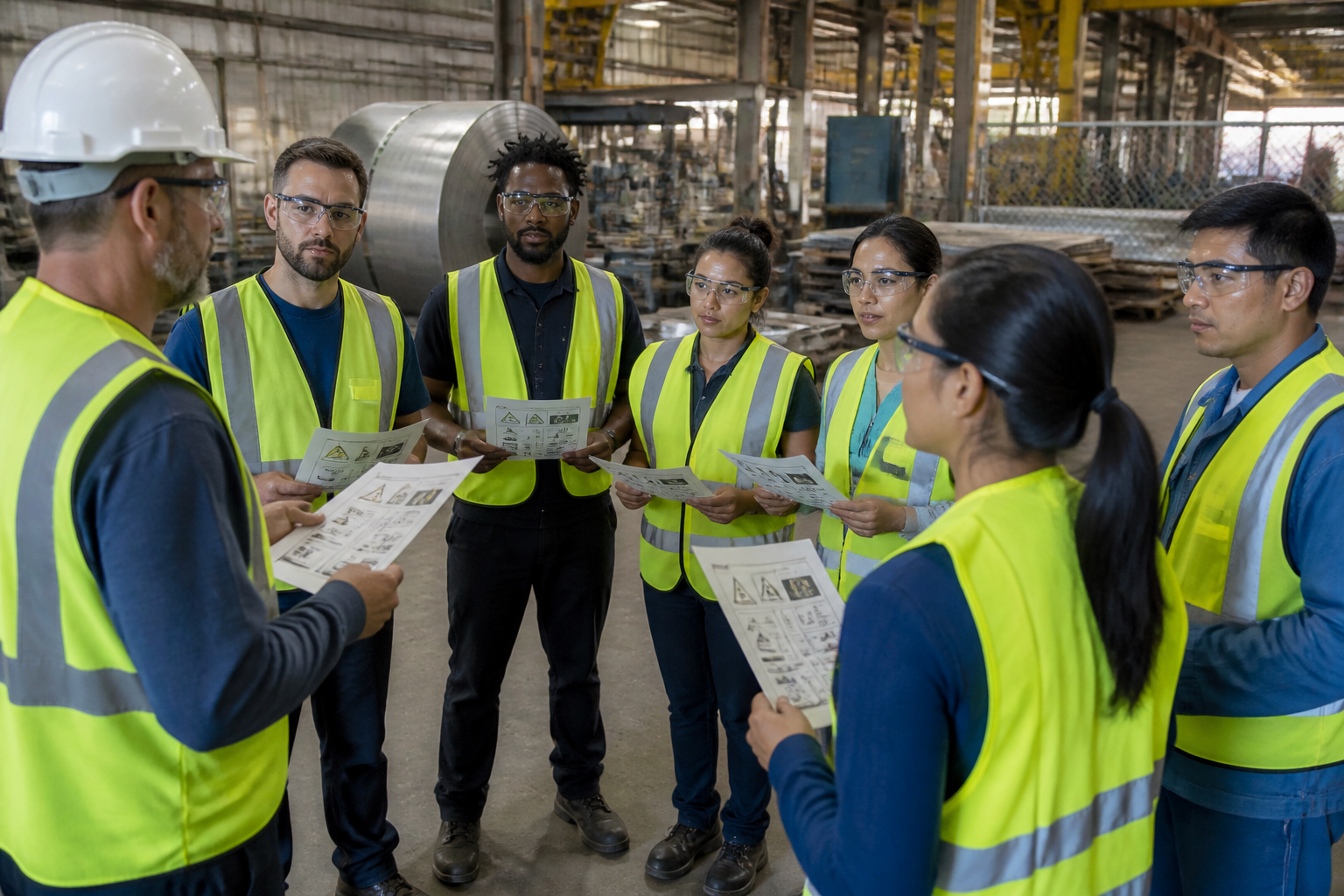
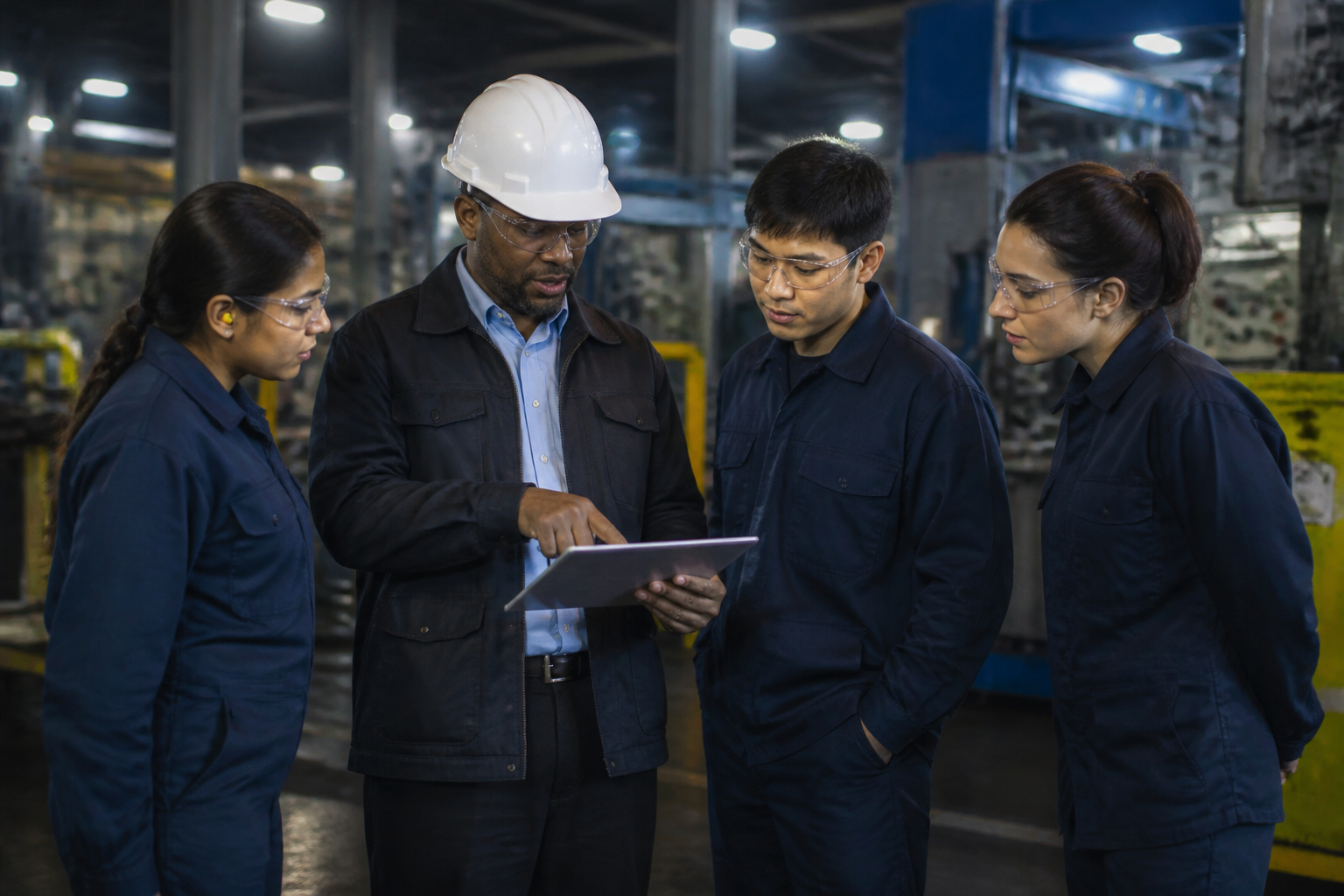
Pre-shift huddles are essential for setting safety expectations, identifying site hazards, and aligning your crew before work begins. However, on job sites and factory floors with multilingual teams, safety messages often fail to reach everyone equally. Running an effective bilingual toolbox talk does not require doubling your meeting time or hiring full-time interpreters. With a clear structure and practical delivery strategies, supervisors can deliver punchy, two-language safety briefings in just 15 minutes.
When workers fully comprehend safety protocols, job site incidents decrease and overall productivity improves. Here is how to structure and deliver a concise, high-impact safety brief that protects every employee on your team.
The 15-Minute Meeting Agenda
To keep a pre-shift meeting under 15 minutes, strict time management is critical. Splitting time between two languages requires deliberate pacing so that non-native English speakers receive the exact same core message as native English speakers without making the meeting feel dragged out.
Allocate Time by Section
- Minutes 0-2: Introduction and Hazard Identification. State the core topic immediately (e.g., Lockout/Tagout, heat illness prevention, or scaffolding safety) and identify where that hazard exists on site today.
- Minutes 2-8: Core Safety Protocol. Deliver 3 to 4 non-negotiable safety rules or steps required for the shift. Translate key terms and directives directly.
- Minutes 8-12: Practical Demonstration and Interaction. Show the physical gear or point directly to the equipment in question. Have a lead worker demonstrate proper procedure.
- Minutes 12-15: Comprehension Check and Sign-off. Ask targeted questions to verify understanding, address immediate questions, and complete attendance logs.
Prepare Key Terminology in Advance
Trying to translate complex technical jargon on the fly leads to confusion, incorrect terminology, and wasted time. Supervisors do not need to be fluent in Spanish to lead a successful safety huddle, but they must prepare critical vocabulary beforehand.
Focus on High-Frequency Safety Verbs and Nouns
Before stepping out onto the plant floor or job site, identify the three or four words central to the lesson. Write them down in English and Spanish on a whiteboard, clipboard, or pocket reference card.
For example, if the topic is eye protection, highlight terms like goggles (gafas de protección), debris (residuos/escombros), and inspect (inspeccionar). Keeping the written translation visible helps bridging language gaps while you speak.
Eliminate Complex Jargon
Use straightforward language in both English and Spanish. Instead of saying, "Ensure the structural integrity of the temporary perimeter guardrails is verified prior to working elevated," say, "Check the guardrails before working on the scaffold. Make sure they are sturdy."
Use Visual Aids and Demonstrations
Words alone are rarely enough when delivering safety information across language barriers. Integrating visual aids into your bilingual toolbox talk reinforces the spoken message and speeds up comprehension.
Show, Don't Just Tell
If you are discussing harness inspection, hold the harness in your hands. Point directly to the D-ring while saying the word in English and Spanish. Pull a damaged strap to show what a fail condition looks like physically.
Leverage Pictograms and Dual-Language Handouts
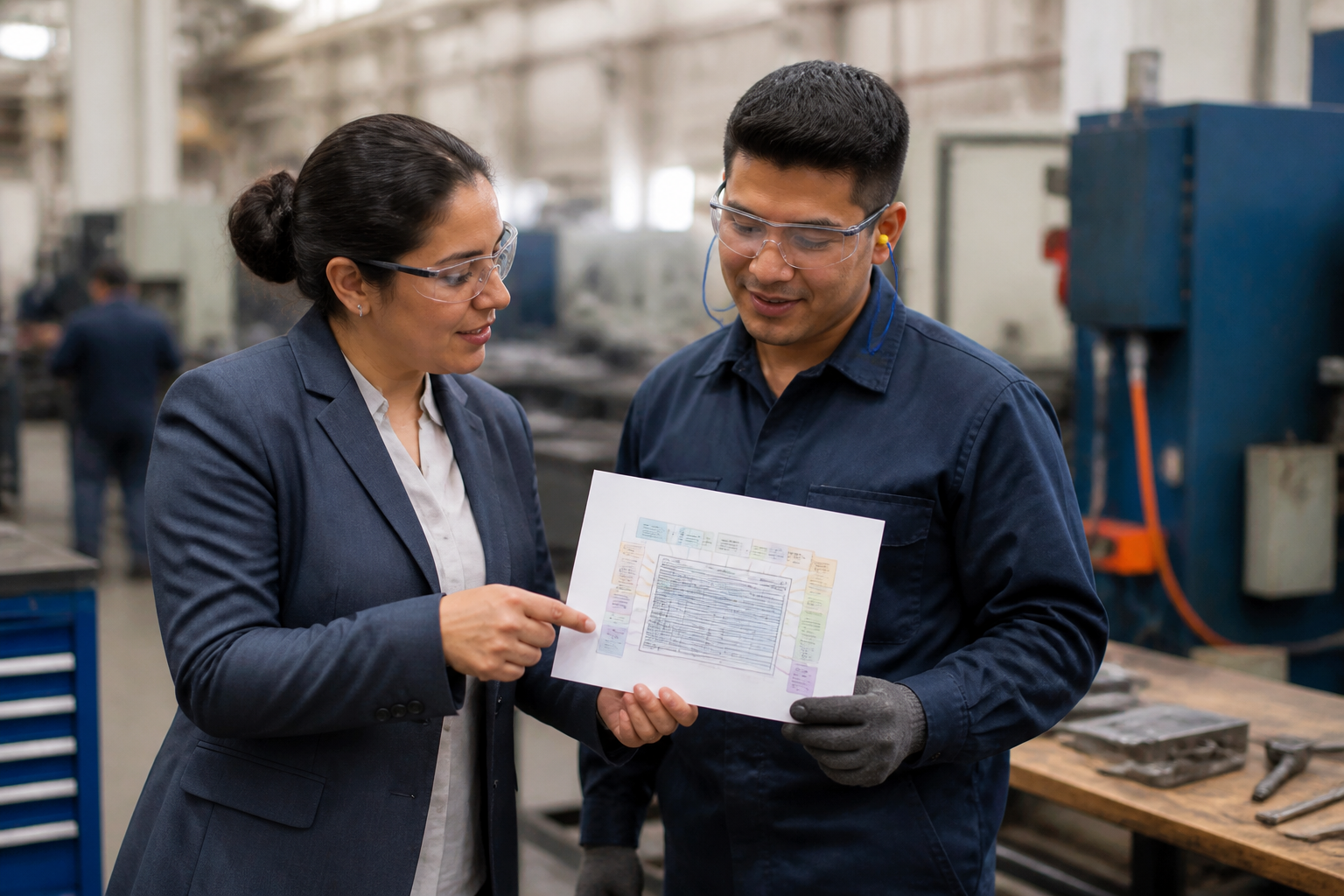
Use OSHA or industry-standard pictograms alongside short text snippets in both English and Spanish. If you hand out summary sheets, ensure the English text and Spanish text are placed side-by-side rather than on separate pages. This enables workers to cross-reference terms and helps non-English speakers build job-specific English vocabulary over time.
Verify Comprehension Beyond the Head Nod
Asking "Does everyone understand?" or "¿Entienden?" usually results in silent nods, even if half the room is unclear on the directive. Workers often nod out of politeness or to avoid standing out in front of peers.
Ask Open-Ended Verification Questions
To ensure your bilingual toolbox talk actually sticks, ask specific, action-oriented questions that require a real response:
- Instead of: "Do you know where the eye wash station is?"
- Ask: "Carlos, point to the nearest eye wash station. Maria, when do we use it?"
- Instead of: "Is this ladder safe?"
- Ask: "Who can tell me two things wrong with how this ladder is set up?"
Utilize Bilingual Safety Champions
Identify proficient bilingual employees on your team and partner with them as designated safety champions. Rather than having them translate word-for-word while you speak—which doubles the length of the meeting—have them repeat the 30-second core takeaway in Spanish immediately after you present it in English. This maintains momentum while ensuring accurate comprehension.
Standardize Your Routine and Document Attendance
Consistency makes brief safety meetings effective. When employees know the format, they arrive prepared to listen and participate.
Maintain a Central Toolbox Talk Library
Build an archive of pre-translated, single-page safety sheets relevant to your facility or trade. Rotating through a standardized library ensures full coverage of required topics throughout the year without forcing supervisors to write new material every morning.
Keep Accurate Dual-Language Logs
Always document attendance with a sign-in sheet that includes the topic title in both languages. This proves regulatory compliance and confirms that all employees, regardless of native language, received essential hazard training before beginning their work.
Standardizing your bilingual toolbox talk routine builds a culture of safety, respect, and shared responsibility across your entire workforce.
Upgrade Your Workforce Communication Strategy
Short, structured toolbox talks keep daily hazards top-of-mind, but long-term safety and operational efficiency require broader language skills across your team. New Heights Languages delivers customized, job-specific English and Spanish training programs designed specifically for manufacturing and construction work environments.
Help your supervisors lead with confidence and empower your workers to communicate safely and effectively on the job. [Book a free consultation today](/contact) to learn how we can tailor a language training solution for your facility or job site.
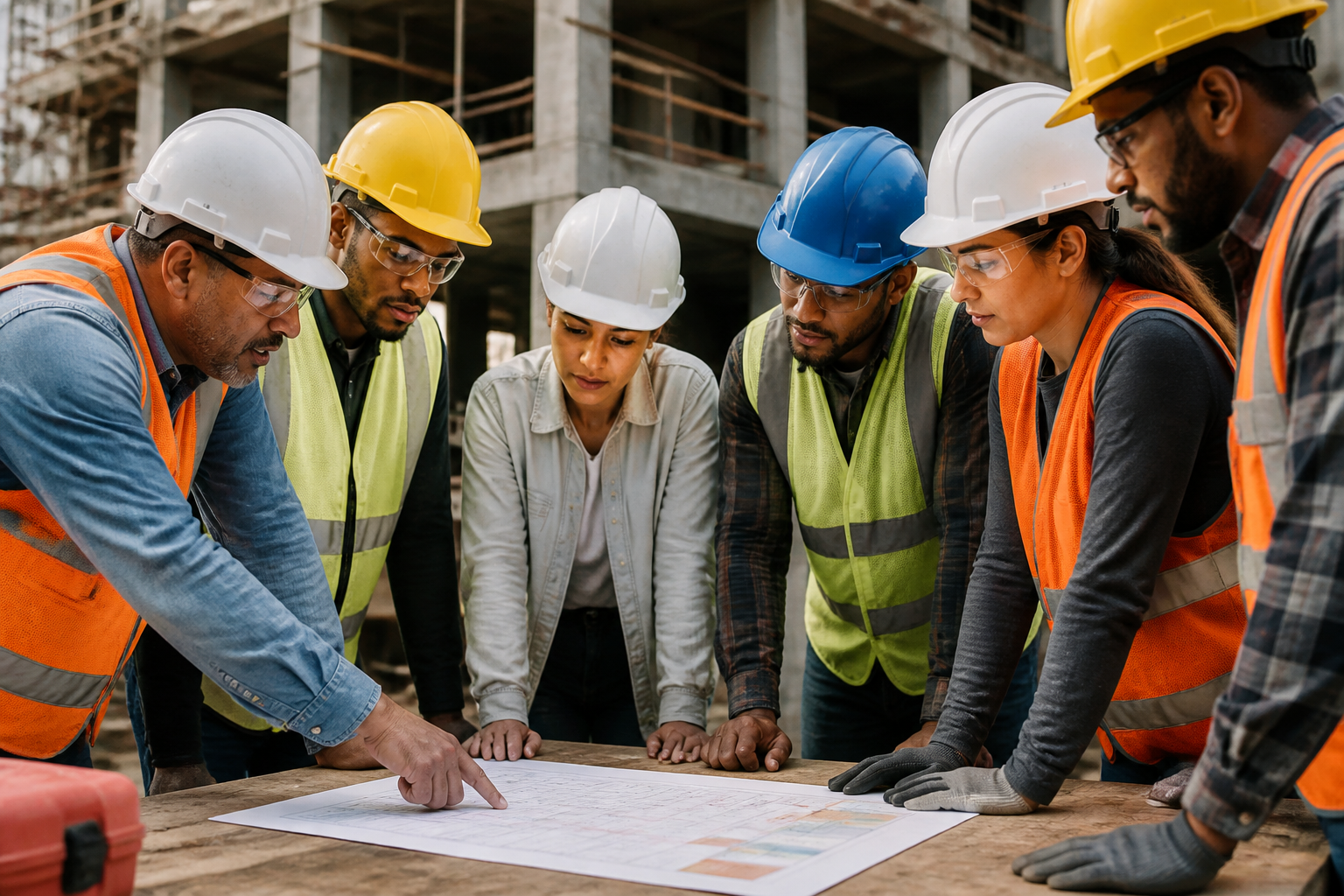
<!-- featured image alt: A construction supervisor leading a 15-minute pre-shift safety meeting with a diverse group of manufacturing workers holding bilingual hazard sheets. -->