Kaizen Events: Multilingual Workforce Lean Guide
By New Heights Languages ·
Learn how to run kaizen events with a multilingual workforce in lean manufacturing. Engage LEP production workers and sustain continuous improvement.
Bridging the Gap in Rapid Improvement Events
Frontline production workers possess the deepest insights into shop floor waste, equipment friction, and workflow bottlenecks. However, when facilities execute continuous improvement projects, non-native English speakers are frequently left on the sidelines. To maximize ROI on rapid improvement projects, running effective kaizen events multilingual workforce lean initiatives requires moving beyond traditional classroom-style facilitation.
When limited-English-proficiency (LEP) operators cannot express their ideas or comprehend complex analytical tools, kaizen events default to top-down supervisor directives. This undermines the core principle of lean: empowering the people who do the work to fix the work. By structuring events to accommodate language diversity, plant managers and lean facilitators can unlock hidden operational capacity and build lasting process ownership.
Pre-Event Preparation for LEP Operator Engagement
Successful engagement starts days before the event kick-off. Expecting LEP workers to process complex lean concepts and communicate ideas spontaneously in a fast-paced workshop creates unnecessary anxiety.
Pre-Teach Essential Lean Vocabulary
Before the event begins, review key terms with participating operators. Introduce simple, paired English and Spanish vocabulary for core concepts like takt time, cycle time, waste (muda), and standard work. Providing workers with familiar functional terms ensures they can follow process mapping without getting lost in jargon.
Pair Leads with Frontline Workers
Do not rely on passive translation apps during rapid-fire brainstorming. Assign a bilingual lead technician or trusted peer facilitator to work alongside LEP operators. This buddy system creates a psychological safe zone where workers can voice observations in their primary language and have them integrated into the team's visual boards.
Designing Visual and Hands-On Gemba Activities
Text-heavy documentation and slide decks stall momentum when executing kaizen events multilingual workforce lean programs. The shop floor (Gemba) provides an equalizing environment where physical processes speak louder than written words.
Use Color-Coded Process Mapping
During value stream mapping, replace lengthy written post-it notes with visual iconography, physical product samples, and color-coded tags. For example:
- Red Cards: Physical bottlenecks or mechanical safety hazards.
- Yellow Cards: Quality defects or extra processing steps.
- Green Cards: Standardized value-added work steps.
Conduct Hands-On Time Studies
Instead of reading written standard operating procedures, have mixed-language sub-teams observe cycle times together using physical timers and visual tally sheets. Demonstrating process variation physically allows all team members to agree on baseline problems regardless of English fluency.
Adapting Root-Cause Analysis Tools
Tools like the "5 Whys" or Fishbone (Ishikawa) diagrams often fail with bilingual teams if facilitators force complex verbal debates. Simplifying how these tools are facilitated keeps everyone focused on problem-solving.
Graphic Fishbone Diagrams
Create large-format wall diagrams using clear visual categories: Machines, Materials, Methods, and Environment. Encourage workers to draw or place photos of observed issues on the board. When an operator points directly to a worn guide rail or a misaligned sensor, language barriers evaporate.
Focused 5-Why Questioning
When facilitating kaizen events multilingual workforce lean teams through root-cause analysis, keep prompt questions short and direct. Instead of asking open-ended questions like "What organizational systemic failures contributed to this defect?", ask targeted questions such as "What stopped the line?" or "Where did the component jam?"
Sustaining Action Items Across Shifts
A common point of failure occurs after the event ends, when standardized work instructions are published only in English. Frontline workers return to old habits simply because new standard work sheets are unreadable.
Visual Standard Work
Convert output documentation into visual work instructions that rely on sequential photos, diagrams, and bilingual callouts. Ensure that target metrics and new standard cycle times are clearly posted on line-side boards in plain language.
Measure Long-Term Participation
Track participation metrics across your workforce. Monitor how many LEP operators present findings during the final kaizen report-out to plant management. Publicly recognizing frontline contributions builds confidence and encourages broader involvement in future continuous improvement initiatives.
Build a Truly Inclusive Lean Culture
Unlocking the full potential of your production floor requires functional English communication tailored directly to your operating environment. When frontline workers master targeted workplace vocabulary, they participate actively in lean problem-solving and long-term waste reduction.
New Heights Languages designs customized, industry-specific language training programs for manufacturing and construction employers. Book a free consultation with our team today to bridge language gaps on your shop floor: [Book a Free Consultation](/contact).
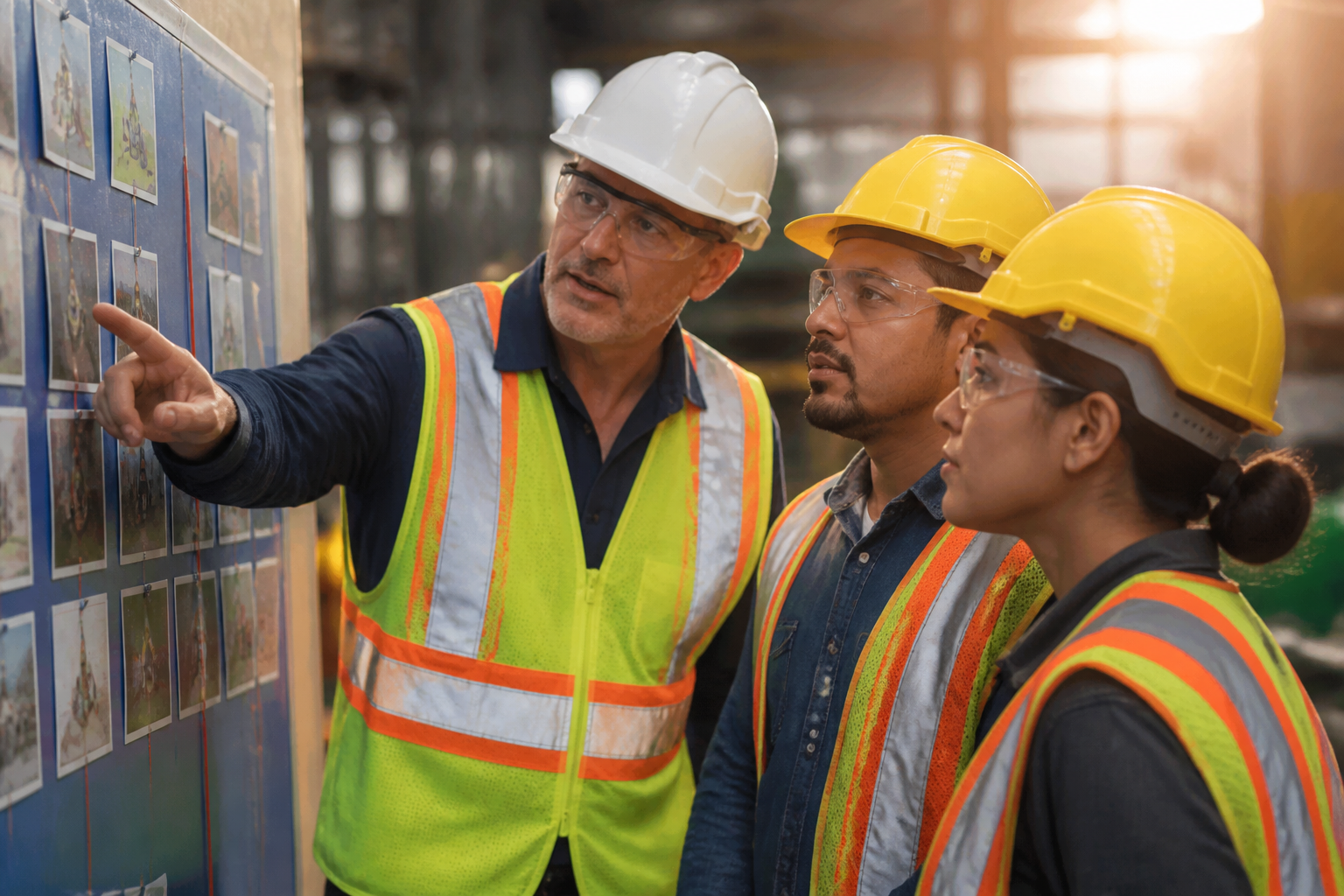
<!-- featured image alt: A plant floor lead and two Spanish-speaking production workers conducting a root cause analysis using visual cards on a lean board. -->