Manufacturing Safety Culture Communication: Ask First
By New Heights Languages ·
Stop silent hesitation on the shop floor. Learn how to build a workplace culture where multilingual workers feel safe asking questions before errors occur.
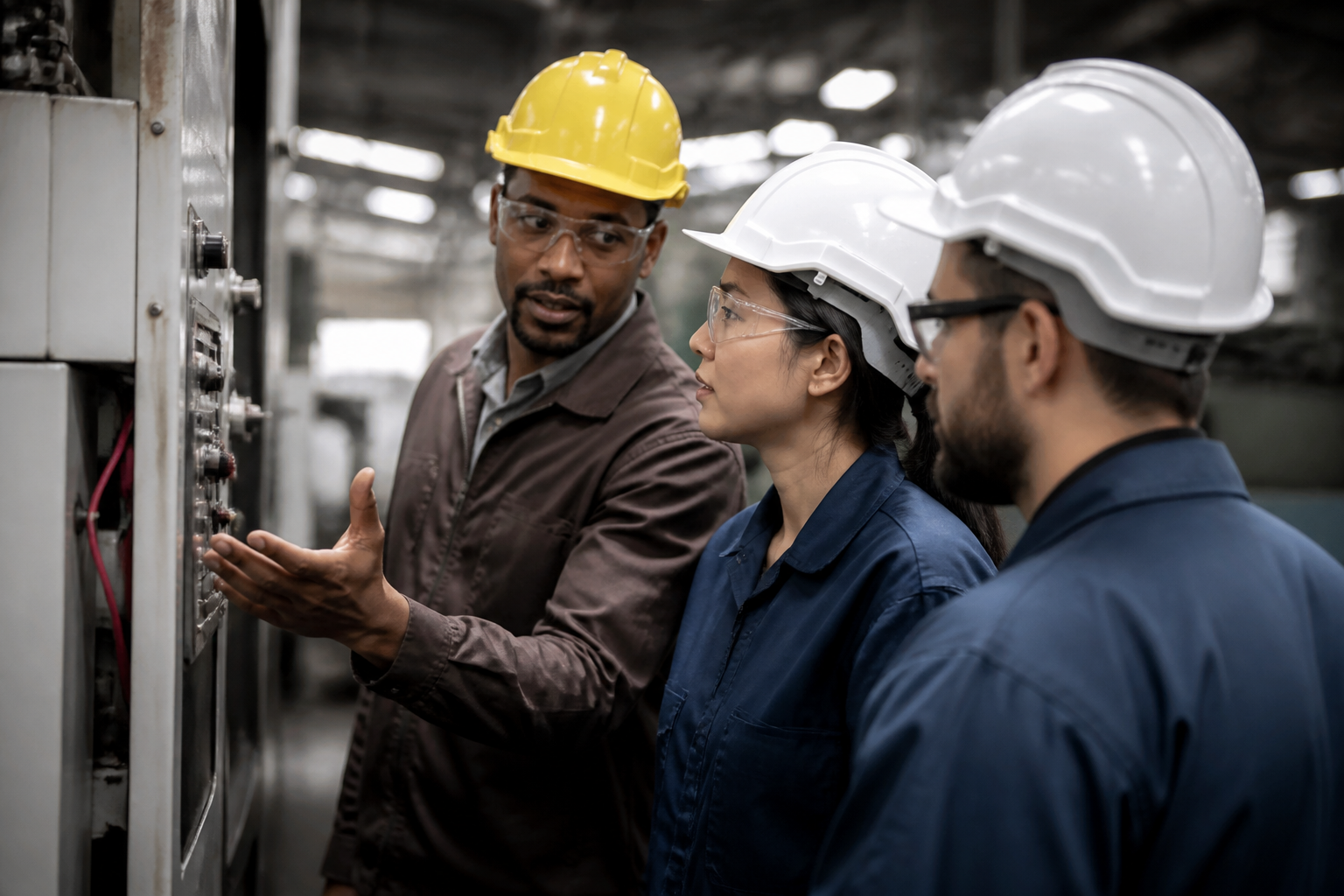
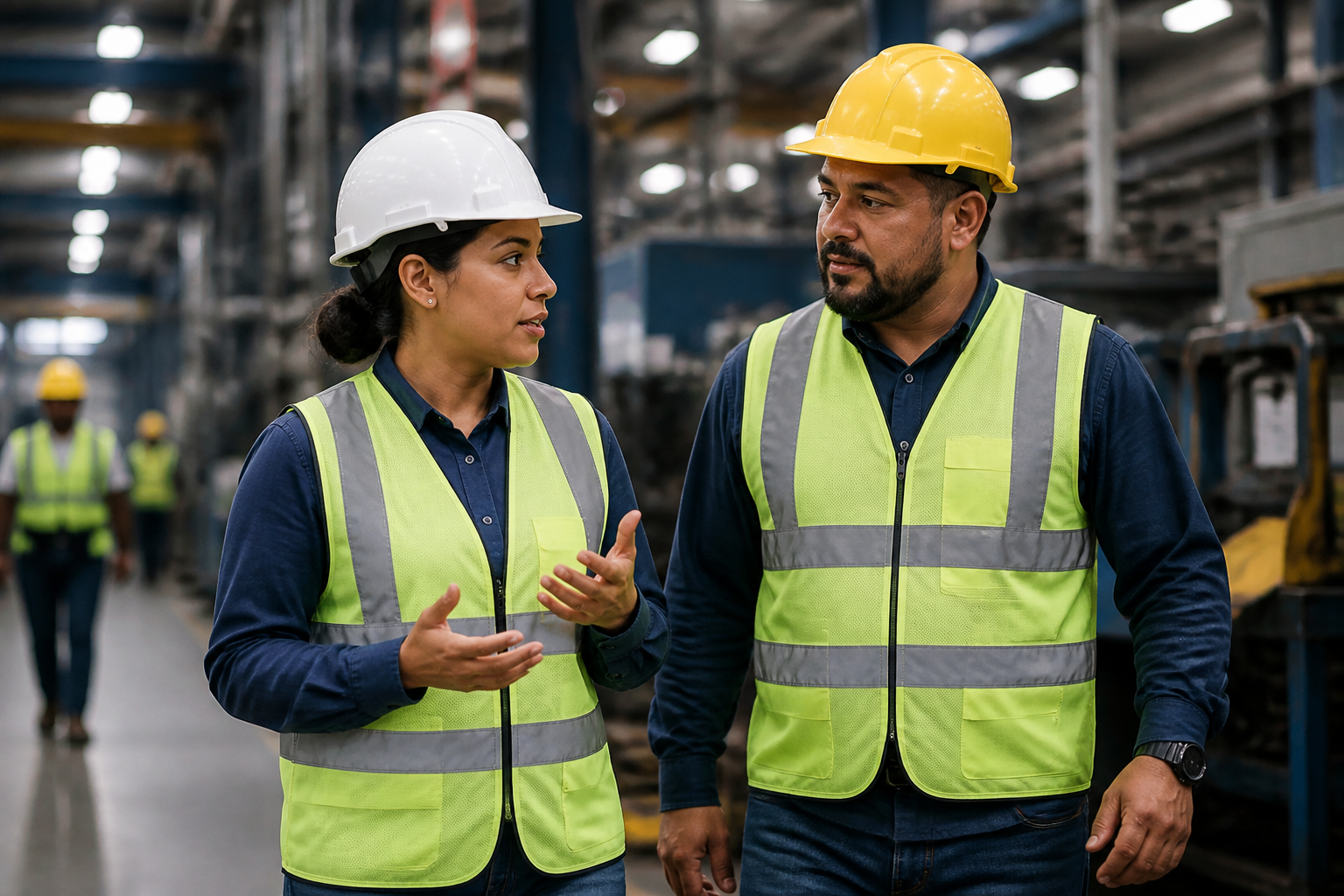
On a busy manufacturing floor, silent hesitation is one of the most dangerous hazards. When a worker isn't 100% sure about a spec's tolerance, a lockout/tagout boundary, or a raw material mix ratio, they face a critical choice: stop line movement to ask a supervisor, or make an educated guess. Too often, fear of looking incompetent, language insecurity, or simple production pressure leads workers to guess. The result? Broken tooling, ruined batches, or severe injuries. Transforming your plant floor requires proactive manufacturing safety culture communication where asking questions is treated as a core job requirement rather than a sign of weakness.
The Root Causes of Shop Floor Silence
To fix silent hesitation, leadership must understand why employees keep quiet in the first place. In fast-paced production environments, several psychological and cultural drivers keep workers silent:
- Fear of slowing down the line: Workers worry that asking questions signals inefficiency or poor performance to management.
- Language insecurity: Non-native English speakers often feel anxious about phrasing questions correctly or being misunderstood by English-speaking supervisors.
- Perceived supervisor frustration: If a team lead responds to questions with impatience, workers quickly learn that asking for help carries a social penalty.
- Assumed clarity: Workers assume everyone else already understands the instruction, making them feel isolated in their confusion.
Strong manufacturing safety culture communication tackles these root causes directly by dismantling the unspoken penalties associated with asking for clarification.
Re-Framing Questions as Quality Control
Asking a question shouldn't be framed as a gap in worker knowledge. Instead, top-performing plants frame it as a critical quality assurance step.
Shift from Permission to Protocol
When supervisors treat questions as standard procedure rather than interruptions, shop floor dynamics change immediately. Establish an explicit operational standard: if a worker hits a point of uncertainty, stopping to verify is a mandatory quality check.
Celebrate Catching Potential Errors
Highlight employees during pre-shift huddles who paused work to confirm a detail. When leadership publicly praises a worker for saying, "I wasn't sure about this spec, so I checked before running the batch," it signals to the entire crew that asking questions protects plant operations.
Eliminating the "Do You Understand?" Trap
One of the biggest breakdowns in manufacturing safety culture communication occurs when supervisors rely on quick, closed questions to verify comprehension.
When a supervisor asks, "Do you understand?" or "Does that make sense?", almost every worker will nod and say "Yes." They nod out of politeness, fear of looking foolish, or an eager attempt to end an uncomfortable interaction. It creates a false sense of security for management.
Use Open-Ended Confirmation Prompts
Replace simple yes/no questions with verification prompts that require workers to explain the task back in their own words:
- "Walk me through how you are going to set up this jig."
- "What is the maximum torque setting for this specific part?"
- "Show me where the primary emergency shutoff is located on this cell."
- "What is the first step if the sensor display reads red?"
Normalize Side-by-Side Checking
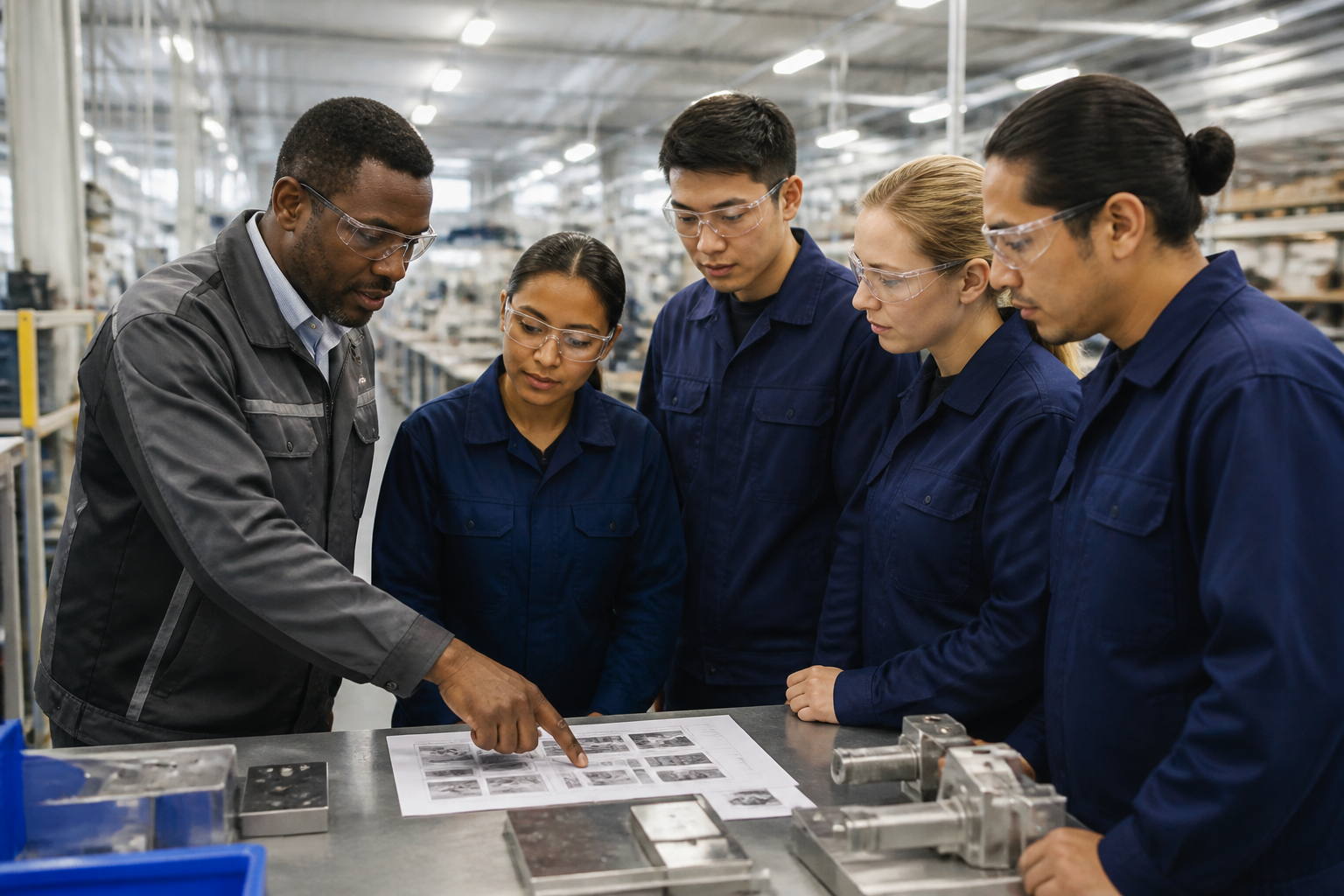
Encourage team leads to walk over to the station when answering questions rather than shouting across a noisy machine bay. Standing side-by-side reduces perceived intimidation and allows visual confirmation of the task.
Overcoming Language Barriers to Create Safety
In multilingual plants, language barriers compound the reluctance to ask questions. A worker with limited English proficiency might understand 80% of a directive but miss the crucial 20% containing a safety warning or tolerance threshold. Because constructing a complex question in English takes effort and courage, they take their chances on the remaining 20%.
Teach Functional Clarification Phrases
Don't wait for workers to become fully fluent before encouraging communication. Teach targeted, high-utility workplace English phrases that allow workers to flag uncertainty quickly:
- "Can you show me one more time?"
- "I want to double-check this number."
- "Is this correct or wrong?"
- "Please slow down."
Train Supervisors in Clear Delivery
Supervisors don't need to speak fluent Spanish or Vietnamese to communicate effectively. Training leads to speak at a steady pace, avoid idiomatic jargon ("eyeball it," "ballpark estimate"), and use consistent terms makes it significantly easier for non-native employees to ask precise questions.
Building a Lasting Environment of Open Dialogue
Creating a proactive plant environment isn't achieved through a single safety memo or annual seminar. Long-term progress relies on daily, deliberate practice embedded into your floor operations.
When you invest in targeted workplace language training for your crews and supervisors, you build the shared vocabulary needed to make asking questions natural and immediate. As workers gain confidence in practical workplace English and supervisors master structured check-ins, scrap rates fall, near-miss reporting increases, and safety culture deepens across every shift.
Effective manufacturing safety culture communication turns your frontline workers from silent executors into active safety partners who catch errors before they hit your bottom line.
Transform Communication on Your Plant Floor
Ready to eliminate silent mistakes and build a proactive safety culture across your multilingual crews? At New Heights Languages, we deliver customized, on-site workplace ESOL and supervisor Spanish training built specifically for manufacturing and construction environments.
[Book a free consultation today](/contact) to learn how targeted language programs can protect your workers, boost quality, and streamline floor operations.
<!-- featured image alt: A plant supervisor and a manufacturing worker discussing machine setup details while looking at an equipment panel. -->