Respirable Crystalline Silica Language Support Construction
By New Heights Languages ·
Protect concrete and masonry crews from silicosis. Overcome language barriers in OSHA silica compliance, Table 1 controls, and respirator fit testing.
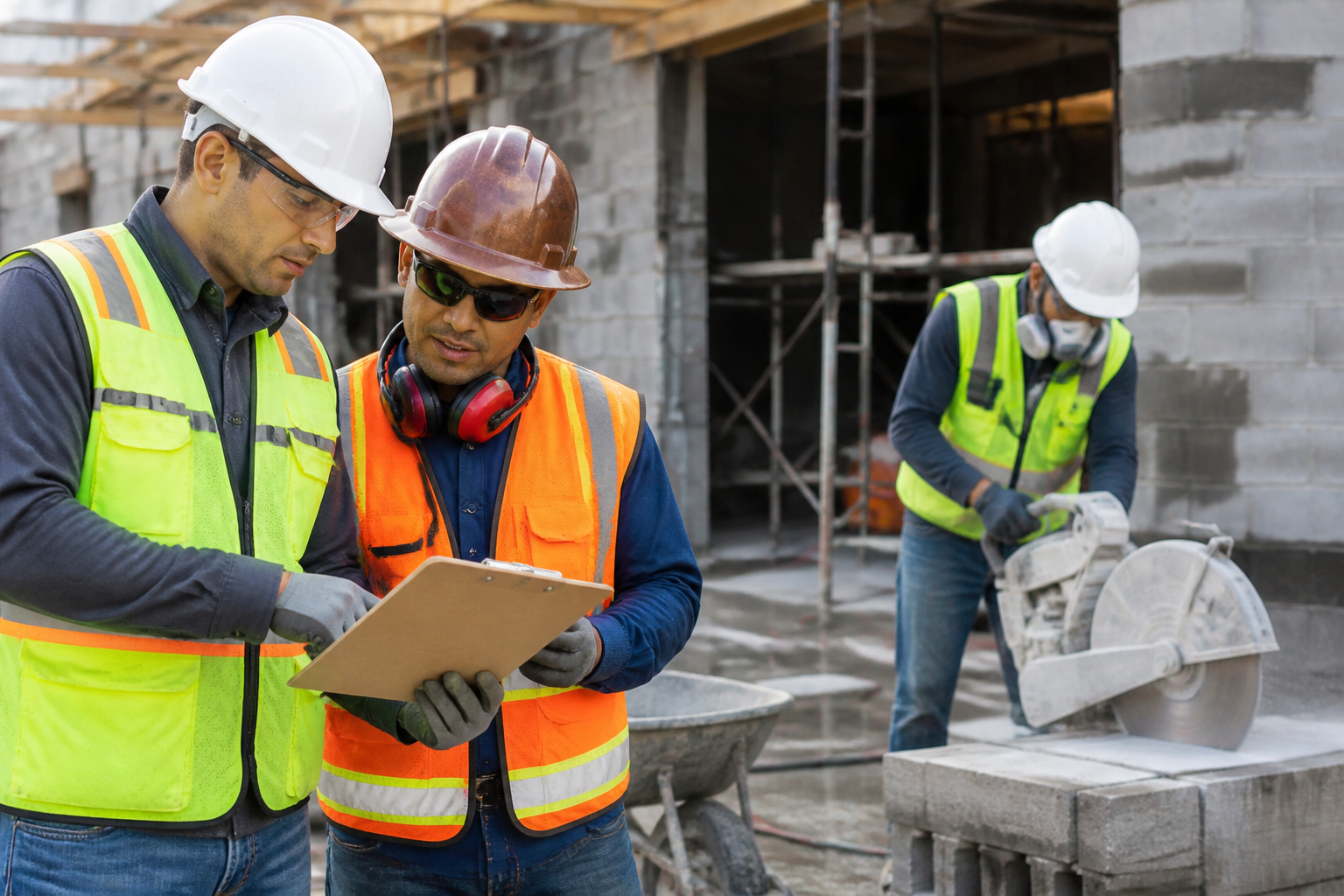
Cutting, grinding, and tuckpointing concrete or brick releases invisible, dangerous dust into the air. OSHA standard 29 CFR 1926.1153 sets strict exposure limits, but managing silica risk requires far more than providing masks and posting warning signs. For general contractors and masonry subcontractors managing bilingual crews, delivering effective respirable crystalline silica language support construction programs is essential for preventing long-term respiratory disease and avoiding severe regulatory penalties.
The High Risk of Silicosis in Concrete and Masonry Work
Respirable crystalline silica particles are roughly 100 times smaller than ordinary beach sand. When workers inhale these microscopic particles during saw cutting, jackhammering, or core drilling, the dust embeds deep in lung tissue. This causes irreversible scarring known as silicosis, which impairs lung function and increases the risk of lung cancer and chronic obstructive pulmonary disease (COPD).
While safety managers post English OSHA compliance sheets and hazard warnings, limited English proficient (LEP) workers often carry out the highest-exposure floor tasks. If a crew member cannot read the operating manual for a dust extraction system or does not understand why dry sweeping is prohibited, the entire jobsite faces airborne contamination.
Operationalizing OSHA Table 1 Controls for Bilingual Crews
OSHA Table 1 outlines specific engineering controls and work practices for common construction tasks. Relying on written English manuals or basic translations to convey these technical protocols creates major operational gaps on active jobsites.
Wet Method Verification
Water delivery systems must continuously suppress dust at the point of impact. Workers need targeted language instruction to recognize and report when water flow rates drop below required thresholds:
- Identifying clogged water nozzles on hand-held masonry saws before starting cuts.
- Understanding required water pressure for continuous suppression during floor slab sawing.
- Communicating immediately with supervisors when water supply lines freeze, kink, or disconnect.
Dust Extraction and Vacuum Shrouds
When using commercial vacuums equipped with HEPA filters for tuckpointing or surface grinding, crew members must know how to operate and maintain the equipment. Providing specialized respirable crystalline silica language support construction training ensures workers understand filter cleaning mechanisms, CFM flow rate requirements, and proper disposal of dust bags without releasing particulates.
Respirator Fit Testing and Daily User Seal Checks
Respirator compliance requires active comprehension, not just equipment distribution. Under OSHA standards, half-mask air-purifying respirators or powered air-purifying respirators (PAPRs) must fit correctly every shift.
Conducting Clear Fit Tests and Briefings
During initial fit testing and medical surveillance evaluations, language barriers can prevent workers from expressing discomfort or understanding proper mask sizing. Supervisors must ensure workers comprehend key physical checks:
- The distinction between a qualitative fit test conducted during onboarding and a daily user seal check (positive and negative pressure checks).
- Facial hair restrictions that compromise the seal between the respirator facepiece and the skin.
- Cleaning, storing, and replacing filter cartridges when breathing resistance increases or damage occurs.
When employees understand why a tight seal matters to their long-term health, daily compliance rates increase dramatically compared to enforcing rules without context.
Eliminating Dangerous Housekeeping Practices
Silica compliance often breaks down during routine jobsite cleanup. Standard practices like dry sweeping or using compressed air to clean off clothing, forms, or equipment create massive airborne dust spikes that impact surrounding trades.
Standardizing Safe Housekeeping Vocabulary
Establishing clear, shared terminology between English-speaking supervisors and Spanish-speaking crews prevents hazardous cleanup habits. Crews must be trained to use wet sweeping compounds, HEPA-filtered vacuums, or low-pressure washdown methods. Integrating tailored respirable crystalline silica language support construction vocabulary into pre-shift huddles helps supervisors verify that workers know how to clean work zones safely.
Establishing Daily Verification Protocols for Supervisors
Site superintendents and safety coordinators need practical methods to audit silica controls without relying on head nods or passive agreement during toolbox talks.
Actionable Supervisory Audits
- Equipment Demonstrations: Ask saw operators to physically demonstrate how they inspect vacuum shrouds and test water flow before starting work.
- Housekeeping Checks: Audit staging areas during mid-shift cleanups to verify that no dry sweeping or compressed air blowing is taking place.
- Respirator Audits: Perform visual inspections during shift changes to ensure half-mask respirators are stored in clean, sealed plastic bags rather than hanging open on staging poles or inside toolboxes.
Upgrade Your Jobsite Silica Compliance
Generic translation sheets and standard video modules do not change daily operational habits on concrete and masonry sites. New Heights Languages delivers customized, jobsite-specific English and Spanish workplace language training designed specifically for heavy civil, masonry, and concrete contractors. We teach your supervisors and workers the exact technical vocabulary and verification protocols needed to maintain OSHA compliance and protect crew health.
Ready to eliminate language barriers and protect your workers from silica exposure? Contact New Heights Languages today to [book a free consultation](/contact) with our industrial language specialists.
<!-- featured image alt: A masonry worker using a wet-blade concrete saw with continuous water suppression and proper respiratory protection on a commercial construction site. -->