Respirator Fit Testing LEP Workers Compliance Guide
By New Heights Languages ·
Ensure respirator fit testing LEP workers compliance in high-hazard plants with clear safety protocols and targeted workplace language training.
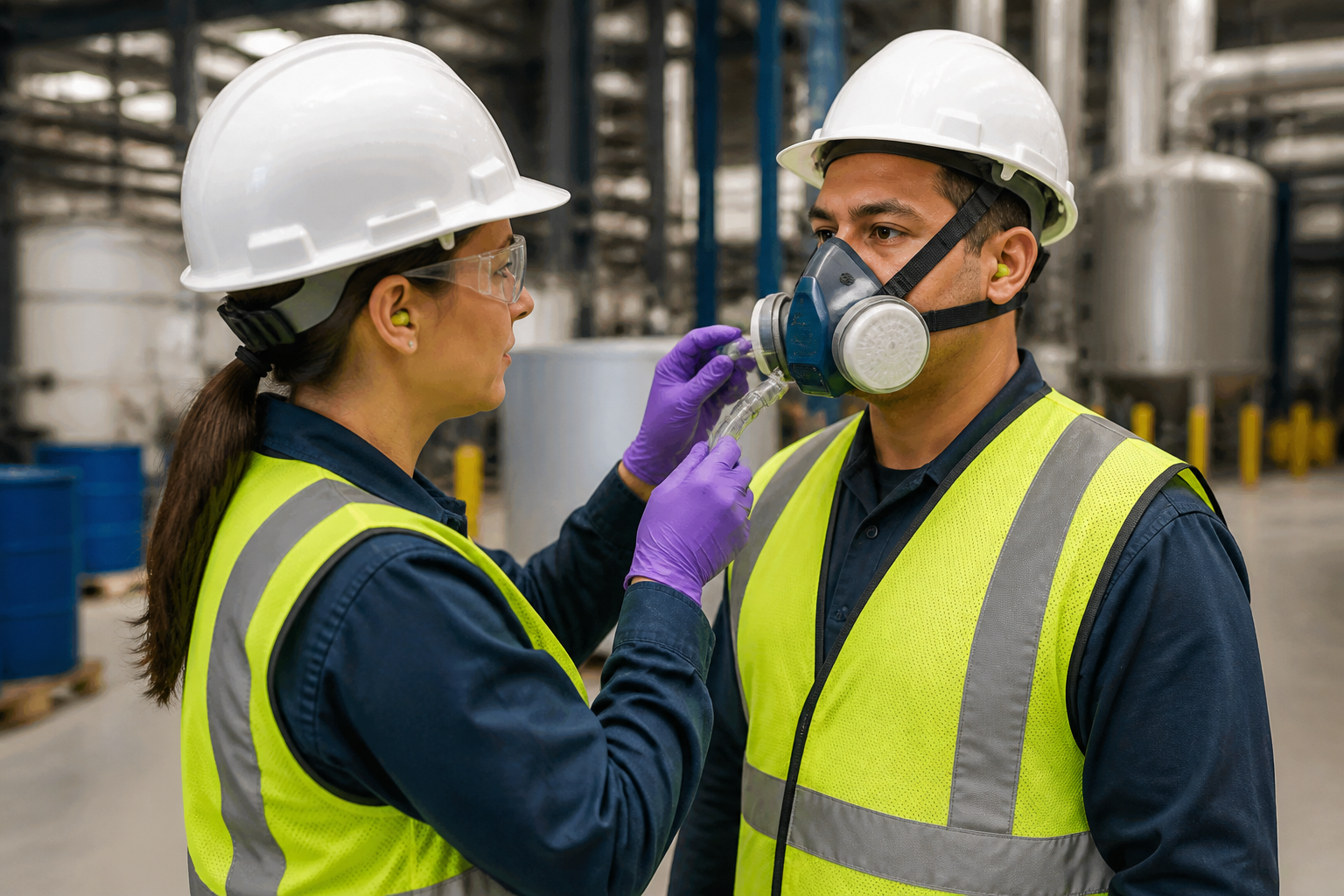
In high-hazard manufacturing plants, chemical processing facilities, and heavy industrial settings, tight-fitting respirators are the final line of defense against airborne hazards like crystalline silica, chemical vapors, and metal fumes. However, achieving consistent respirator fit testing LEP workers compliance requires far more than handing an employee a mask and handing an administrator a clip board. When limited English proficient (LEP) workers do not fully comprehend the fitting protocols, medical evaluations, or daily maintenance procedures, your plant faces immediate regulatory exposure and severe health risks.
OSHA's Respiratory Protection Standard (29 CFR 1910.134) mandates that employers ensure workers understand how to use, fit, clean, and maintain respiratory equipment. When language barriers prevent clear comprehension during testing and daily wear, seals fail, exposures occur, and compliance audits fall apart. Here is how plant managers, safety directors, and industrial hygienists can bridge the language gap to secure compliance and keep every worker safe.
Overcoming Barriers in the Mandatory OSHA Medical Evaluation
Before any employee undergoes a quantitative or qualitative fit test, they must receive medical clearance. The mandatory OSHA Respirator Medical Evaluation Questionnaire relies on self-reported symptoms, pre-existing conditions, and medical history.
Preventing False Clearance Responses
When LEP employees encounter complex medical phrasing in English, they often check "No" down the entire column because they do not understand the questions. Alternatively, they may fear that answering "Yes" to chest pain or shortness of breath will lead to termination.
Plant managers must ensure medical evaluations are administered in the worker's native language or facilitated by a qualified medical interpreter. Clear communication reassures workers that the evaluation is designed to protect their cardiovascular and respiratory health, not to evaluate their job performance.
Clarifying Medical Follow-Ups
If the evaluating healthcare professional requires a follow-up exam or spirometry testing, clear instructions must reach the employee. Workers need to know why additional testing is required and what to expect during the clinical visit, eliminating anxiety and preventing delayed clearances.
Execution of Qualitative and Quantitative Fit Testing Protocols
Conducting qualitative (Bitrex, saccharin, banana oil) or quantitative (PortaCount) fit testing requires active physical cooperation from the employee. Achieving true respirator fit testing LEP workers compliance means the technician and worker must be perfectly aligned during every phase of the test protocol.
Delivering Clear Physical Test Instructions
During a fit test, the worker must perform specific physical exercises while maintaining a tight face-to-facepiece seal. Standard test maneuvers include:
- Normal breathing and deep breathing
- Turning the head from side to side and nodding up and down
- Talking aloud (reciting the Rainbow Passage or counting down from 100)
- Grimacing or smiling (during qualitative screening)
- Bending over at the waist or jogging in place
If the technician relies solely on rapid English commands, the employee may perform the movements incorrectly, break the seal prematurely, or misinterpret the taste threshold during a qualitative test. Technicians need dual-language visual aid cards and standardized, simple action verbs to direct these exercises effectively.
Verifying Qualitative Taste Threshold Signals
During qualitative testing, workers must immediately report when they taste the challenge agent. If an LEP worker does not understand what they are supposed to taste or feels pressured to pass, they may stay silent while exposure occurs inside the hood. Pre-test instruction must clearly establish the exact physical signal or response word the worker will use the moment they detect the agent.
Daily User Seal Checks vs. Annual Fit Testing
An annual fit test pass score is meaningless if employees do not perform proper seal checks every single time they don their mask on the production floor. Establishing daily respirator fit testing LEP workers compliance requires embedding practical language into routine shift start-up procedures.
Standardizing Positive and Negative Pressure Checks
Workers must know how to execute both positive and negative pressure user seal checks before stepping into a hazardous atmosphere.
- Positive Pressure Check: Block the exhalation valve with the palm of the hand and exhale gently. The facepiece should puff out slightly without air leaking out around the edges.
- Negative Pressure Check: Cover the filter inlets or cartridges with the palms of the hands, inhale gently, and hold breath for ten seconds. The facepiece should collapse slightly inward.
Supervisors must be trained to demonstrate these checks physically while using simple, consistent vocabulary. Using standardized visual prompts on the shop floor reinforces these steps far better than text-heavy English signage.
Reporting Damaged Valves and Degraded Seals
Respirator components degrade over time. Exhalation valves crack, head straps lose elasticity, and silicone skirts harden. LEP workers must have clear, low-friction communication channels to report worn equipment to maintenance or safety personnel immediately, without fear of interrupting production.
Navigating Facial Hair Policies and Cultural Factors
OSHA standards strictly prohibit any facial hair that lies between the sealing surface of the respirator and the wearer's skin. Enforcing a strict clean-shaven policy can present sensitive cultural and operational challenges in diverse manufacturing workforces.
Explaining the Physics of the Seal
Employees often believe that a light stubble or a trimmed mustache will not affect their protection. Safety managers must explain the physical science: microscopic dust particles and gas molecules easily pass through gaps created by human hair, which is far thicker than airborne contaminants.
Consistent Enforcement Across All Shifts
Supervisors across all shifts must enforce the clean-shaven policy uniformly. When language barriers prevent supervisors from explaining why the rule exists, enforcement can feel punitive or arbitrary. Clear, respectful communication framed around health protection eliminates friction and builds a culture of shared compliance.
Build Continuous Compliance with Targeted Workplace Language Training
Paper compliance during an annual audit does not keep workers safe from industrial airborne hazards. Long-term safety requires that your supervisors, technicians, and LEP employees share a precise, functional vocabulary for equipment inspection, hazard reporting, and fit testing protocols.
New Heights Languages designs customized, on-site and remote workplace English and Spanish training programs specifically for manufacturing and industrial environments. We help your lead techs, safety coordinators, and production crews master the exact terminology needed to sustain zero-incident environments.
Ready to eliminate language barriers in your industrial hygiene and safety programs? [Book a free consultation with New Heights Languages today](/contact) to discuss customized language training tailored to your plant's operational needs.
<!-- featured image alt: An industrial hygienist conducts a respirator fit test with a manufacturing employee wearing a half-mask respirator in a chemical plant. -->