
TPM Training for ESL Operators: Autonomous Maintenance
By New Heights Languages ·
Boost equipment reliability by adapting TPM training for ESL operators. Bridge language gaps in Autonomous Maintenance and shop floor defect logging.
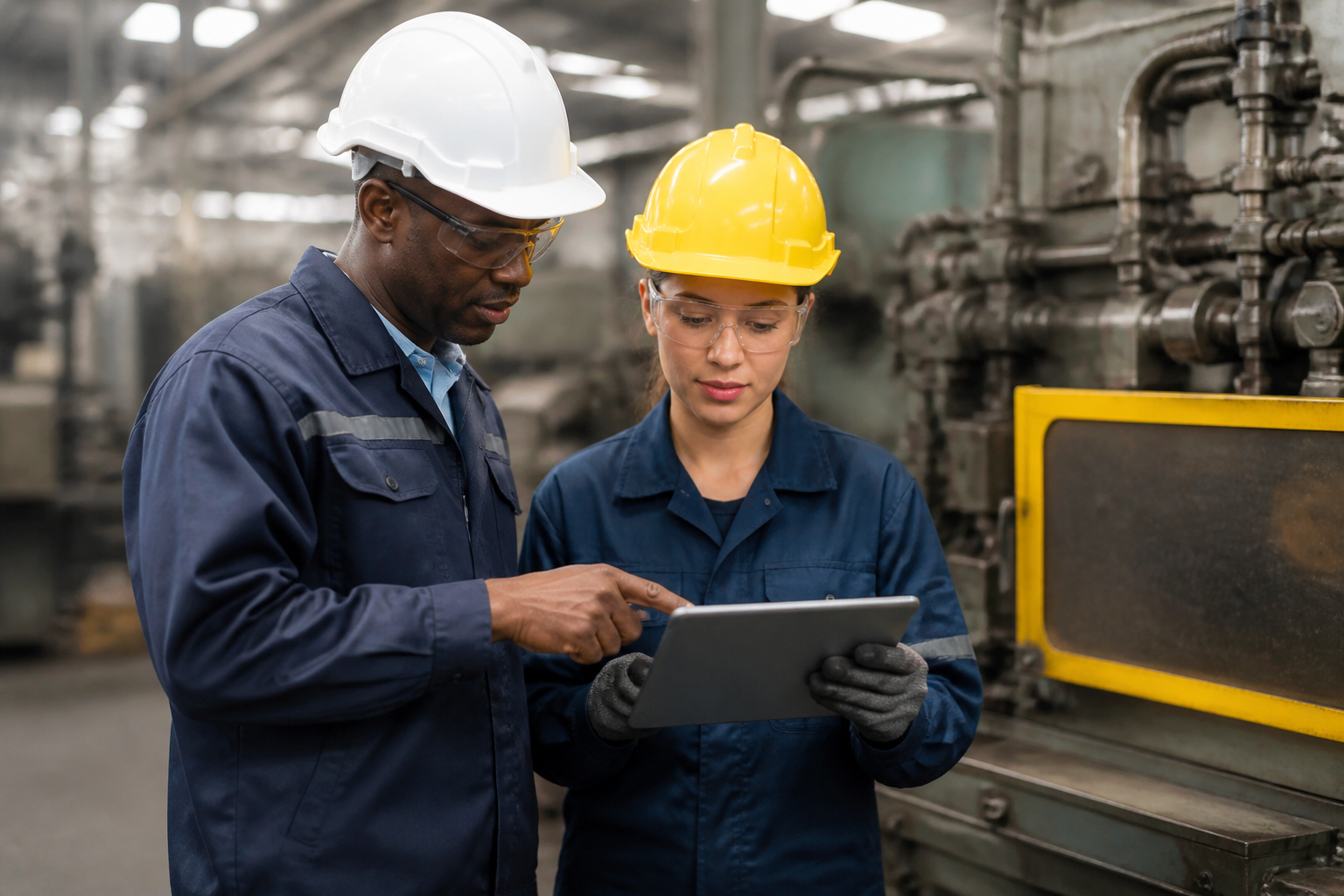
Total Productive Maintenance (TPM) relies heavily on Autonomous Maintenance—the practice of empowering machine operators to clean, inspect, lubricate, and perform basic care on their own equipment. When successful, Autonomous Maintenance reduces unplanned downtime, extends machine lifespans, and boosts Overall Equipment Effectiveness (OEE).
However, plants with non-native English speakers often struggle during TPM rollouts. Operators may understand how to run production runs perfectly, but when asked to identify root causes, log subtle equipment anomalies, or execute complex inspection checklists, communication breaks down. Implementing targeted TPM training for ESL operators ensures that language barriers do not compromise your facility's operational excellence.
The Communication Failure Points in Autonomous Maintenance
Autonomous Maintenance shifts a worker’s role from passive machine driver to active equipment owner. This transition requires higher-level descriptive language and precise documentation. In facilities employing limited English proficient (LEP) workers, TPM implementations frequently hit three major failure points.
1. Ambiguous Defect Logging
When operators notice an issue but lack the vocabulary to describe it, they often write generic notes on log sheets such as "machine bad" or "making noise." Maintenance technicians wasting time diagnosing vague complaints reduces the overall efficiency of the TPM framework.
2. Misunderstood Inspection Standards
Standard Operating Procedures (SOPs) for equipment maintenance often use passive voice or technical jargon. Terms like "check for play," "purge air lines," or "ensure proper tension" can confuse non-native speakers, leading to missed inspection steps or improper adjustments.
3. Hesitation in Red-Tagging
The red-tag process is fundamental to initial cleaning and inspection phases. Non-native English workers often hesitate to apply red tags or log abnormalities because they fear incorrectly describing the fault to maintenance engineers.
Core Vocabulary for Shop Floor TPM Success
To make TPM training for ESL operators effective, instruction must focus directly on the functional language required on the shop floor. General English classes do not teach operators how to communicate mechanical failure modes.
Workplace ESOL programs tailored for TPM focus on specific categories of technical language:
- Sensory Inspection Verbs: Differentiating between grinding, squealing, humming, vibrating, and rattling allows workers to describe sounds accurately.
- Condition Indicators: Words like frayed, cracked, leaking, scorched, misaligned, loose, and corroded give operators the exact terms needed for clear defect descriptions.
- Fluid and Pressure Descriptions: Terms such as seeping, pooling, low pressure, clogged, and foaming assist in accurate hydraulic and pneumatic checks.
- Action Directives: Clear understanding of maintenance verbs like bleed, tension, flush, grease, torque, and calibrate prevents costly operator errors.
Standardizing Tagging and Handoff Protocols
Clear communication protocols bridge the gap between machine operators and skilled maintenance teams. Standardizing how issues are logged speeds up repair times and builds worker confidence.
When implementing TPM training for ESL operators, plants should integrate structured sentence templates directly into defect tags and digital logging terminals. Instead of expecting free-form technical writing, train workers to use standardized reporting structures:
- Location + Component + Condition: "Pump 3 - Mechanical seal - Dripping coolant."
- Action Taken + Current Status: "Replaced filter - Pressure restored to 45 PSI."
- Observed Sound + Location: "Drive belt - High-pitched squeal - Needs tensioning."
- Visual Cue + Component: "Hydraulic line - Frayed outer casing - Needs replacement."
Teaching workers these structured templates eliminates grammatical anxiety and ensures maintenance technicians receive actionable data instantly.
Integrating Targeted Language Training into TPM Rollouts
Effective TPM training for ESL operators does not mean teaching generic English grammar. It requires contextualized language learning directly aligned with your plant's specific equipment, TPM documentation, and safety standards.
Aligned with Shop Floor Visuals
Instructional materials should feature real photos of your facility's machinery, actual red tags, and current digital maintenance screens. When workers practice reading actual lubrication schedules and equipment logs during training, real-world execution improves immediately.
Practical Peer-to-Peer Scenarios
Training sessions should simulate real operational handoffs. Operators practice reporting machine anomalies verbally to plant supervisors or maintenance leads in clear, structured English. Practice builds confidence for fast-paced shift transitions.
Verification through Demonstration
Assessment should rely on physical demonstration combined with verbal explanations. An operator demonstrates how to conduct a zero-energy check or perform a daily lubrication pass while explaining the steps clearly in functional English.
Build a Safer, More Efficient Shop Floor
Autonomous Maintenance succeeds only when every operator has the language tools required to inspect, identify, and report equipment issues. Bridging the English language gap on your shop floor protects valuable machinery, reduces scrap rates, and minimizes unplanned downtime.
At New Heights Languages, we design customized workplace English programs specifically tailored for manufacturing facilities executing Lean and TPM initiatives. Contact us today to [book a free consultation](/contact) and learn how we can help your operators take full ownership of equipment reliability.
<!-- featured image alt: A machine operator performing an autonomous maintenance inspection and documenting equipment conditions on a digital tablet in a manufacturing facility. -->