Workers Comp Claim Language Barrier Spanish: Fast RTW
By New Heights Languages ·
Speed up injury reporting and return-to-work protocols by overcoming the workers comp claim language barrier with Spanish-speaking employees.
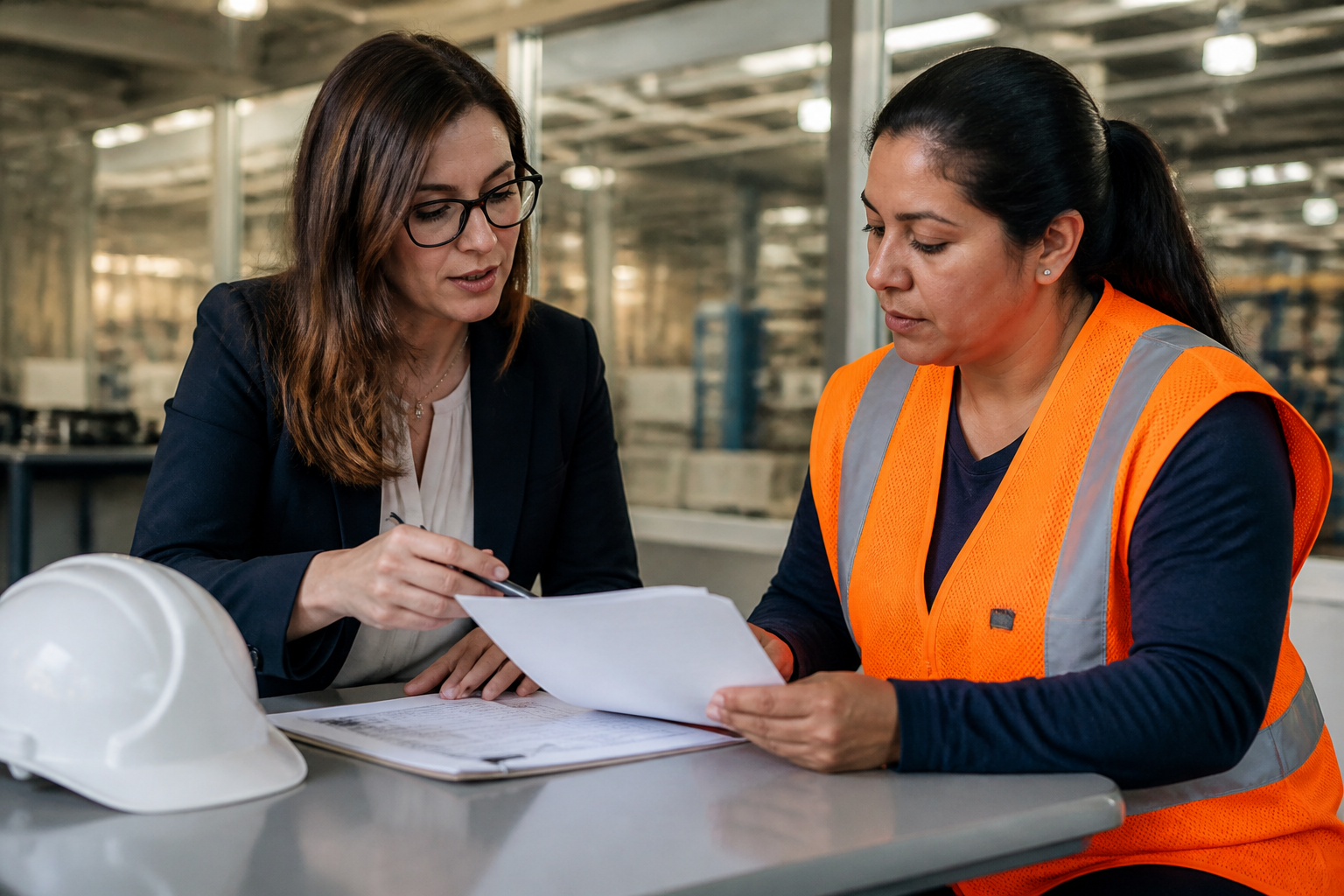
When an employee delays reporting a shop floor injury, claim costs compound quickly. Medical treatments become complicated, statutory filing windows shrink, and claim adjusters face incomplete data. For plant managers, risk directors, and HR leaders, navigating a workers comp claim language barrier spanish speaking employees encounter is one of the most common drivers of delayed injury reporting and stalled return-to-work (RTW) programs. When workers lack the English proficiency to describe how an accident occurred—or fear miscommunicating their physical symptoms to a supervisor—minor soft-tissue strains frequently turn into costly indemnity claims.
Streamlining your claims process requires removing language friction at every stage of an injury lifecycle. By implementing targeted language support during incident reporting, medical triage, and modified-duty placement, employers can protect worker health while maintaining operational control over workers' compensation costs.
The Hidden Costs of Delayed Injury Reporting
In manufacturing and construction environments, early intervention is critical to effective claims management. However, limited English proficient (LEP) workers often delay reporting injuries for several operational reasons:
- Uncertainty around terminology: Workers may not know the English terms for specific body parts, pain types (e.g., sharp, dull, throbbing), or machinery components involved in the incident.
- Fear of miscommunication: Employees often worry that their limited English will lead to misunderstandings about how the injury occurred, potentially exposing them to unfair blame.
- Administrative intimidation: Complex workers' compensation forms and insurance language create a formidable barrier for employees who are not fluent in written English.
When these factors cause a 48-hour delay in reporting, insurance carriers lose the ability to perform immediate medical triage. A simple ergonomic strain that could have been resolved with first aid and light duty turns into an unmanaged, off-site medical claim. Addressing the workers comp claim language barrier spanish speaking crews experience directly targets these early-stage delays.
Eliminating Friction in Incident Investigations
An accurate incident report is the foundation of a fair, efficient claims process. When supervisors and safety managers rely on broken translation or informal peer interpreters during an post-accident interview, key factual details get lost. This creates discrepancies between the internal safety report and the initial medical intake, raising red flags for insurance adjusters and needlessly prolonging claim reviews.
To ensure incident reports are accurate from day one, employers must standardize translation and communication protocols on the floor.
Standardize First-Notice-of-Injury Vocabulary
Ensure supervisors have clear, standardized vocabulary guides that cover immediate reporting terms. Supervisors do not need to be fully bilingual, but they do need the operational vocabulary required to execute initial injury protocols accurately.
Utilize Direct, Plain-Language Reporting Tools
Digital and paper incident forms should use clear visual cues alongside simple, direct phrasing. Avoid complex legalistic language on initial employee statement forms. Plain-language forms make it easier for employees to describe mechanics of injury without confusion.
Accelerating Return-to-Work and Light-Duty Compliance
Bringing an injured worker back to the plant on modified duty is the most effective way to control indemnity costs and preserve productivity. Yet, when managing a workers comp claim language barrier spanish speaking employees often struggle to understand modified-duty restrictions, leading to non-compliance or re-injury.
Clarifying Modified-Duty Assignments
A light-duty assignment is only effective if the employee thoroughly understands what physical actions they are permitted—and not permitted—to perform. If a doctor restricts a worker to "no pushing or pulling over 10 lbs," but the employee cannot read the written task description in English, they may default to their standard heavy-lifting duties to avoid appearing unhelpful.
Supervisors must review light-duty job descriptions verbally with the employee using clear, plain language or translated task lists, verifying comprehension before the worker steps onto the floor.
Maintaining Active Post-Injury Communication
Isolation during off-duty recovery increases claim duration. Regular, structured check-ins with injured workers in their primary language build trust, decrease litigation risks, and ensure workers adhere to physical therapy schedules.
Practical Steps to Streamline Claim Workflows
Employer-led language solutions bridge the gap between emergency response, medical care, and shop floor reintegration. Here is how risk management and HR teams can operationalize language support:
1. Establish Bilingual Injury Intake Workflows: Create pre-printed, translated employee statement guides and ensure shift leads know how to access immediate, qualified translation services during an incident.
2. Develop Modified-Duty Task Catalogs in Both Languages: Pre-define common light-duty roles—such as visual quality inspection, bench assembly, or inventory tagging—and maintain translated task breakdowns for instant deployment when restrictions are issued.
3. Train Front-Line Supervisors in Incident Response Communication: Provide supervisors with specific training on navigating initial injury communications calmly and clearly, eliminating intimidation factors for LEP workers.
4. Deliver Industry-Specific Workplace English Training: Invest in job-specific language training that equips workers with the functional English needed to report hazards, describe injuries, and follow medical restrictions effectively.
Build a Stronger Safety Culture Through Targeted Language Support
Resolving a workers comp claim language barrier spanish speaking teams encounter is not just about translating paperwork—it is about building an operational environment where workers feel confident reporting issues immediately and returning to work safely.
When your employees have the practical English skills needed to navigate workplace processes, injury reporting becomes faster, claim severity drops, and return-to-work programs operate smoothly.
To learn how New Heights Languages can help your organization implement customized, job-specific language training for your manufacturing or construction workforce, [book a free consultation with our team today](/contact).
<!-- featured image alt: A female HR leader and a Spanish-speaking manufacturing worker reviewing return-to-work documentation in a plant office. -->