Workplace Ergonomics Training Limited English Workers
By New Heights Languages ·
Standard ergonomics training fails when language barriers hide body mechanics. Learn how to adapt physical safety and posture protocols for LEP workers.
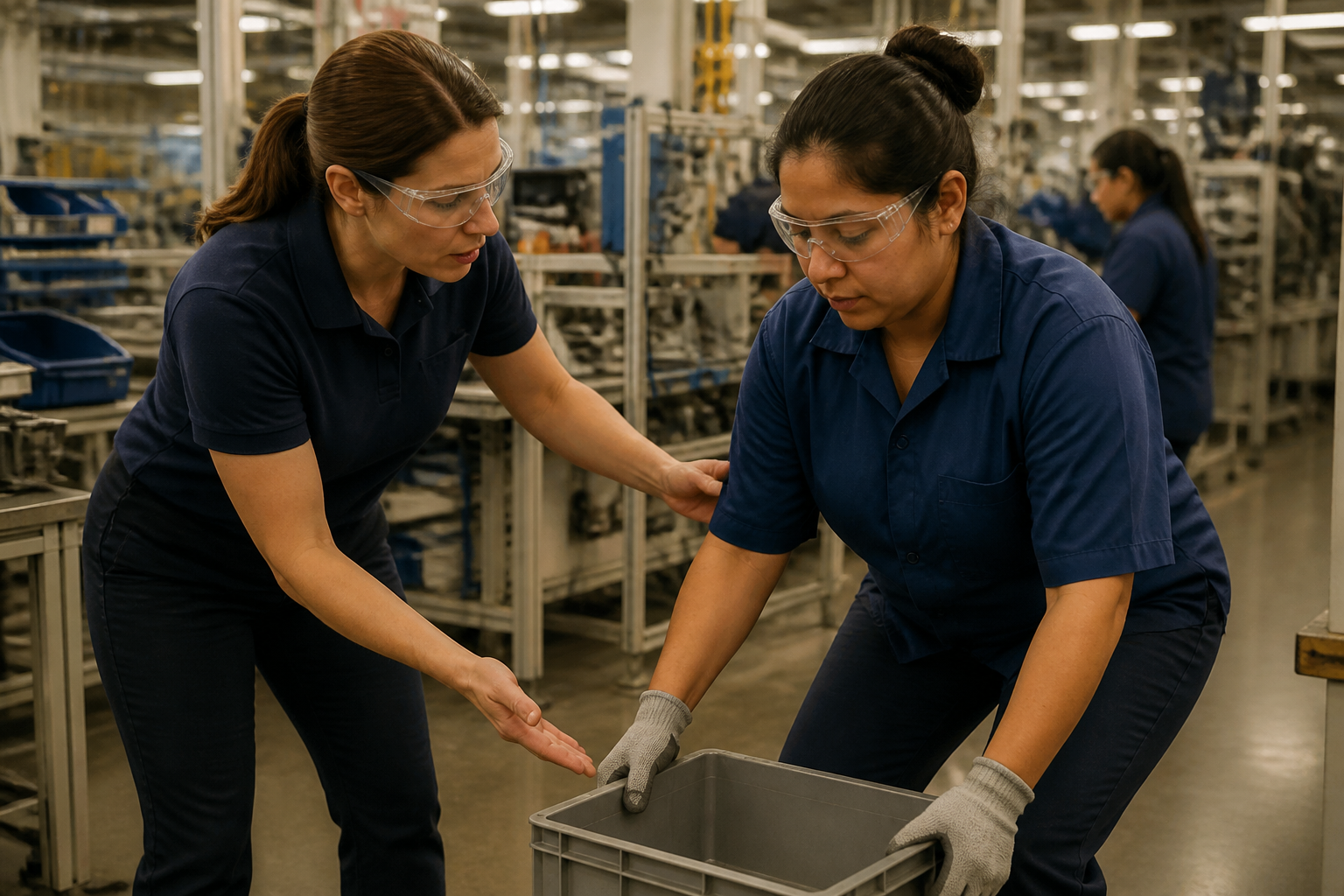
Repetitive strain injuries (RSIs) like carpal tunnel syndrome, tendonitis, and lumbar stress represent a massive portion of workers' compensation claims in high-velocity manufacturing and assembly environments. While safety directors spend substantial budget dollars on standard video modules and poster campaigns, these initiatives frequently fall short when applied to a multilingual workforce. Effective workplace ergonomics training limited English workers can understand requires more than translated slides—it demands functional vocabulary, active physical feedback loops, and actionable floor communication.
The Flaw in Static Ergonomics Presentations
Standard ergonomics sessions rely heavily on complex medical terms and abstract physics concepts. Terms like "flexion," "neutral wrist alignment," "tactile feedback," and "static exertion" rarely translate cleanly through basic translation tools or generic slide decks.
The "Head Nod" Traps Safety Audits
When non-native English speaking operators attend annual safety refresher courses, they often nod in agreement out of respect or compliance. However, nodding does not equal comprehension. If a line worker does not understand what a "neutral joint position" actually feels like—or how to articulate joint fatigue—they will continue using high-risk motions until an acute injury occurs.
Misinterpreting Pain vs. Fatigue
In many cultures and work environments, reporting minor discomfort is seen as complaining or a sign of weakness. Without explicit language training that normalizes reporting early warning signs, workers often suppress symptoms until severe nerve damage or chronic inflammation develops.
Why Language Barriers Delay Early RSI Detection
Preventing musculoskeletal disorders (MSDs) relies entirely on early reporting. When operators identify slight numbness or tightness during week one of a repetitive task, supervisors can adjust workstation height, rotate shift tasks, or modify tool grips before a recordable injury occurs.
Missing Vocabulary for Specific Physical Symptoms
When limited English employees experience early strain, they frequently lack the targeted English phrases required to explain their physical symptoms. Expressing the difference between a "sharp pain," a "dull ache," "tingling," or "stiffness" requires precise workplace language skills.
The High Cost of Late-Stage Claims
When language barriers keep workers silent during the early stages of tissue inflammation, the result is predictable: delayed medical intervention, higher severity OSHA recordables, extended lost-time days, and expensive workers' compensation claims. Implementing customized workplace ergonomics training limited English workers can comfortably apply on the shop floor directly mitigates these escalated costs.
Building Functional Ergonomic English on the Shop Floor
To fix ergonomic training breakdowns, plant management and HR teams must merge physical instruction with practical workplace English training. Safety concepts must be tied directly to daily shift routines and tool handling.
Key Ergonomic Terms to Standardize
Safety leads and shift supervisors should focus on a core set of plain-language terms that bridge the gap between biomechanical safety and daily production:
- "Neutral Wrist" vs. "Bent Wrist": Teaching workers to visually identify and verbally check their wrist angle during high-speed packing or sorting.
- "Micro-break": Defining brief 5-to-10-second posture resets between heavy cycles, ensuring operators know these are encouraged safety habits rather than unauthorized downtime.
- "Pinch Grip" vs. "Power Grip": Explaining how holding small parts exerts disproportionate mechanical strain on finger tendons compared to full-hand grips.
- "Numbness / Tingling / Burning": Direct teaching of symptom words so operators can accurately report early nerve compression to shift leads or occupational health nurses.
- "Ask for a Two-Person Lift": Standardizing clear verbal prompts for oversized or heavy components across mixed-language crews.
Peer-to-Peer Ergonomic Audits
Once basic terms are established, pair native English supervisors with limited English workers for brief, 2-minute check-ins during active shifts. Demonstrating correct mechanics while speaking simplified, standard phrases locks in muscle memory far better than annual classroom presentations.
Tailoring Ergonomics to Manufacturing and Construction Roles
Ergonomics is not a one-size-fits-all discipline. A worker on a meat processing line faces vastly different physical demands than an employee operating an injection molding machine or tying rebar on a construction site.
High-Speed Assembly and Packing Lines
On rapid packing lines, repetitive upper extremity motions dominate. Ergonomics training must teach workers how to request adjustments to conveyor speeds, table heights, or bin placement using concise, confident English phrasing.
Heavy Material Handling and Staging
In warehouse and fabrication settings, spinal load and shoulder impingement are the primary risks. Training should coach workers on standard verbal calls used when spotters and operators collaborate to hoist heavy material using overhead cranes or forklifts.
Correcting Tool Usage Mechanics
When workers use pneumatic drivers or hand tools incorrectly due to misunderstood initial instructions, strain builds rapidly. Tailored workplace language instruction ensures operators understand how tool torque affects hand-arm vibration and how to request counter-balance supports.
Upgrading Your Safety Program with New Heights Languages
Generic safety videos will not reduce repetitive strain injuries if your crew cannot understand or execute the physical instructions on the floor. Upgrading your workplace ergonomics training limited English workers rely on protects your staff, lowers OSHA recordable rates, and sustains daily operational throughput.
At New Heights Languages, we build customized, site-specific workplace ESOL and Spanish training programs tailored to your exact manufacturing or construction operations. We turn complex safety protocols into practical, daily spoken language that keeps your floor safer and more productive.
Contact us today to [book a free consultation](/contact) and evaluate your facility's safety communication needs.
<!-- featured image alt: An ergonomics specialist demonstrating proper lifting posture and wrist alignment to an assembly line worker in a manufacturing plant. -->