The Cost of a Workplace Safety Language Barrier
By New Heights Languages ·
Standard safety training fails when non-English workers can't understand it. Discover why translation isn't enough and how to fix safety language gaps.
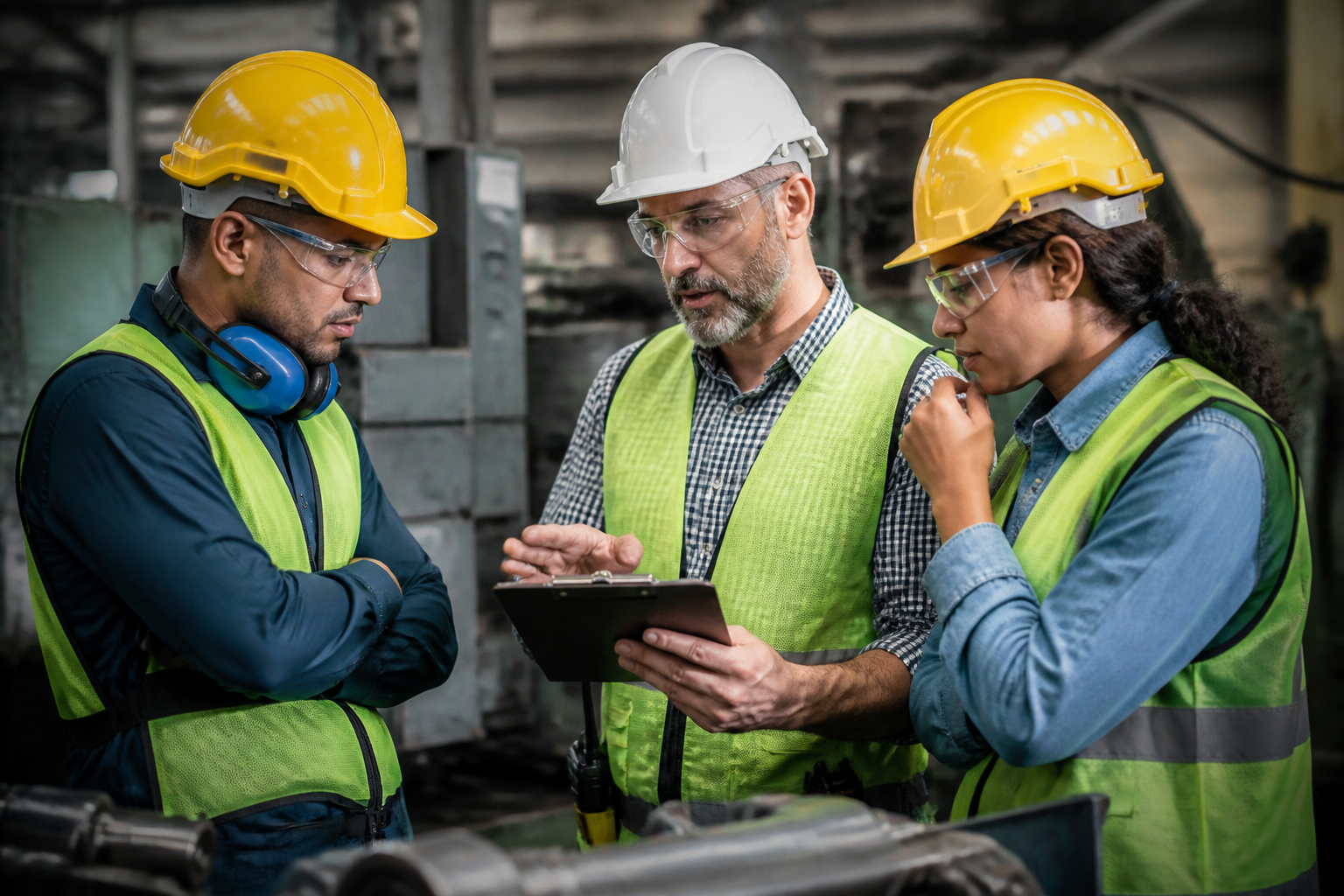
Every year, manufacturing plants and construction sites invest heavily in translated safety manuals, video orientation modules, and signed compliance forms. On paper, these initiatives satisfy regulatory requirements and demonstrate due diligence. On the floor or on the job site, however, safety managers still face unexplained machine damage, avoidable injuries, and underreported near-misses. The root cause is rarely a lack of effort or care from leadership. More often, it is an unaddressed workplace safety language barrier that renders expensive training programs completely ineffective.
When non-English speaking workers or limited-English proficient employees do not fully understand safety training, they adapt by relying on non-verbal cues, visual guesswork, or translated summaries from coworkers. This creates a dangerous illusion of safety compliance. Understanding why standard safety training fails for non-native speakers is the first step toward building a genuinely secure working environment.
The Illusion of Compliance: Why Nodding Isn't Understanding
During safety onboarding, it is common for supervisors to present slides or hand out printed handbooks, ask if everyone understands, and accept a round of nods as confirmation. In many working cultures, nodding does not mean "I fully understand the instruction." Instead, it often signifies respect for authority, an acknowledgment that the supervisor is speaking, or a desire not to hold up the rest of the team.
The Fear of Speaking Up
Workers who are hesitant in their English skills rarely raise their hands to stop a presentation or ask for clarification in front of their peers. They may fear appearing unqualified, frustrating their manager, or risking their employment. As a result, critical safety nuances are lost before the employee ever steps onto the shop floor or scaffold.
Over-Reliance on Unofficial Translators
When formal training materials are not clearly understood, crews default to using designated "bilingual buddies." While peer translation helps in a pinch, relying on non-certified co-workers to deliver technical safety information is hazardous. The informal translator may misunderstand specialized concepts themselves, skip over vital warnings to save time, or summarize complex lockout/tagout procedures down to simple, unsafe commands like "just don't touch that button."
Why Direct Translation Falls Short in Operations
Many employers attempt to eliminate language gaps by running standard training documents through automated translation software or hiring general translation agencies. While well-intentioned, simple text translation rarely solves the workplace safety language barrier because safety communication relies heavily on operational context and technical vocabulary.
Technical Jargon and Local Terminology
Direct translations frequently fail when handling industry-specific terminology. Terms like "rigging," "flash point," "shear point," or "pinch hazard" do not always have direct, single-word equivalents in other languages. If a translation service converts these terms literally, the resulting sentence can sound confusing or completely nonsensical to an employee working on an active production line.
Written Documents vs. Spoken Execution
Many workers possess basic conversational English skills or functional literacy in their native language, but struggle to digest dense, text-heavy legal disclaimers and safety manuals. Training that relies solely on text reading fails to build the real-time, oral command of English required during an fast-moving operational emergency.
High-Risk Scenarios Caused by Language Barriers
When communication breaks down, everyday site activities quickly turn into high-stakes hazards. A persistent workplace safety language barrier directly contributes to severe incidents across several key areas:
- Lockout/Tagout (LOTO) Protocols: An employee may recognize the physical lock on a breaker box but miss the spoken instruction explaining why a specific machine is tagged out, leading to unintended equipment re-energization.
- Chemical Handling and SDS Data: Workers may misread label warnings or fail to understand spoken directions regarding proper personal protective equipment (PPE) required for specific solvents, resulting in chemical burns or respiratory exposure.
- Heavy Machinery and Staging: On construction sites or busy loading docks, verbal warnings like "heads up," "stand clear," or "swing radius" must be processed instantly. A split-second delay in comprehending a supervisor's shouted command can lead to catastrophic struck-by injuries.
- Emergency Response and Evacuations: During a fire, toxic spill, or structural emergency, panic sets in. If workers cannot understand audible alarm codes or verbal site instructions, evacuation routes become congested and dangerous.
- Near-Miss Reporting: If employees lack the specific vocabulary needed to explain a mechanical malfunction or a close call, they simply will not report it. Management loses vital visibility into hazards before an actual injury occurs.
Moving Beyond One-Time Translated Orientation
To make safety training stick, companies must treat language acquisition as a core operational skill rather than a one-time HR check-box. Translating a slide deck once a year does not change daily habits on the factory floor. Continuous, site-specific language instruction bridges the gap between written policy and real-world execution.
Empowering Frontline Supervisors
Supervisors bear the daily burden of safety enforcement. When supervisors cannot communicate directly with their crews, they struggle to conduct effective pre-shift huddles or tool-time safety talks. Equipping supervisors with basic operational Spanish—or providing workers with targeted, job-specific English training—restores clear, direct lines of command.
Contextual, Job-Specific Language Instruction
Generic language courses that teach everyday conversational phrases do not prepare employees for hazardous work environments. Effective workplace training focuses exclusively on the high-frequency vocabulary, equipment names, safety commands, and reporting phrases used inside your specific facility or job site.
Practical Steps to Break the Safety Language Barrier
If you suspect that language gaps are creating safety risks in your organization, take proactive steps to restructure your communication approach:
1. Audit Your High-Hazard Work Areas: Identify the processes where miscommunication carries the highest risk of injury or downtime (e.g., machine maintenance, material handling, high-voltage zones).
2. Verify Comprehension Practically: Replace verbal asks like "Does everyone understand?" with hands-on demonstrations. Ask the employee to walk you through the procedure and explain the safety risks in their own words.
3. Standardize Critical Commands: Establish a concise list of short, mandatory safety terms and visual hand signals that every worker and supervisor must know, regardless of native language.
4. Implement On-Site ESOL and Practical Spanish Training: Provide structured, job-aligned language instruction directly tailored to your site's operational workflows and safety standards.
Protect Your Workforce with Practical Language Training
Safety compliance forms mean nothing if your team cannot execute protocols under pressure. Eliminating the workplace safety language barrier requires targeted, industry-focused language training that gives your employees the communication tools they need to stay safe on the job.
At New Heights Languages, we design customized workplace English (ESOL) and practical Spanish programs specifically for manufacturing plants and construction sites. We help your workforce master the exact vocabulary, safety protocols, and operational commands used in your business.
Ready to build a safer, fully connected workforce? [Book a free consultation with our team today](/contact) to discuss your site's unique language training needs.
<!-- featured image alt: A construction supervisor in a hard hat reviewing safety protocols with two manufacturing workers on a busy factory floor. -->