Bilingual Safety Signage That Cuts Plant Incidents
By New Heights Languages ·
Learn how to design, place, and audit bilingual safety signage in your plant to reduce incidents and protect limited English proficient workers.
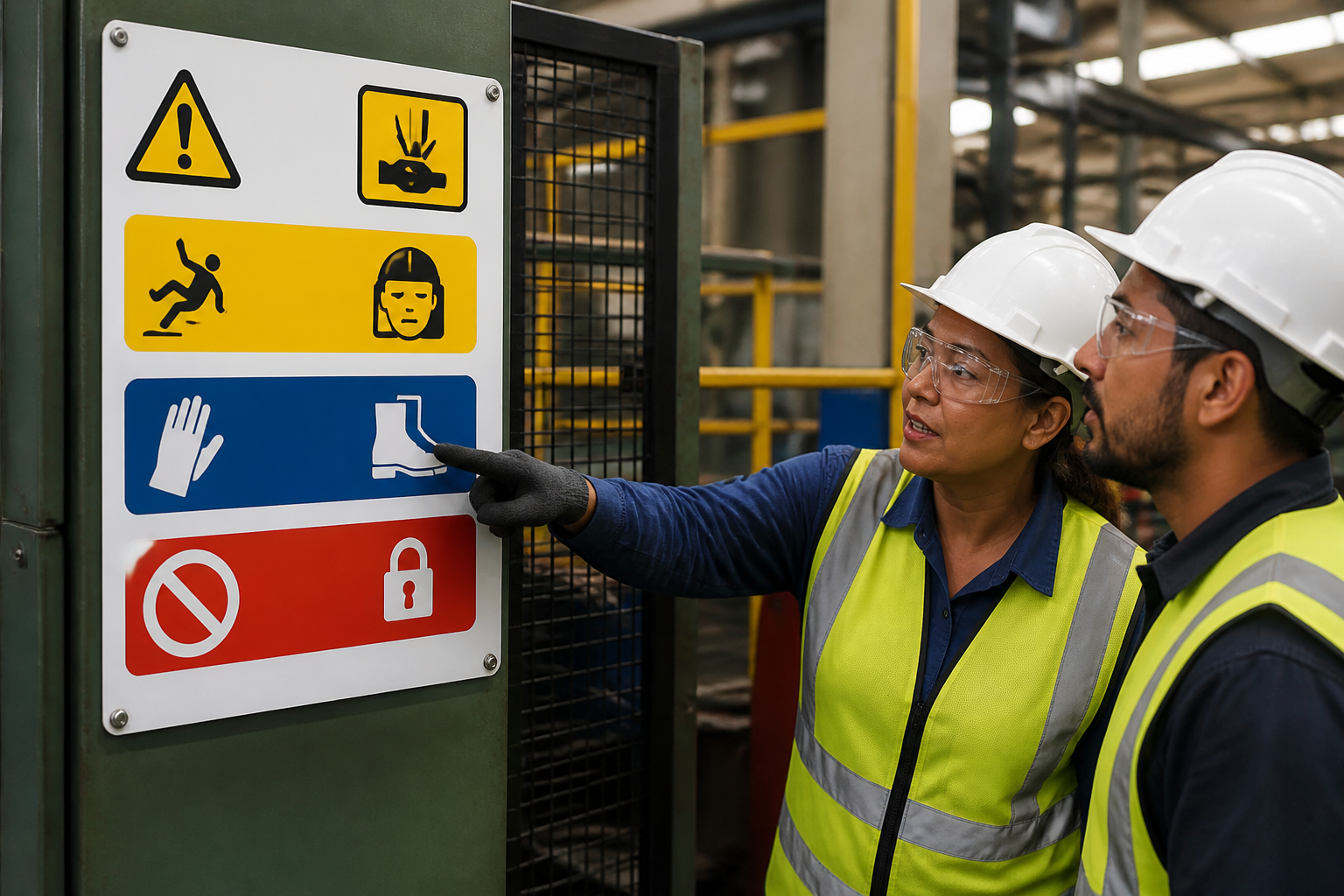
Walking through a manufacturing plant or active construction site, you often see warning placards attached to heavy machinery, chemical storage units, or high-voltage panels. However, if your frontline workforce includes limited English proficient (LEP) employees, simply translating English text word-for-word onto a sign rarely prevents accidents. Implementing well-designed bilingual safety signage is an essential operational step toward eliminating near-misses and serious injuries on the floor.
Signs are only effective if your crew can read, understand, and act upon them in a fraction of a second. When signage is poorly translated, crowded with text, or placed incorrectly, it becomes visual noise. To protect your workers and maintain operational continuity, management must approach plant signage with the same engineering precision used for safety guards and lockout/tagout procedures.
Why Literal Translations Fail on the Plant Floor
Translating safety warnings is not as simple as running text through digital translation tools. Factory environments contain specialized machinery, unique hazards, and industry-specific terminology that software often misinterprets.
The Danger of Direct Machine Translation
Machine translation tools often select literal word meanings rather than practical field terms. For instance, translating "Lockout/Tagout" literally into Spanish can yield phrasing that sounds like locking a door rather than isolating an energy source. When bilingual safety signage features awkward or incorrect phrasing, native Spanish-speaking workers may ignore the sign entirely or misinterpret critical safety commands.
Regional Dialects and Technical Vocabulary
Your Spanish-speaking workers may come from Mexico, Central America, or South America. Technical terms for machinery components, personal protective equipment (PPE), and hazards often vary by region. Using broad, internationally recognized terminology—rather than regional jargon—ensures every crew member understands the message immediately.
Design Principles for High-Impact Signage
Effective safety signs communicate hazard severity instantly. When designing dual-language signs, visual structure and standardized formatting are just as important as the text itself.
Prioritize Standardized ISO Pictograms
Graphics should do the heavy lifting. ANSI Z535 and ISO 7010 pictograms provide universal visual cues that transcend language barriers. A clear graphic of a hand entering a pinch point or eye exposure to chemicals communicates immediate danger before a worker reads a single word. Place the universal icon at the top or left of the sign, making it the primary focal point.
Establish Clear Typographic Hierarchy
Avoid stacking long blocks of English and Spanish text together in identical font sizes. This creates visual clutter, making the sign difficult to process during a fast-paced shift. Follow these formatting guidelines for clear dual-language layouts:
- Header Signal Words: Keep standard safety signal words prominent at the top (e.g., DANGER / PELIGRO or WARNING / ADVERTENCIA).
- Primary Message: Place the primary hazard description in English and Spanish side-by-side or stacked cleanly using distinct formatting (such as bolding or color variation).
- Text-to-Visual Ratio: Limit text to short, action-oriented phrases (e.g., "Eye Protection Required" / "Uso Obligatorio de Gafas de Protección").
Strategic Placement Across Your Facility
Even a perfectly designed sign fails if workers do not see it at the exact moment a decision must be made. Placement strategy dictates whether bilingual safety signage actually reduces floor incidents.
Point-of-Hazard Visibility
Place signs directly at the point of action, not ten feet away on a hallway wall. If a machine requires ear protection, the notice must be visible before the worker reaches for the start switch. If a conveyor belt presents a crush hazard, place the placard right at the intake zone.
Lighting, Height, and Sightlines
Take physical floor conditions into account when mounting physical placards:
- Eye-Level Mounting: Mount placards between 45 and 66 inches from the floor so they fall directly into the natural line of sight.
- Environmental Factors: Ensure adequate lighting around critical safety signs. In areas with airborne dust, oil mist, or heavy vibrations, choose durable laminated or metal signage that stays clean and readable.
- Obstruction Audits: Check that forklift traffic, stacked pallets, or open access doors do not block key hazard warnings.
Auditing Plant Signage for Real Comprehension
Installing physical placards is only half the battle. To ensure your facility relies on functional communication rather than false security, management must audit how workers interact with plant signs.
Conduct Floor Walk-Throughs with Supervisors
During routine safety walks, supervisors should ask frontline employees simple, non-punitive questions about nearby signs. Ask a worker to explain what a specific icon means or what action they must take when approaching a zone with a dual-language warning placard. If workers hesitate or give conflicting answers, the sign needs redesigning or relocation.
Identify Gaps Between Written Signs and Spoken Commands
Signage sets the standard, but daily verbal communication enforces it. If your physical placards are bilingual but your leads only deliver verbal safety warnings in English, a dangerous gap remains. Ensuring your bilingual safety signage aligns with daily spoken routines on the floor creates a cohesive safety culture.
Reinforcing Physical Signage with Targeted Training
While visual cues and bilingual placards reduce initial errors, physical signs cannot replace clear, functional communication skills on the floor. Workers must be able to ask questions about hazards, report near-misses, and understand complex emergency procedures that cannot fit on a wall mount.
Combining clear site visuals with customized language training equips your crew to navigate hazards safely and efficiently. At New Heights Languages, we help manufacturers and construction companies bridge language gaps on the shop floor with practical, industry-specific English and Spanish programs.
Ready to build a safer, more connected workforce? [Book a free consultation with our team](/contact) to discuss customized language training solutions tailored to your plant's operational goals.
<!-- featured image alt: A close-up view of a clear bilingual safety sign mounted on a manufacturing plant floor near industrial machinery. -->