Bilingual Shift Handoff Standardization Guide
By New Heights Languages ·
Learn how bilingual shift handoff standardization between English and Spanish lead techs reduces scrap rates, prevents downtime, and improves safety.
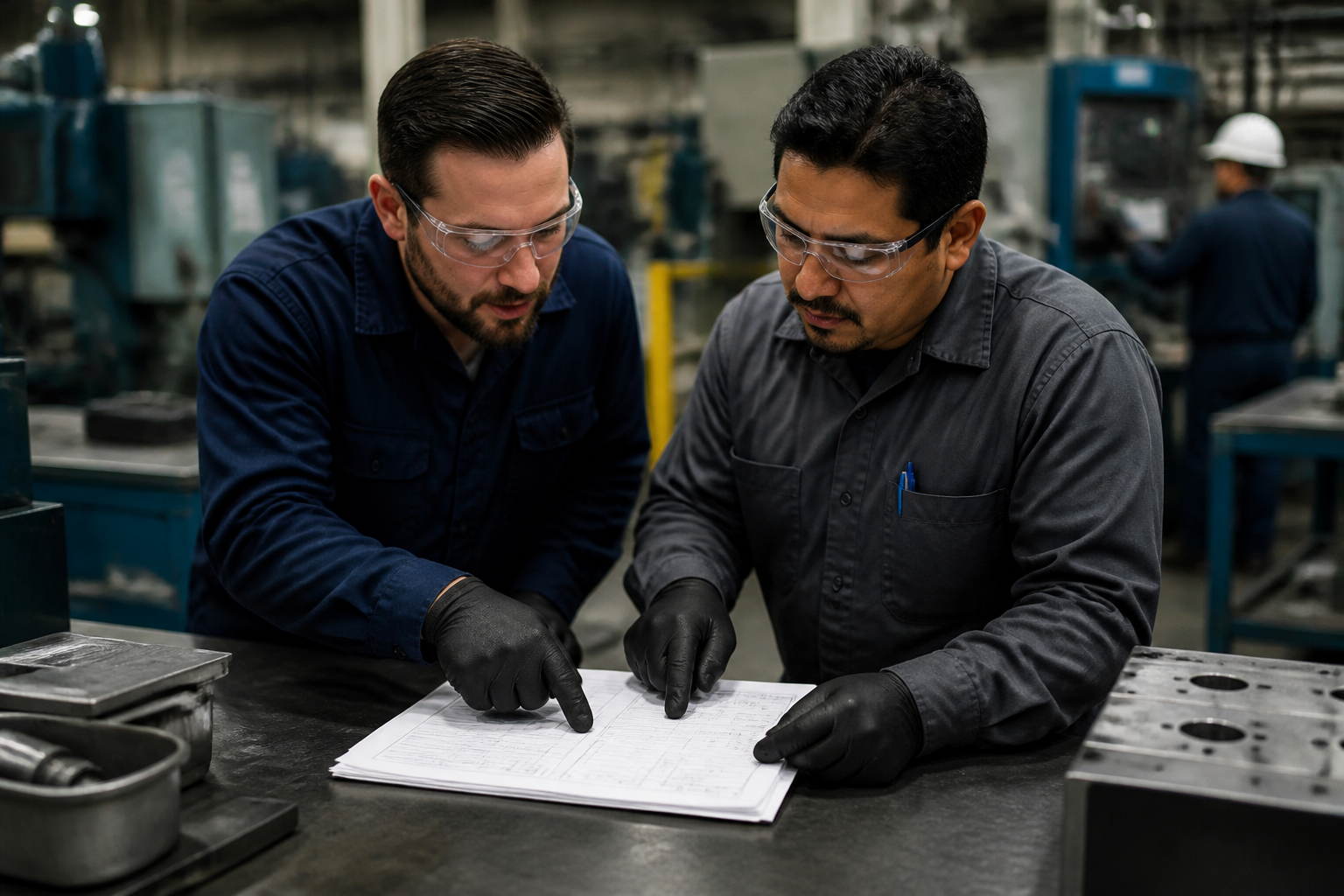
When shift transitions rely on informal verbal updates between lead technicians who speak different primary languages, operational details get lost in translation. A outgoing English-speaking lead tech might tell an incoming Spanish-speaking lead tech that a packaging line had intermittent sensor faults during the last two hours of the shift. The incoming lead nods to acknowledge the conversation, but without precise language alignment or a structured process, the incoming crew spends their first hour troubleshooting a problem that was already diagnosed. Implementing bilingual shift handoff standardization across your lead technicians eliminates these miscommunications, protects equipment uptime, and ensures continuous quality control.
In high-volume manufacturing and heavy industrial environments, the handoff between shifts is one of the highest-risk operational windows. Establishing a repeatable, dual-language protocol allows plant managers to transform informal shift changes into tight, accountable operational transfers.
The Real Cost of Unstructured Shift Handoffs
When lead technicians lack a shared framework for shift changes, plant operations suffer in predictable ways. Communication breakdowns during handoffs rarely result in total stoppage immediately; instead, they create compounding inefficiencies throughout the incoming shift.
Scrap Spikes During Shift Startups
The first hour of a shift often sees elevated scrap rates. If the outgoing lead fails to communicate minor adjustments made to machine tolerances, raw material batch variances, or temperature settings, the incoming team operates on outdated parameters until defect trends appear on the quality dashboard.
Repeat Mechanical Troubleshooting
Without clear bilingual documentation, maintenance issues are frequently re-diagnosed. An English-speaking maintenance lead might perform a temporary fix on a conveyor motor during the second shift. If the third-shift Spanish-speaking lead tech isn't given a precise summary of what was adjusted and why, they may duplicate the diagnostic work or inadvertently reverse the workaround.
Misaligned Safety Precautions
Safety hazards discovered late in a shift must be explicitly communicated. Lockout/tagout status updates, modified containment areas, or temporary bypasses on auxiliary equipment require zero ambiguity during the shift swap.
Core Principles of Bilingual Shift Handoff Standardization
The core objective of bilingual shift handoff standardization is to eliminate guesswork by combining visual logs, standardized technical terminology, and structured verbal confirmation protocols.
Dual-Language Visual Shift Boards
Physical or digital shift handoff boards should feature standardized headers in both English and Spanish. Rather than relying on open-ended narrative notes, shift boards should use structured fields:
- Machine Status / Estado de la Maquinaria: Operational, Degraded, or Down.
- Active Mechanical Issues / Problemas Mecánicos Activos: Specific component and defect code.
- Target vs. Actual Production / Producción Meta vs. Real: Numerical breakdown.
- Quality Alerts / Alertas de Calidad: Critical tolerance checks required for the incoming shift.
- Material Lot Changes / Cambios de Lote de Material: Raw material identifiers.
Standardized Technical Nomenclature
Operational terms must be consistent across the entire facility. If English leads refer to a component as a "jam" while Spanish leads call it an "obstrucción" or "bloqueo," confusion builds over time. Creating a cross-referenced plant glossary ensures that both English and Spanish lead techs use standardized vocabulary during shift exchanges.
Designing a 15-Minute Handoff Protocol
Structure prevents operational drift. A standard 15-minute overlap between outgoing and incoming lead technicians provides sufficient time for thorough alignment without bloating labor costs.
Minute 0–5: Independent Review of the Dual-Language Log
The incoming lead tech arrives five minutes early to review the visual shift board and production log. Because the form uses standardized, dual-language fields, the incoming lead absorbs critical metrics and alerts before speaking with the outgoing lead.
Minute 5–10: Joint Floor Walkthrough
The outgoing and incoming leads walk the primary production line together. This active step removes reliance on pure verbal descriptions. By standing at the machine, the outgoing lead can physically point to recent adjustments, wear points, or sensor modifications.
Minute 10–15: Structured Verification and Sign-Off
Before the outgoing lead departs, both techs complete a brief verbal verification. Instead of asking open-ended questions like "Is everything good?" or closed questions like "Did you understand?", the incoming lead tech summarizes the primary focus areas for the shift in English or through standardized bilingual prompts.
Developing Technical English Skills for Spanish-Speaking Leads
Standardized forms and processes provide the structure, but practical language skills give lead technicians the confidence to execute handoffs efficiently. Upskilling Spanish-speaking lead techs in targeted, job-specific English accelerates shift transfers and strengthens leadership across the floor.
Focus on High-Impact Maintenance Terminology
Language training for lead techs should not focus on general conversational grammar. Instead, it must target the precise phrasing required on your shop floor. Lead techs need to confidently communicate root causes, equipment symptoms, and material specifications.
Phrases like "intermittent fault," "bearing wear," "hydraulic pressure drop," and "calibration offset" form the bedrock of effective shift reports. Mastering this vocabulary enables Spanish-speaking leads to write clear logs and brief English-speaking maintenance engineers or plant managers directly.
Training English Leads in Plain Language Communication
Standardization is a two-way street. English-speaking lead technicians must be trained to avoid idioms, regional slang, and overly fast speech during handoffs. Phrases like "it's acting squirrelly" or "we took a shortcut on line three" create unnecessary confusion. Teaching English leads to use direct, active voice ensures that key messages are received accurately every time.
Measuring the Impact of Standardized Handoffs
By embedding bilingual shift handoff standardization into your standard operating procedures, you can track clear improvements in plant performance:
- Reduced Startup Downtime: Track the time required for incoming shifts to reach full line speed.
- Decreased First-Hour Scrap: Measure defect rates during the first 60 minutes of each shift.
- Faster Maintenance Resolution: Monitor repeat work orders caused by communication gaps between shifts.
- Improved Employee Engagement: Gauge confidence levels among lead technicians regarding shift readiness and communication clarity.
Standardizing shift handoffs removes friction between shift teams, protects capital equipment, and drives operational consistency across your entire facility.
Build a Custom Language Program for Your Plant
At New Heights Languages, we design customized, onsite and online workplace language courses specifically for manufacturing and construction environments. We help your Spanish-speaking lead techs master targeted technical English while equipping your English-speaking supervisors with actionable communication strategies.
[Book a free consultation today](/contact) to discuss how we can help your facility standardize shift handoffs, improve floor safety, and boost productivity.
<!-- featured image alt: Two lead technicians, one English-speaking and one Spanish-speaking, reviewing a dual-language shift handoff log together on a manufacturing shop floor. -->