Overcoming Construction Subcontractor Language Barriers
By New Heights Languages ·
Manage construction subcontractor language barriers on job sites. Learn practical ways GCs can bridge trade language gaps and protect project timelines.
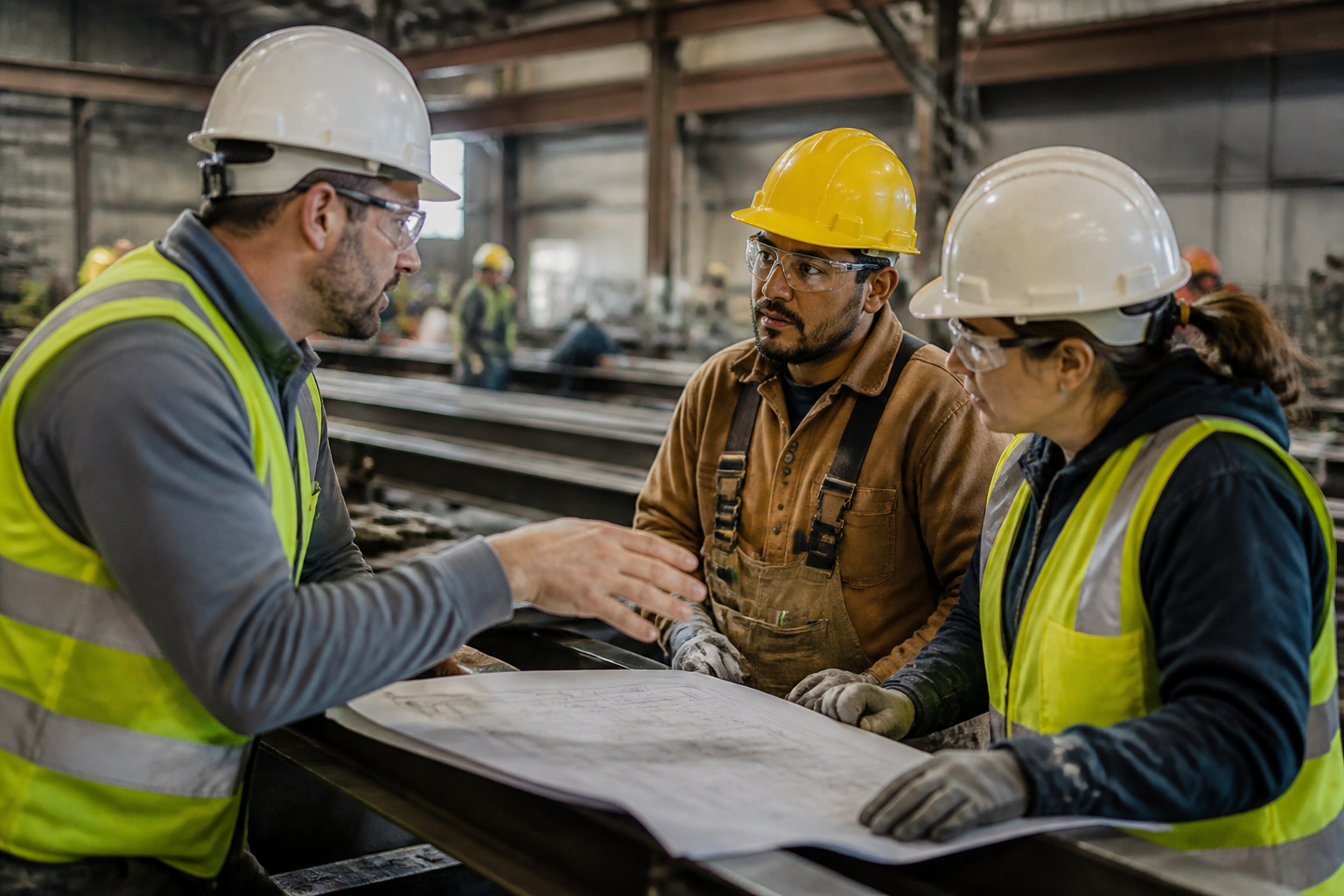
On an active commercial or residential jobsite, general contractors (GCs) manage a complex ecosystem of trade partners, tight schedules, and strict safety standards. When specialty trades arrive on site, construction subcontractor language barriers can quickly delay project milestones, cause costly trade stacking conflicts, and create severe safety hazards. When GC superintendents cannot communicate directly with subcontractor crews—or rely on a single bilingual worker to translate for a 15-person team—site control degrades rapidly.
To keep projects on schedule and within budget, general contractors must move beyond basic translation apps and paper sign-in sheets. Managing language gaps across subcontractor teams requires a structured operational approach, targeted workforce training, and clear communication standards on the jobsite.
The Unique Risk of Subcontractor Language Gaps
Managing language barriers within a direct-hire workforce is straightforward: HR controls hiring, onboarding, and training programs. Managing subcontractor language gaps, however, presents distinct operational challenges for general contractors:
- High Crew Turnover: Subcontractor staffing shifts rapidly based on project phases, meaning new non-native English speaking workers arrive on site weekly.
- Trade-Specific Terminology: Concrete, framing, electrical, and MEP crews use specialized vocabulary that generic translation tools frequently misinterpret.
- The Single-Point-of-Failure Translator: GCs often depend entirely on one subcontractor foreman who speaks conversational English. If that foreman is off-site, off the deck, or misinterprets a directive, the entire crew operates without clear instructions.
When communication breaks down between the GC leadership and specialty trade crews, site superintendents lose real-time visibility into daily progress, quality controls, and active jobsite hazards.
Modernizing Site Orientations and Pre-Task Planning
Site safety and productivity begin at the orientation trailer. Yet, many GCs rely on dense English safety manuals or static translated forms that workers skim and sign without full comprehension.
To effectively manage construction subcontractor language barriers during site onboarding and daily Pre-Task Planning (PTP) meetings, GC project teams should implement these operational practices:
- Verify Comprehension, Don't Assume It: Replace binary questions like "Do you understand?" with practical verification requests like "Show me where the secondary access point is" or "Demonstrate how you will secure that harness."
- Standardize Multilingual PTP Forms: Ensure Job Safety Analyses (JSAs) and daily pre-task cards feature clear visual icons alongside key terms in English and Spanish.
- Establish Designated On-Site Communicators: Require trade partners to identify a qualified, bilingual lead worker for every shift who remains on site with the crew at all times.
Bridging the Field Gap: Targeted Training for Field Leadership
Field leadership is a two-way street. Expecting subcontractor crews to immediately master native English is unrealistic, just as expecting GC superintendents to become fluent Spanish speakers in a few weeks is impractical. The solution lies in high-impact, functional language training tailored specifically to jobsite roles.
1. Jobsite Spanish for GC Superintendents and Project Engineers
GC superintendents and field engineers do not need to discuss complex grammar; they need functional operational Spanish. Training field supervisors in clear, direct phrases allows them to conduct quick site walks, enforce PPE compliance, direct material staging, and give emergency instructions without waiting for an interpreter.
2. Practical English for Subcontractor Foremen
Subcontractor foremen benefit immensely from targeted jobsite English training. Equipping trade foremen with the vocabulary needed to participate in daily GC coordination meetings, clarify RFIs, report schedule delays, and explain field engineering issues directly eliminates operational bottlenecks.
When general contractors invest in targeted language programs, they mitigate construction subcontractor language barriers at the source, fostering a collaborative culture between prime contractors and specialty trades.
Incorporating Language Standards into Subcontract Agreements
Proactive general contractors address communication expectations before a single subcontractor mobilizes on site. Including explicit language and communication clauses in master service agreements (MSAs) and project subcontracts sets clear standards early.
Consider incorporating the following requirements into subcontracts:
- Bilingual Capability Requirements: Specify that subcontractor crews exceeding a designated size must include at least one English-proficient supervisor or lead person on site during working hours.
- Mandatory Attendance at Coordination Meetings: Require subcontractor leads to participate actively in daily stand-up meetings and safety briefings.
- Compliance with Visual and Safety Standards: Mandate that all trade-specific warning signs, rigging tags, and hazardous material labels match the site's bilingual safety protocol.
Establishing these contractual standards ensures trade partners view jobsite communication as a non-negotiable component of safety and quality control.
Long-Term Benefits for General Contractors
GCs that proactively resolve construction subcontractor language barriers gain a strong competitive advantage in the commercial and residential construction sectors. Projects run smoother, inspection failures drop, and trade stacking issues are resolved before they cause schedule drift.
Furthermore, preferred trade partners prefer working with general contractors whose jobsites are organized, safe, and easy to navigate. By building an environment where non-native English workers and English-speaking field leaders communicate seamlessly, GCs protect their profit margins, reduce liability, and complete projects safely on schedule.
Upgrade Your Jobsite Communication Strategy
Navigating language barriers across multiple trade partners requires a practical, construction-focused approach. At New Heights Languages, we deliver customized workplace English and Jobsite Spanish programs designed specifically for construction leaders, superintendents, and trade crews.
Ready to eliminate communication gaps and boost productivity on your jobsites? [Book a free consultation with our team today](/contact) to build a custom language training plan for your upcoming projects.
<!-- featured image alt: A general contractor superintendent discussing site plans with a specialty subcontractor foreman on an active construction jobsite. -->