Forklift Safety Language Barrier: 4 Plant Mistakes
By New Heights Languages ·
Address the forklift safety language barrier in your plant. Learn how to improve operator-pedestrian communication and prevent costly floor accidents.
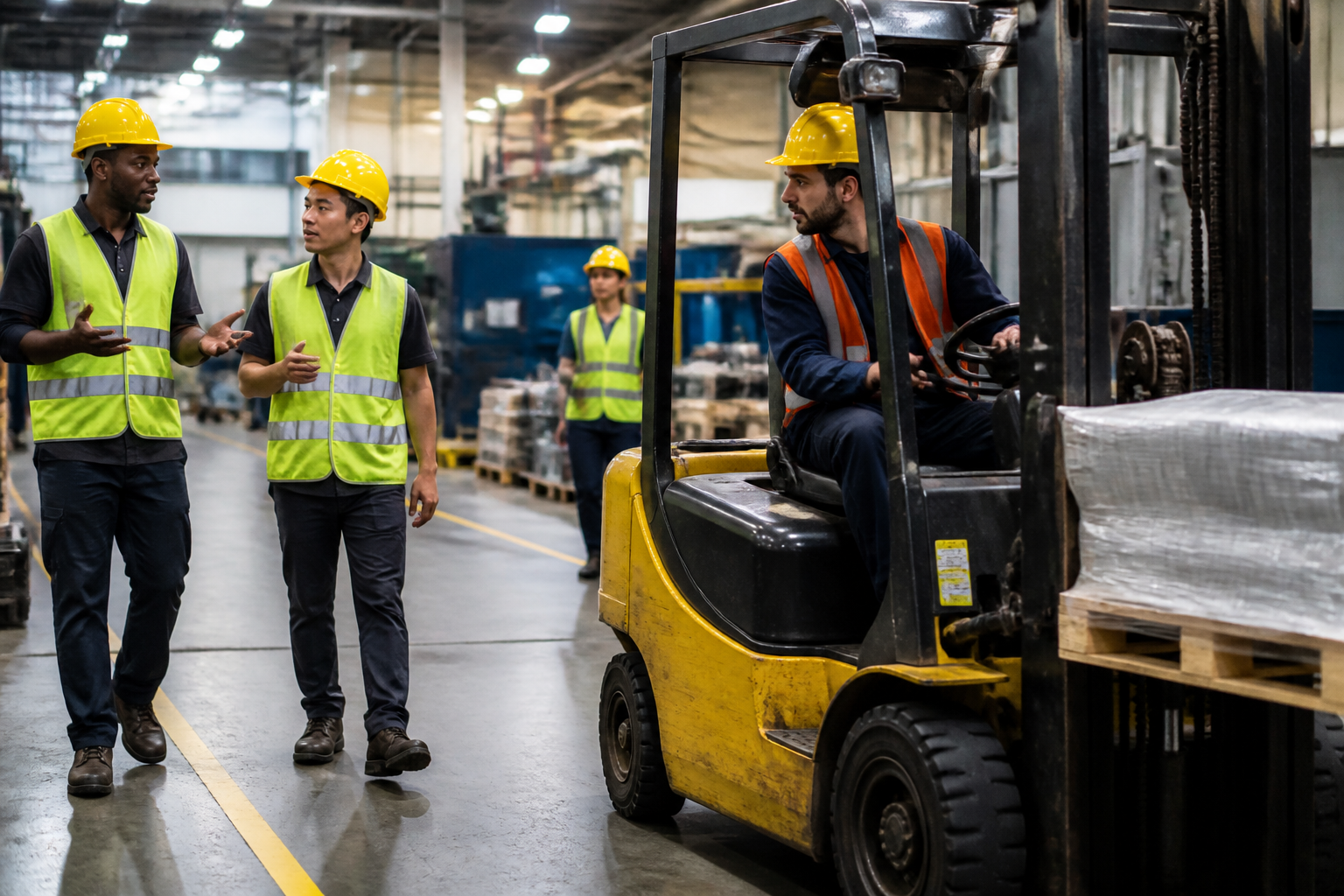
High-visibility vests, blue spotlight alerts, and backup alarms are standard features in modern manufacturing facilities. Yet, powered industrial truck accidents remain among the most frequent and severe incidents on the plant floor. When investigating near-misses or struck-by events involving heavy equipment, safety managers often trace the root cause back to a breakdown in communication. Overlooking the forklift safety language barrier leaves your facility vulnerable to severe injuries, racked inventory damage, and costly downtime.
Most plant operations teams believe their forklift training program is fully compliant because they offer translated written tests or bilingual signage. However, true operational safety requires real-time, bi-directional communication between drivers and pedestrian workers. Here are four critical mistakes plants make regarding language barriers and forklift operations—and how to fix them.
Mistake 1: Assuming Written Certification Equals Operational Understanding
Federal safety standards mandate that powered industrial truck operators demonstrate competence through training and evaluation. To satisfy this requirement, many plant HR teams provide translated written exam sheets. While this checks a regulatory box, it creates a false sense of security.
The Gap Between Exam Translation and Real-Time Awareness
Passing a translated 20-question multiple-choice quiz does not guarantee an employee understands dynamic safety calls on a loud plant floor. Overcoming a forklift safety language barrier requires more than passing a translated written test; operators must instantly process and respond to spoken warnings, emergency commands, and load-change instructions.
If an operator struggles to understand fast-spoken English from a dock manager or warehouse supervisor, written exam compliance will not prevent a dock-lock miscommunication or a blind-corner collision.
Mistake 2: Neglecting Pedestrian-to-Driver Communication Protocols
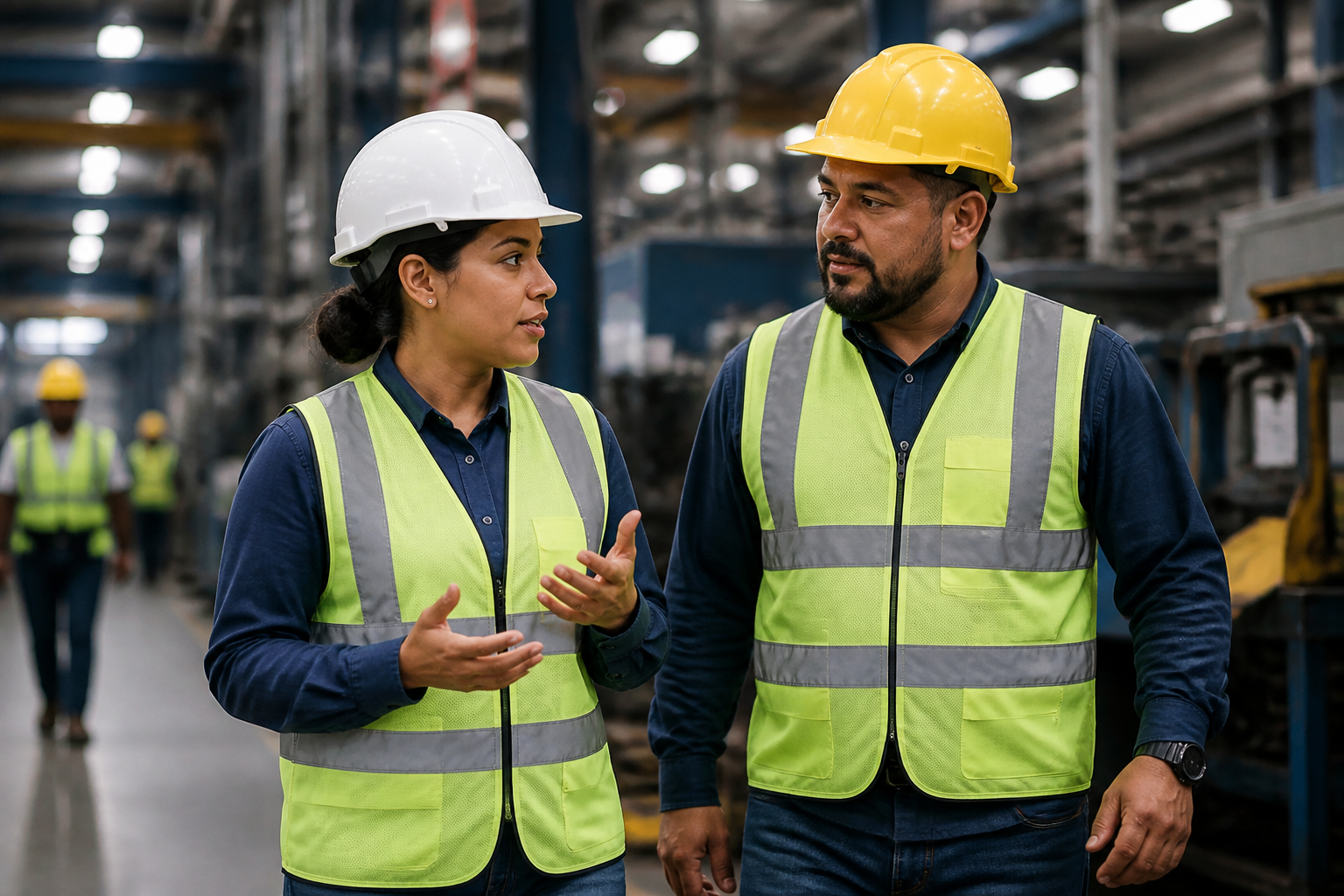
Forklift safety is not solely the operator's responsibility. Pedestrian floor workers—packers, assemblers, maintenance technicians, and material handlers—must interact safely with moving machinery every shift.
Standardizing Verbal and Non-Verbal Signals
When plants ignore the forklift safety language barrier, pedestrian workers on the shop floor bear the brunt of the risk. Many non-English fluent floor workers hesitate to speak up, ask a driver to wait, or confirm that an operator has seen them before stepping into a traffic aisle.
To close this gap, operations teams must establish explicit, shared communication protocols across both languages:
- Mandatory Eye Contact & Hand Signals: Require pedestrian workers to make direct eye contact and receive a clear hand signal from the driver before crossing an active aisle.
- Standardized Verbal Call-Outs: Teach workers specific, non-negotiable English and Spanish terms for high-risk zones, such as "Holding," "Clear," "Backing," and "Stop."
- Three-Second Pause Rule: Train operators to wait three full seconds after giving a signal before moving a load near pedestrian walkways.
Mistake 3: Relying on Static Signage Without Auditory Reinforcement
Posting "Forklift Traffic Area" or "Sound Horn" signs in English and Spanish is common practice. However, static signs quickly become visual background noise for busy employees focused on production quotas.
Why Visual Signs Fail in High-Speed Traffic Zones
In active staging areas and narrow rack aisles, split-second decisions rely on sound and direct verbal cues. When an operator sounds a horn at an intersection, nearby workers must immediately recognize what that sound commands them to do.
If pedestrian employees do not share a common operational vocabulary with drivers, auditory warnings are easily misinterpreted. For instance, if a driver yells a quick direction like "Stay back!" or "Watch the swing!", a worker with limited English proficiency may freeze or step into the swing path instead of retreating.
Mistake 4: Conducting Passive, One-Way Safety Refreshers
Annual forklift recertification and shift huddles often rely on a supervisor reading safety policies aloud while workers nod along. In multilingual environments, nodding rarely signifies full comprehension—it frequently indicates a desire to avoid standing out or delaying the shift.
Moving to Interactive, Practical Demonstrations
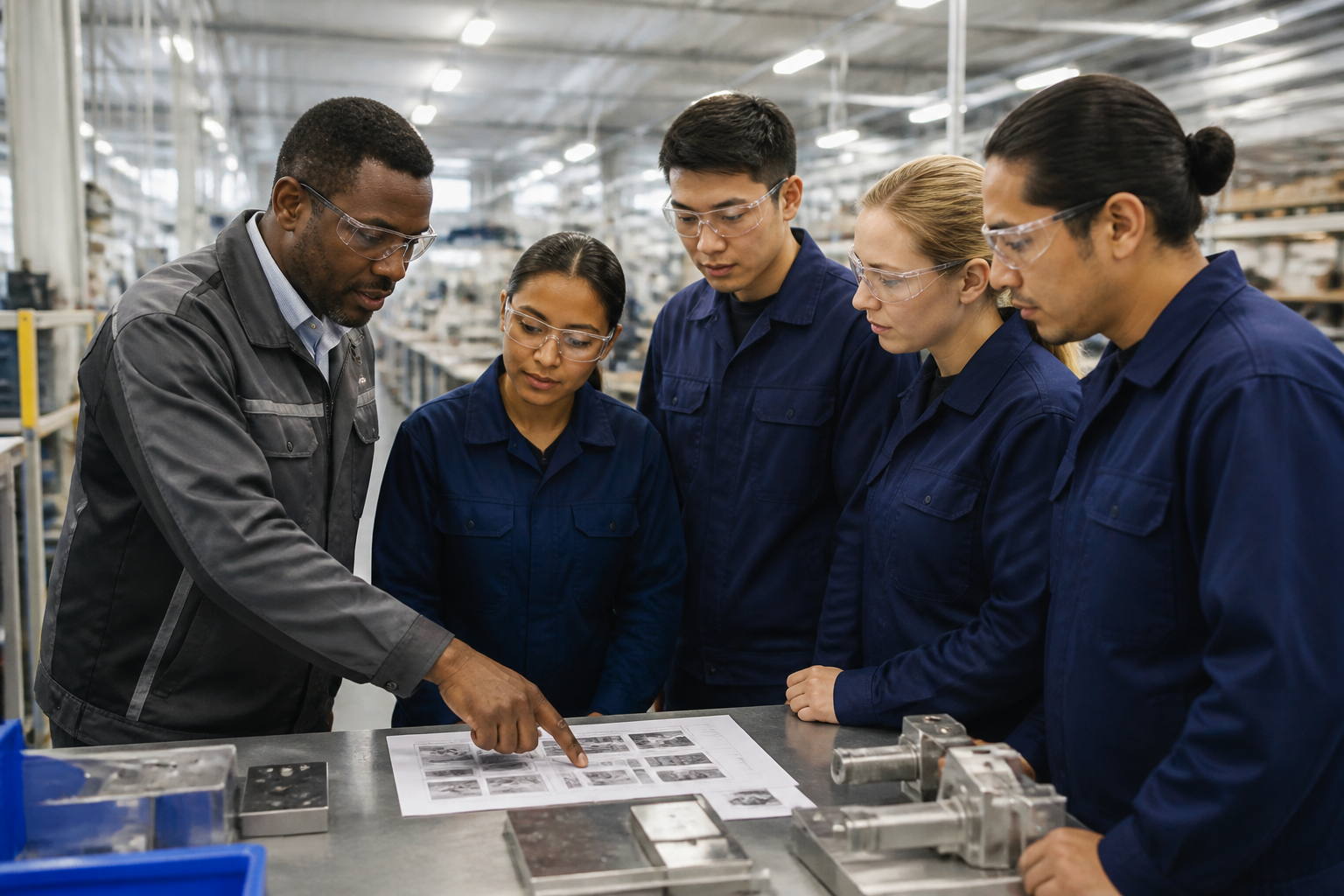
Effective safety training requires active verification. Supervisors should ask workers to demonstrate comprehension through action rather than verbal agreement.
Instead of asking, "Does everyone understand the blind spot rules?", supervisors should ask operators and pedestrians to walk the rack corners together, demonstrate horn protocols, and explain load-limit warnings in their primary working language or targeted workplace English.
Eliminating the Forklift Safety Language Barrier on Your Floor
Protecting your team from powered industrial truck hazards requires a deliberate strategy that combines practical language instruction with daily floor protocols. When operators and pedestrian workers share a concise, clear safety vocabulary, near-misses drop and floor confidence rises.
At New Heights Languages, we design customized, industry-specific ESOL and Spanish training programs tailored to your plant's exact operational workflows. We help your frontline workers and supervisors master the precise vocabulary needed for heavy equipment safety, staging operations, and clear shift communication.
Help your team communicate clearly and work safely. [Book a free consultation today](/contact) to discuss customized language training for your manufacturing facility.
<!-- featured image alt: A forklift operator navigating a busy manufacturing aisle near pedestrian floor workers wearing high-visibility vests. -->