
Hiring Surge Language Support: Plant Expansion Guide
By New Heights Languages ·
Scale up plant production without sacrificing safety. Learn how targeted hiring surge language support speeds up onboarding and lowers 90-day turnover.
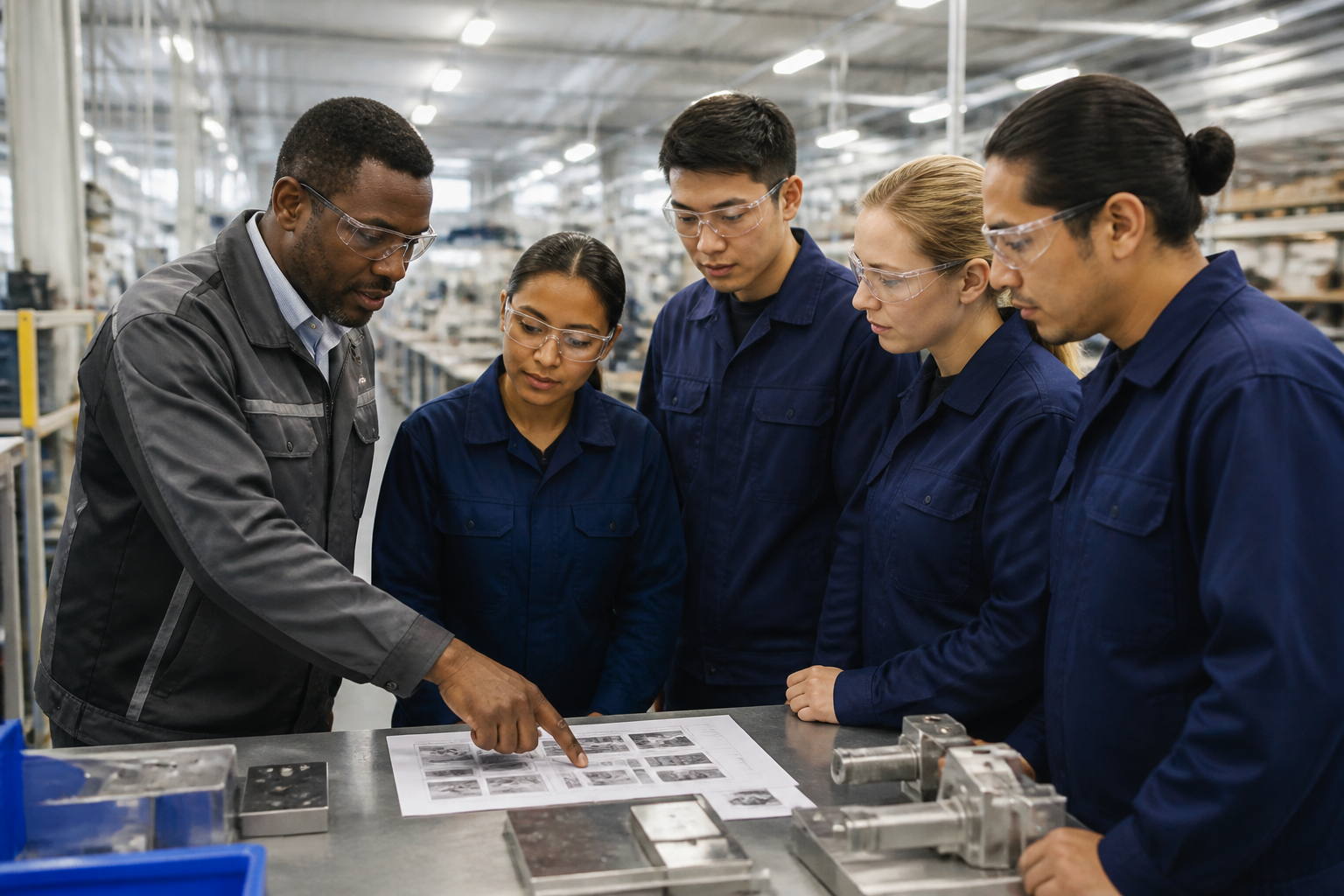
Expanding a manufacturing facility or adding an entire production line is an exciting milestone for any industrial operations team. However, scaling up headcount overnight introduces immediate operational friction. When a plant brings on 30, 50, or 100 new workers in a short window, traditional onboarding pipelines quickly fracture. When a significant portion of those new hires speak English as a second language, communication barriers can stall your entire schedule.
Deploying targeted hiring surge language support keeps production ramping up smoothly. Without a deliberate communication strategy during rapid growth, plant leadership risks spiking scrap rates, delaying production milestones, and watching early employee turnover climb.
Here is how plant managers, HR leaders, and operations executives can implement practical language strategies during major hiring pushes and plant expansions.
The Real Cost of Unplanned Ramp-Ups
When hiring accelerates, floor supervisors rarely have the luxury of spending extra time clarifying instructions. They rely on rapid-fire explanations, dense written SOPs, or informal peer translation. During a hiring surge language support gap, three predictable problems emerge on the floor:
1. Extended Time-to-Productivity
New employees who struggle to understand English equipment controls or supervisor direction take significantly longer to reach full standard operating speed. Instead of hitting full quota by week three, workers remain dependent on constant supervision.
2. High 90-Day Employee Turnover
Starting a new industrial job is stressful. When multilingual workers feel isolated or overwhelmed by instructions they cannot process, frustration builds quickly. Plant expansions frequently suffer high early-stage attrition when new hires feel unsupported in their daily tasks.
3. Equipment Downtime and Quality Drops
In a rush to fill expanded shifts, crucial safety warnings and machine setup nuances get lost. Small misunderstandings regarding machine calibration, lockout/tagout steps, or raw material staging can lead to damaged tooling and production line halts.
Step 1: Execute Job-Specific Vocabulary Mapping
Do not try to teach general English during a high-stakes plant expansion. Your new hires do not need conversational fluency to run a stamp press or assemble harness components correctly; they need immediate control of job-specific terminology.
Before the new cohort steps onto the shop floor, conduct a rapid audit of your expansion area:
- Identify Critical Machinery Terms: Map out exact labels, emergency stops, touch-screen interface text, and alert sounds for new equipment.
- Standardize Action Verbs: Narrow floor instructions down to uniform terms (e.g., standardizing on "clamp," "torque," "verify," or "stage"). Avoid using interchangeable idioms like "lock it down" or "catch that line."
- Isolate High-Frequency Hazards: Highlight precise wording for safety compliance, hazard warnings, and personal protective equipment (PPE).
Integrating this mapped vocabulary directly into early customized workplace English modules ensures workers learn the exact commands they will hear from supervisors on day one.
Step 2: Implement Shift-Integrated Onboarding Support
Pulling new hires off the line for hours of classroom lectures during a hiring push hurts throughput. Instead, weave language acquisition directly into the shift schedule. Incorporating tailored hiring surge language support into your onboarding schedule ensures immediate practical application.
Short, High-Frequency Learning Blocks
Schedule 30-minute micro-sessions two to three times per week right before or after shift start. Focus each session on a single physical task, tool set, or safety procedure the workers will perform that day.
Direct Floor Contextualization
Bring actual work materials—such as torque wrenches, defect logs, or component trays—into the training space. Workers associate English vocabulary directly with the physical objects and movements required on the plant floor.
Peer Cohort Grouping
Group newly hired multilingual employees into micro-cohorts based on their current functional English level. This approach allows lower-proficiency workers to build basic operational vocabulary fast, while more advanced speakers focus on complex machine troubleshooting and written reporting.
Step 3: Train Supervisors to Lead Multilingual Expansion Crews
Language support during a surge is not just for the new hires; your current floor leadership needs immediate tools as well. Shift supervisors and team leads accustomed to managing native English-speaking crews often feel overwhelmed when suddenly assigned 20 non-native speaking workers during an expansion.
Provide practical coaching for your floor leaders in key areas:
- Pacing and Sentence Structure: Train leads to give short, single-step instructions rather than multi-part verbal directions.
- Verification Techniques: Teach supervisors to stop using open-ended questions like "Does everyone understand?" Instruct them to use physical demonstration requests, such as "Show me how you set the guard."
- Consistent Terminology: Ensure leads stick strictly to the standardized plant vocabulary established during your initial mapping.
By equipping floor leads with dedicated hiring surge language support tools, you reduce supervisor stress and prevent communication bottlenecks before they impact daily quota goals.
Step 4: Track Early Expansion Metrics
To ensure your language support strategy is delivering real returns during your plant ramp-up, track specific operational KPIs from week one:
- 90-Day Retention Rates: Compare turnover among multilingual new hires before and after implementing structured language support.
- First-Time Quality (FTQ) Yields: Monitor rework rates on newly established production lines to verify that instructions are being followed accurately.
- Onboarding Speed to Standard Rate: Measure how many days it takes a new hire on the expansion line to hit 100% standard production rate independently.
Tracking these data points gives plant managers clear insight into how quickly workers are adapting and where additional targeted training may be required.
Accelerate Your Plant Growth Safely
A plant expansion or hiring surge should drive your business forward, not create floor chaos. By aligning practical English training directly with your operational goals, you protect your safety record, reduce early employee turnover, and hit your target ramp-up speeds.
At New Heights Languages, we build customized, plant-specific English and Spanish training programs designed around your exact equipment, schedules, and floor workflow.
[Book a free consultation today](/contact) to discuss how we can support your upcoming plant expansion or hiring surge.
<!-- featured image alt: A plant manager walking newly hired multilingual assembly line workers through a clean manufacturing floor during a facility expansion. -->