
Language Needs Assessment Construction Site Guide
By New Heights Languages ·
Learn how to conduct a language needs assessment in construction to spot site safety gaps, streamline trade handoffs, and upskill frontline workers.
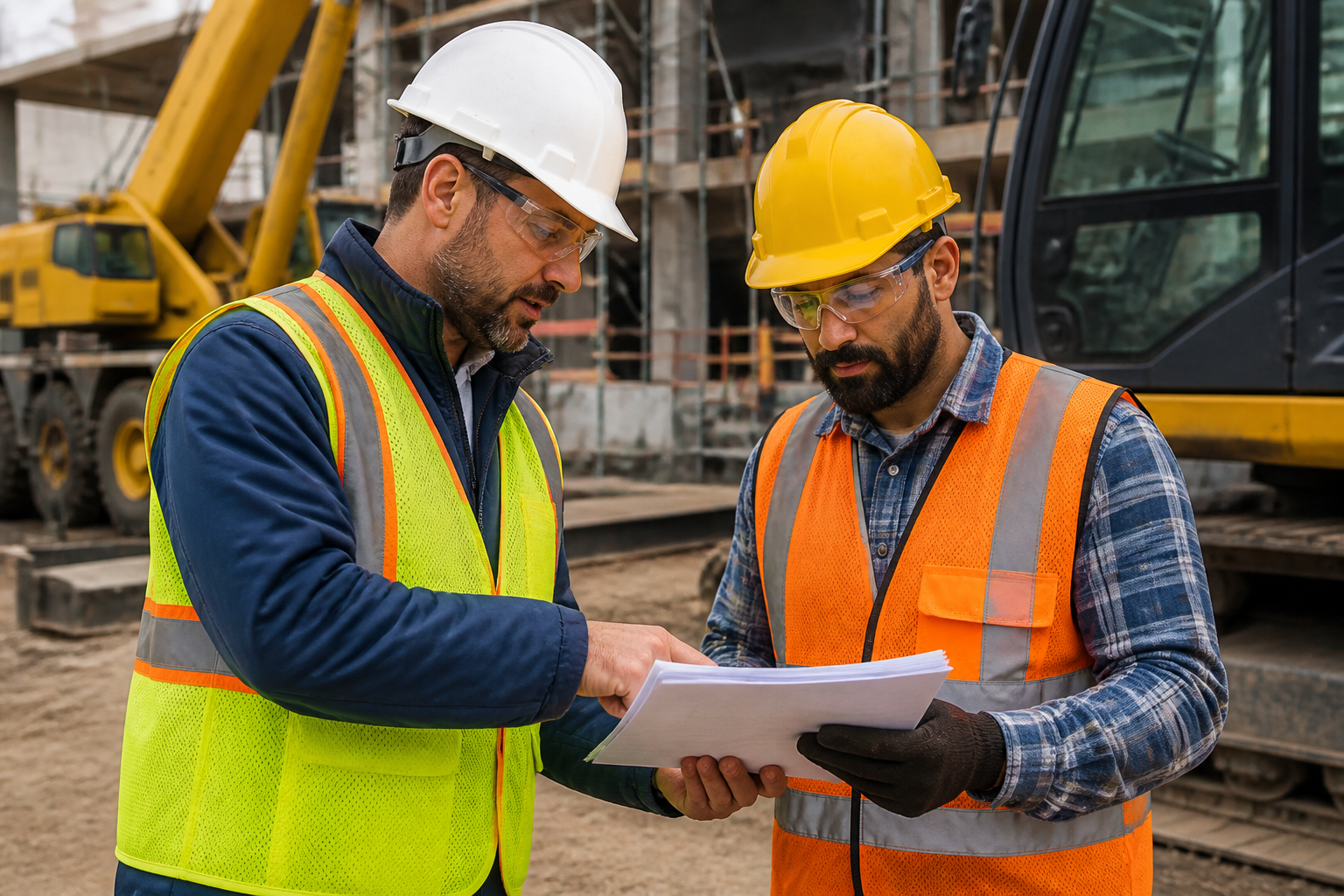
Executing a structured language needs assessment construction managers can rely on is the most effective way to identify high-risk communication gaps on active job sites. Construction sites move fast, and relying on assumptions about worker comprehension often leads to costly rework, schedule delays, or safety incidents. Instead of guessing who understands what, a targeted assessment provides hard data on real-world English and Spanish language abilities across your trades.
A thorough evaluation looks beyond generic fluency scores. It measures how effectively your foremen, equipment operators, and craft workers comprehend safety protocols, follow pre-task plans, and coordinate across trades during high-stakes daily operations.
Step 1: Audit High-Risk Communication Touchpoints
When launching a language needs assessment construction safety directors should start by evaluating daily touchpoints where miscommunication causes rework or hazards. Job site communication rarely happens in a quiet office; it takes place around heavy machinery, generator noise, and tight production schedules.
Key touchpoints to audit include:
- Daily Toolbox Talks and JSA Briefings: Are limited English proficient workers actively participating, or are they simply nodding along without understanding critical hazards?
- Subcontractor and Trade Handoffs: How do framing, electrical, and MEP crews coordinate working boundaries and shared space on-site?
- Equipment Operations and Rigging: Can spotters and crane operators quickly exchange standardized hand signals and verbal emergency commands?
- Emergency Response Protocols: Do workers know exactly how to report an incident, read evacuation routes, and notify first responders in English?
Auditing these high-risk areas helps you pinpoint specific operational breakdowns rather than broad, unfocused language issues.
Step 2: Categorize Language Demands by Job Role
A thorough language needs assessment construction teams conduct will map required language proficiency directly to concrete job tasks. A general laborer needs different language tools than a craft lead or site foreman. Grouping roles helps you set clear benchmarks for functional workplace English or practical Spanish.
General Laborers and Skilled Trades
For frontline workers, focus on functional listening and reading comprehension. Can they follow multi-step spoken instructions regarding material placement? Can they read posted safety warnings, PPE requirements, and material safety data sheets (MSDS)?
Foremen, Crew Leads, and Superintendents
Bilingual leads require higher-level functional English to bridge the gap between project management and field crews. Can your leads complete accurate daily shift logs, explain quality control defects to sub-tier trades, and convey engineering changes back to their crews?
Safety Officers and Quality Control Inspectors
These roles require precise technical vocabulary. Safety and QC personnel must be able to document near-misses, conduct formal site audits, and explain non-compliance issues clearly to both English-speaking leadership and non-English fluent field workers.
Step 3: Gather Low-Friction Data on the Job Site
Traditional written exams do not work well for frontline construction personnel. Many skilled workers excel with hands-on tasks but may freeze up during formal academic tests, leading to inaccurate results. To get precise baseline data without disrupting site productivity, combine observational audits with quick, practical conversations.
Passive Field Observations
Send an evaluator to shadow crews during key shift activities, such as morning stand-ups or material offloading. Watch for silent indicators of miscommunication, such as workers constantly looking to a peer for translation or hesitating before starting a task.
5-Minute Practical Field Interviews
Conduct brief, structured 1-on-1 chats directly on the site. Ask workers to demonstrate understanding rather than asking closed questions like "Do you understand?" For example, ask: "Walk me through the three steps on this pre-task card," or "Explain what you do if this crane lift area is blocked."
Supervisor Input Audits
Gather structured feedback from site superintendents and project managers. Ask them to identify specific tasks where language gaps slow down work, cause material waste, or create safety compliance bottlenecks.
Step 4: Map Language Gaps to Field Outcomes
Once you collect field data, aggregate the findings to identify clear operational risks. Do not list gaps as abstract language deficiencies; translate them directly into business impact metrics that executives and project sponsors understand.
For instance, if 40% of your concrete crew struggles to read mixed-ratio sheets written in English, tie that directly to batch waste and rework expenses. If crew leads struggle to write clear daily logs in English, link that gap to delayed billing, missing change orders, and legal risk during claim disputes.
By framing the results around safety, schedule integrity, and quality control, you establish a compelling business case for targeted, job-specific training.
Step 5: Convert Assessment Findings into an Actionable Training Strategy
The final step of the assessment is establishing clear training priorities. Avoid off-the-shelf, generic language apps or non-industry ESL courses that teach vocabulary workers will never use on a build site.
Use your assessment findings to:
- Build Custom Job-Site Vocabularies: Focus training modules strictly on terms, tools, and phrasing unique to your active trades and safety plans.
- Group Employees by Functional Level: Create training cohorts based on role requirements so advanced foremen and entry-level workers receive instruction tailored to their daily duties.
- Establish Measurable KPIs: Set operational goals for post-training performance, such as reduced near-miss incidents, faster morning stand-ups, and fewer quality rejections.
Conducting a thorough evaluation guarantees that your subsequent training investments generate immediate, measurable returns on the job site.
Schedule Your Construction Site Assessment
Ready to eliminate language barriers and boost safety across your job sites? New Heights Languages provides tailored language assessments and practical workplace training built specifically for construction firms and manufacturers.
[Book a free consultation with our workplace language experts today](/contact) to evaluate your field communication needs and build a custom training plan for your crews.
<!-- featured image alt: A construction site foreman wearing a hard hat discussing blue prints with a frontline worker on an active job site. -->