Fixing Near Miss Reporting Language Barriers
By New Heights Languages ·
Discover why limited English workers underreport near-misses and how targeted language training breaks down safety barriers on the shop floor.

When a forklift narrowly misses a pallet rack, a loose cable causes a stumble, or a hydraulic line drips near an hot surface, immediate reporting prevents future disasters. Yet on busy plant floors and jobsites across the country, near miss reporting language barriers keep critical safety incidents completely hidden.
When non-native English speakers encounter close calls, they often lack the precise English vocabulary to explain what happened, or they struggle to navigate complex safety reporting software. As a result, critical safety data never reaches your EHS management system, leaving identical hazards unaddressed until an actual injury occurs.
To build a true zero-harm culture, plant managers and safety leadership must understand why limited English workers stay silent and implement structural solutions to fix it.
Why Limited English Workers Underreport Near-Misses
Underreporting isn't caused by a lack of concern for workplace safety. In fact, frontline employees are usually the first to notice deteriorating equipment or hazardous floor conditions. The breakdown happens when a worker tries to translate a chaotic moment into a formal English report.
Fear of Incorrect English on Written Forms
Standard incident forms often require detailed written explanations. Workers who struggle with written English frequently worry that grammatical errors, misspellings, or poor phrasing will make them look incompetent to management. Rather than risk embarrassment, they choose not to submit the report.
Confusion Over Technical Terminology
Safety concepts like "pinch point," "stored energy," "shear hazard," or "line of fire" carry specific legal and operational definitions. While a worker might recognize danger intuitively, they may not know the designated English term required on a pull-down menu or incident log.
Fear of Unintended Disciplinary Action
In many cultures, raising a problem to management can be perceived as complaining or admitting fault. If workers do not fully understand the non-punitive intent of a near-miss policy due to language gaps, they may fear that reporting a close call will result in reprimands or termination.
Four Actionable Steps to Eliminate Safety Communication Gaps
Addressing near miss reporting language barriers requires looking beyond simply translating paper forms into multiple languages. True compliance and hazard visibility demand practical language upskilling and streamlined reporting paths.
1. Teach Functional Near-Miss Vocabulary
Generic ESOL programs teach basic conversational English, which rarely helps on an active assembly line. High-impact workplace English training focuses directly on hazard reporting vocabulary. Focus on teaching functional verbs and descriptive terms such as:
- Action verbs: leaking, fraying, binding, sparking, jamming, slipping
- Location modifiers: above the conveyor, behind the guard, under the housing, inside the panel
- Severity descriptors: loose, exposed, hot, unstable, cracked
When workers practice using these specific terms in guided drills, they gain the confidence to speak up during shift huddles or write clear descriptions on paper.
2. Implement Dual-Language Verbal Debriefs
Written reporting should not be the sole entry point for safety data. Supervisors should be trained to conduct quick, verbal near-miss debriefs during daily stand-ups. Pairing limited English employees with bilingual lead operators allows workers to explain what happened verbally in their primary language while the lead helps document the technical details in English.
3. Simplify Incident Categorization
Overly complex reporting portals create friction for every worker, but they create a complete wall for non-native speakers. Replace vague open-text fields with structured, visual categories (e.g., Equipment, Slip/Trip, Chemical, Electrical) paired with short English descriptors. This structure guides workers through the reporting process while building their familiarity with standard industrial terminology.
4. Upskill Supervisors in Clear Communication
When supervisors proactively break down near miss reporting language barriers, workers feel confident coming forward. Train shift leaders to use direct, simple English when asking about safety conditions. Instead of asking a broad question like, "Were there any unsafe conditions on Line 2 today?" teach supervisors to ask specific questions: "Did any machines jam today?" or "Did you see any oil on the floor?"
Transforming Near-Miss Data into Shop-Floor Action
When limited English employees receive targeted language instruction, near-miss reporting rates typically increase—not because more hazards are occurring, but because existing hazards are finally being illuminated.
Eliminating near miss reporting language barriers isn't just about safety compliance; it's about empowering every team member to protect themselves and their peers. When workers have the vocabulary to describe close calls accurately, safety teams can take corrective action before a minor incident becomes an OSHA recordable injury.
Build a Safer Worksite with New Heights Languages
At New Heights Languages, we build customized workplace ESOL and functional Spanish training programs specifically designed for manufacturing plants and construction sites. We help your limited English workers master the exact safety vocabulary, operational terms, and reporting language required on your shop floor.
Ready to improve safety reporting and protect your crew? [Book a free consultation with our team today](/contact) to discuss customized on-site or virtual language training for your workforce.
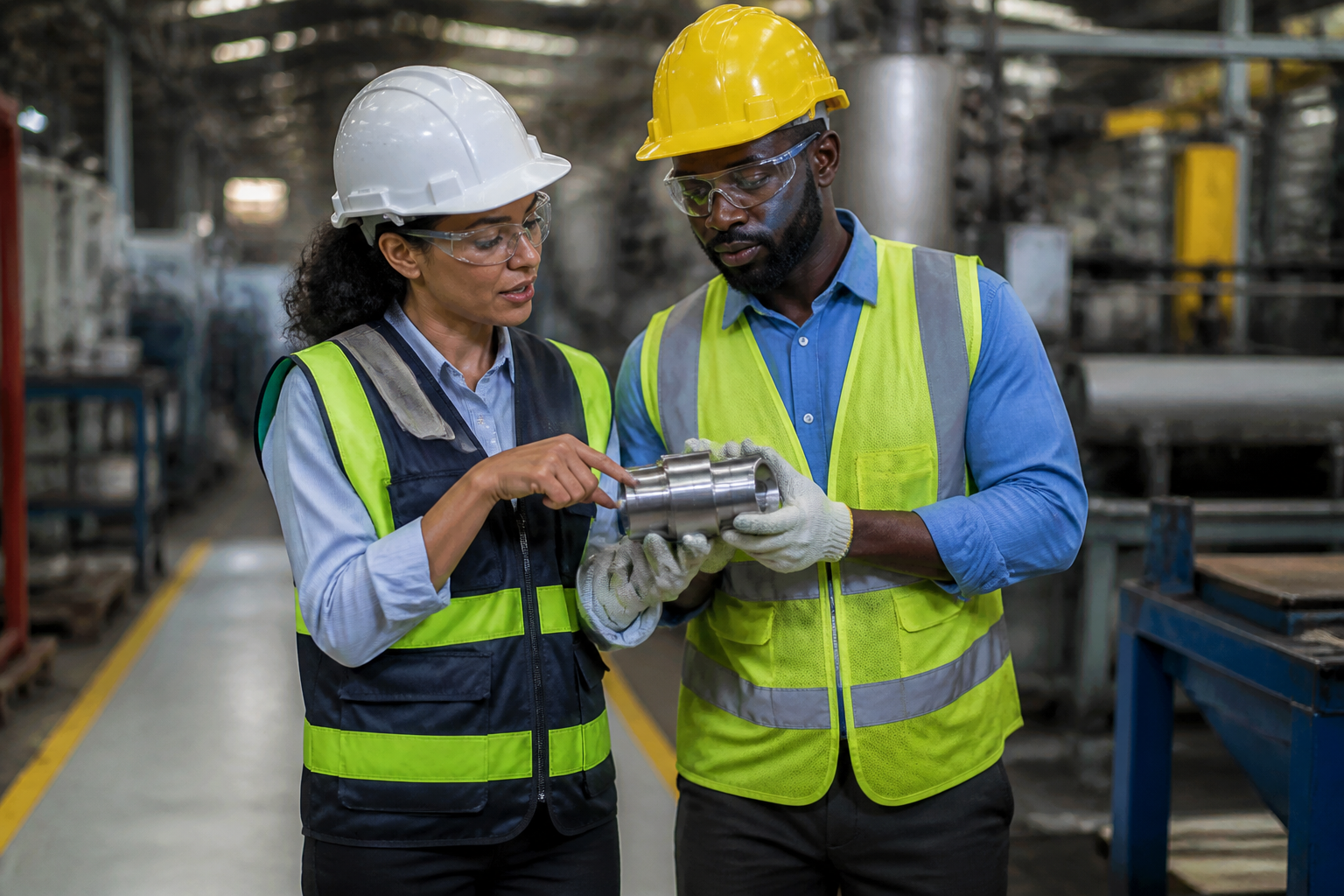
<!-- featured image alt: A warehouse supervisor discussing safety procedures with a diverse group of manufacturing workers on a plant floor. -->