Onboarding ESL Employees: A 30-Day Floor Plan
By New Heights Languages ·
Learn a practical 30-day strategy for onboarding ESL employees in manufacturing and construction to boost frontline retention and plant safety.

The first month on the plant floor determines whether a new hire stays for years or leaves after three weeks. For plant managers and HR leaders, onboarding esl employees presents a distinct operational challenge. When new team members are navigating machine setups, safety procedures, and English terminology simultaneously, standard orientation videos and dense employee handbooks fall short. Early turnover among non-native English speakers is rarely due to a lack of technical capability; it is almost always driven by broken communication during initial integration.
To protect your recruiting investment, maintain line balance, and prevent scrap, you need a structured, 30-day floor strategy. Here is how to organize the first four weeks for non-native English speakers in your facility.
Week 1: Visual Orientation and Physical Workflows
Prioritize Action Over Text
During the first seven days, eliminate text-heavy presentations and standard classroom orientations. Non-native English speakers process a high cognitive load during their first week. Expecting them to absorb plant policies or complex operating standards through written English manuals leads to immediate fatigue and misunderstandings.
Map the Physical Facility
Focus Week 1 on physical navigation, non-verbal cues, and clear environmental markers. Walk new workers through key floor areas multiple times:
- Shift clock-in stations, break rooms, and rest areas
- Personal protective equipment (PPE) dispensaries
- Emergency stops, fire exits, and eye-wash stations
- Material staging zones, quality quarantine tables, and scrap bins
Demonstrate physical tasks directly at the workstation rather than explaining them verbally. Show the exact hand placement for machine loading, the precise physical alignment for materials, and correct component staging.
Week 2: Strategic Buddy Pairing and Micro-Verifications
Structured Floor Mentorship
By week two, effective practices for onboarding esl employees require strategic buddy pairing on the line. Avoid assigning a new hire to whichever operator happens to be available. Pair them with a reliable, experienced operator who demonstrates high safety standards, steady production habits, and patience.
While assigning a bilingual mentor is helpful, shared language skills are not strictly mandatory. An experienced worker who speaks clearly, uses deliberate physical demonstrations, and respects standard operating procedures is far more valuable than a bilingual operator who takes shortcuts on the floor.
Move Beyond "Do You Understand?"
Supervisors frequently ask, "Do you understand?" to verify training. Most workers will nod or answer "yes" out of politeness, respect, or fear of looking incompetent.
Replace this question with practical micro-verifications:
- "Show me how you clear this jam."
- "Where does this defective part go?"
- "Demonstrate the three steps to reset this sensor."
Observing the worker physically perform the action provides immediate, objective confirmation that the directive was processed accurately.
Week 3: Core Floor Vocabulary in Context
Focus on High-Frequency Verbs
During week three, begin building targeted floor vocabulary. Avoid teaching general grammar or long vocabulary lists. Concentrate on the high-frequency verbs and nouns required for daily line communication and defect prevention.
Target essential floor terms used in production:
- Machine operations: Stop, start, align, push, hold, clear, adjust.
- Material conditions: Hot, sharp, wet, flush, cracked, bent.
- Location directives: Above, behind, inside, staging bin, conveyor.
When onboarding esl employees, introduce terms while touching the physical tool or performing the exact task. Linking sound, word, and visual action directly on the line reinforces vocabulary far faster than off-site study.
Week 4: Autonomy Assessment and Two-Way Feedback
Evaluating Independent Line Execution
By the fourth week, the objective transitions toward independent operation under periodic supervisor observation. Evaluate the worker's ability to complete standard work instructions, monitor quality parameters, and respond to basic line alarms without requiring a mentor present at all times.
Establishing Feedback Loops
Effective onboarding requires two-way communication. Create a low-pressure environment for the employee to communicate back to floor leadership:
- Ask which equipment setups or tasks feel most comfortable.
- Identify specific signals, tools, or procedures that remain unclear.
- Verify that shift handoffs and team communication are operating smoothly.
This deliberate check-in allows supervisors to address small misunderstandings before they result in quality issues or safety incidents.
Moving from Onboarding to Ongoing Language Skills
A 30-day onboarding strategy reduces initial turnover, establishes basic safety routines, and gets new hires performing safely on the line. However, initial onboarding only solves immediate floor survival. Long-term productivity, quality control improvements, and leadership development require structured, ongoing language training.
When you support your team with targeted workplace English and Spanish instruction customized to your plant's specific equipment and terms, you build a resilient, multi-skilled workforce ready for continuous improvement.
Ready to eliminate communication barriers across your production lines? [Book a free consultation with New Heights Languages](/contact) to discuss customized, shift-friendly language training for your workforce.
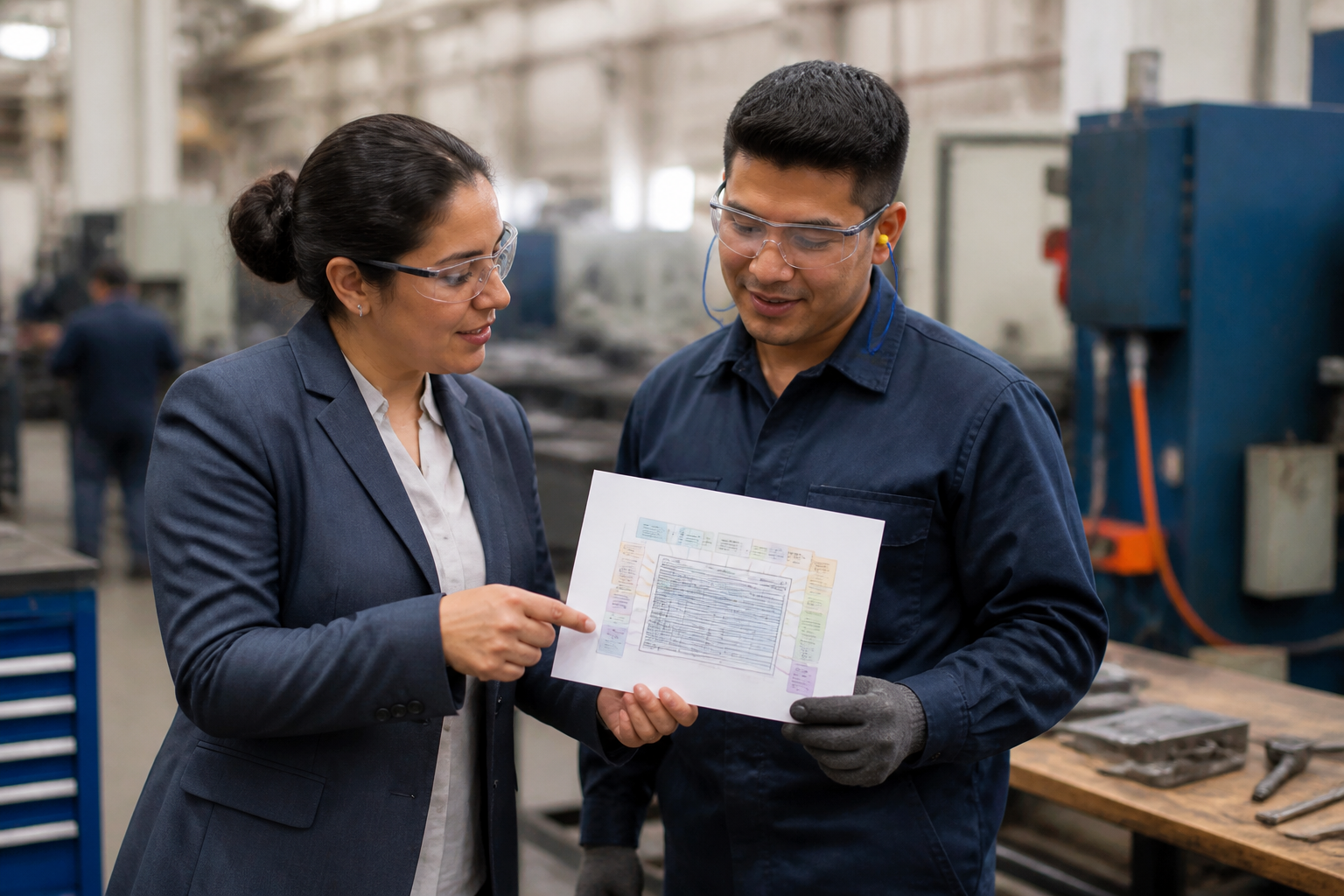
<!-- featured image alt: A manufacturing supervisor in a high-visibility vest guiding a new worker through machine operations on a production line. -->