Fix Overall Equipment Effectiveness Language Barrier
By New Heights Languages ·
Learn how overcoming the overall equipment effectiveness language barrier boosts plant floor availability, performance, and product quality.

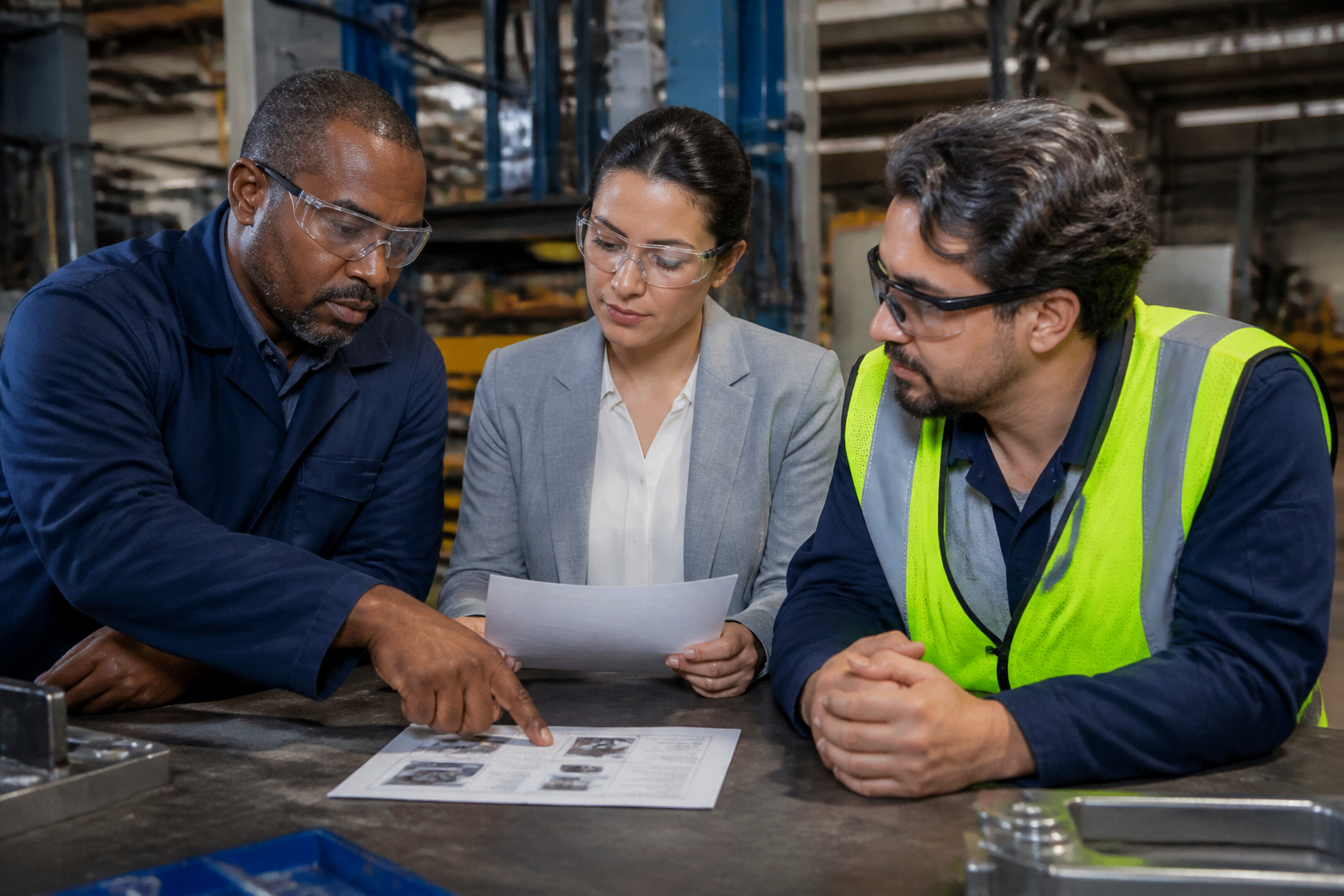
When manufacturing leaders analyze stagnant throughput, they frequently look at mechanical bottlenecks, tooling wear, or supply chain hiccups. However, one of the most persistent and costly operational challenges is the overall equipment effectiveness language barrier. When line operators, setup technicians, and maintenance staff lack a shared, precise technical vocabulary, equipment metrics suffer across the board.
Overall Equipment Effectiveness (OEE) relies on three critical metrics: Availability, Performance, and Quality. When limited-English proficient (LEP) operators cannot swiftly communicate alarm states, clarify changeover instructions, or read precision adjustment specs, all three pillars take a measurable hit. targeted floor-level language upskilling directly closes these gaps, unlocking latent capacity without requiring expensive machinery upgrades.
Availability Losses: Reducing Planned and Unplanned Downtime
Machine availability measures the percentage of planned production time that equipment is actually running. Unplanned downtime and excessively long changeovers are the primary drivers of low availability. Language barriers compound both issues.
Accelerating Shift Handoffs and Changeovers
During shift changes, outgoing operators must brief incoming crews on machine quirks, heat builds, or recent component swaps. When outgoing operators lack the English vocabulary to describe subtle mechanical behaviors, incoming operators waste critical production time discovering those issues themselves. Standardizing shift handoff dialogue ensures that incoming crews receive clear, actionable equipment status reports within minutes.
Streamlining Maintenance Escalation
When a machine halts unexpected, every minute counts. LEP operators often struggle to explain exact symptoms to English-speaking maintenance technicians, leading to generic "machine broken" calls. Training operators to clearly state specific symptoms—such as bearing chatter, hydraulic pressure drops, or sensor misalignment—allows technicians to arrive with the correct tools and replacement parts on the first trip, dramatically cutting mean time to repair (MTTR).
Performance Losses: Eliminating Micro-Stoppages and Slow Cycles
Performance evaluates how close a machine runs to its theoretical maximum speed. Small, repetitive delays—known as micro-stoppages—often go unrecorded on shift logs, yet they quietly destroy daily yield.
Swift Resolution of Equipment Alarms
Modern automated machinery flags minor faults via screen alerts or stack lights. When operators cannot quickly read or communicate complex fault descriptions, a minor material jam that should take 20 seconds to clear can freeze a packaging or machining line for five minutes. Addressing the overall equipment effectiveness language barrier through targeted vocabulary training gives operators the confidence to interpret fault alerts, clear minor jams safely, and restart lines without waiting for supervisor intervention.
Maintaining Nameplate Line Speeds
Operators sometimes manually dial down machine feed rates or conveyor speeds because they feel uncertain about handling higher throughput or managing rapid material feeds. When training bridges the gap between operator language and machine operating standards, workers gain a clearer understanding of safe operating parameters and maintain target speeds throughout their shifts.
Quality Losses: Preventing Scrap and Rework Spikes
Quality tracks the ratio of good parts produced against total units started. Minor misunderstandings in calibration, tolerance adjustments, or material specs directly translate to scrapped production runs.
Precise Execution of Setup Adjustments
Initial machine setup requires strict adherence to precise engineering specs. If an operator misinterprets written work instructions regarding torque values, temperature thresholds, or alignment tolerances, an entire batch can be produced out of specification before quality control catches the error. Floor-focused language training ensures operators comprehend specification sheets and can confirm calibration steps in English.
Rapid Quality Escalations
When an operator notices visual surface defects, burrs, or dimensional drifts, immediate reporting prevents continuous scrap generation. Upskilling operators with clear non-conformance vocabulary allows them to halt production quickly and articulate the defect to quality assurance personnel before hundreds of components are ruined.
Strategic Steps to Build Floor-Level Language Skills
Overcoming the overall equipment effectiveness language barrier requires a structured, workplace-specific strategy rather than generic language instruction. To drive immediate gains in plant throughput, focus on these targeted tactics:
- Map Language to Equipment Assets: Identify the exact machines with the highest downtime or lowest OEE, then isolate the critical English vocabulary required to operate, clear, and report issues on those specific assets.
- Develop Standardized Floor Phrases: Create concise, standardized terminology for shift handoffs, maintenance dispatching, and quality hold tags so all shifts use identical phrasing.
- Train Supervisors in Clear Directives: Train shift supervisors to use clear, unambiguous phrasing when giving setup parameters, machine adjustments, and safety directives.
- Incorporate Visual Equipment Glossaries: Pair physical machine diagrams, control panel layouts, and error codes with standard English terms on bulletin boards and near operator stations.
- Deliver On-Site Work Context Instruction: Implement short, focused language modules directly tied to manufacturing processes, equipment operations, and floor documentation.
Measuring the Return on Investment in Language Upskilling
Investing in language training for plant operators yields measurable operational results. By removing communication friction from daily operations, plants consistently see improvements across their primary performance indicators:
- Reduced Changeover Duration: Direct, standard communication during tool changes and line reconfigurations cuts changeover times.
- Lower Scrap Rates: Enhanced comprehension of job cards and calibration settings prevents material waste.
- Higher Machine Availability: Faster escalation calls and clearer fault reporting reduce total downtime hours.
When line workers have the precise English language tools needed to interact with machinery, supervisors, and maintenance personnel, OEE targets move from theoretical goals to repeatable operational reality.
Empower Your Manufacturing Workforce Today
Language barriers should never dictate your plant's throughput, changeover speeds, or scrap rates. At New Heights Languages, we deliver customized, on-site and remote workplace English training tailored specifically to your equipment, operational workflows, and floor team needs.
Ready to eliminate communication bottlenecks and boost your facility's OEE? [Book a free consultation today](/contact) to discuss customized language training programs for your operational teams.
<!-- featured image alt: A manufacturing floor operator and plant supervisor reviewing machine operational metrics on a digital tablet near an automated production line. -->