Retaining Bilingual Employees: Build Visible Paths
By New Heights Languages ·
Prevent talent drain on your plant floor. Learn how to retain bilingual employees by creating structured career paths and eliminating translation burnout.

Plant managers and HR leaders frequently struggle with turnover among their most valuable frontline personnel: bilingual workers. These team members bridge crucial daily communication gaps between Spanish-speaking operators and English-speaking management. However, retaining bilingual employees requires more than competitive hourly wages. Without a clear, documented roadmap for advancement, these high-potential workers often seek opportunities elsewhere.
When bilingual team members feel trapped in entry-level roles—or burdened by constant, uncompensated translation duties—they burn out. To keep your best talent on the floor and prepare them for future leadership, industrial employers must build visible, structured career paths that reward both technical mastery and language capability.
The Hidden Retention Risk: The "Bilingual Tax"
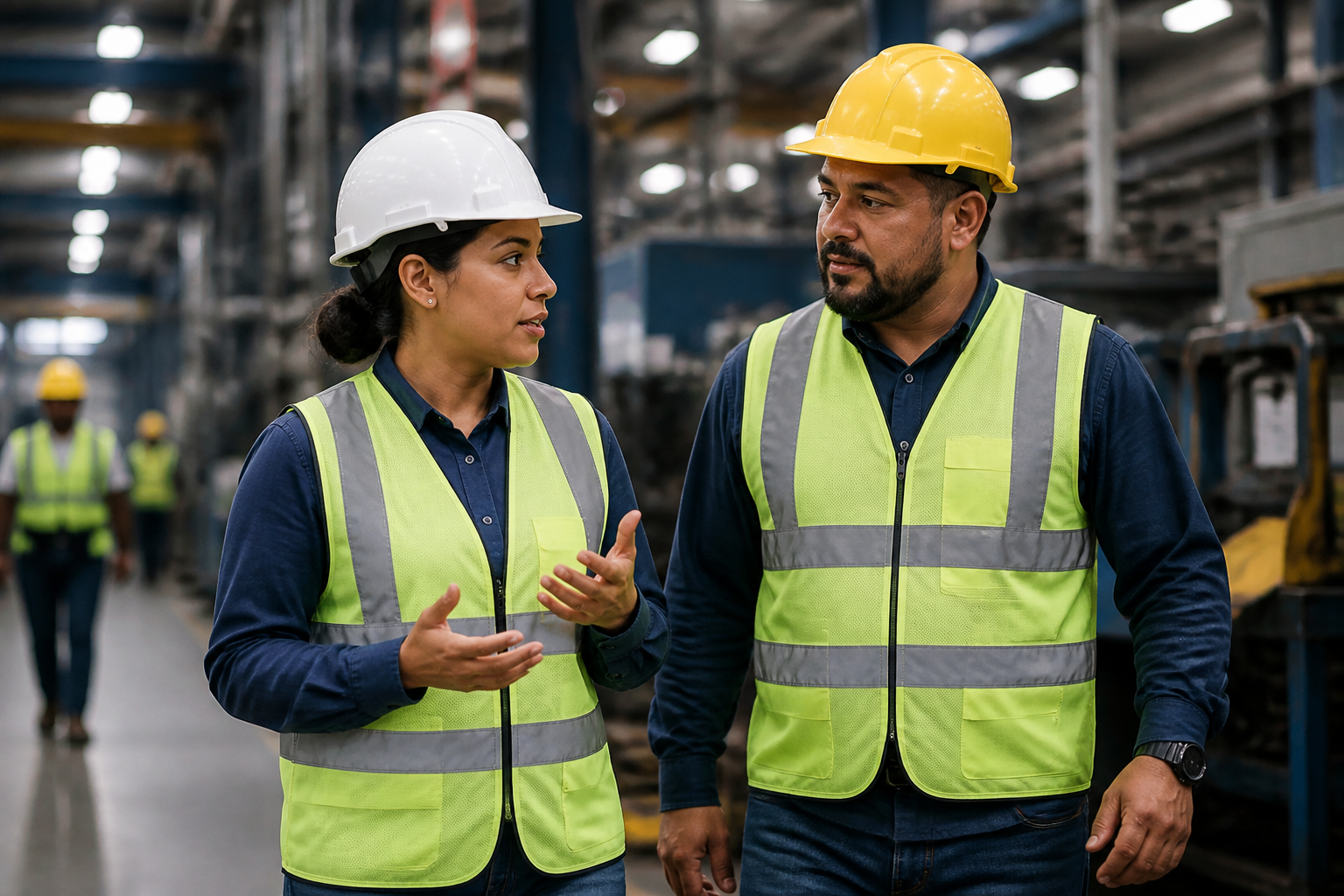
In many manufacturing plants and construction sites, bilingual employees carry an invisible workload. Whenever a supervisor needs to explain a complex engineering change, conduct a disciplinary meeting, or review a safety hazard with a Spanish-speaking crew, they pull a bilingual machine operator off their machine to translate.
While this solves an immediate operational problem, it creates long-term retention issues when left unmanaged:
- Production Disruptions: Frequent interruptions pull skilled operators away from their primary machines, hurting their individual production numbers and efficiency incentives.
- Role Fatigue: Bilingual workers often feel caught in the middle between management demands and peer expectations, leading to stress and job dissatisfaction.
- Lack of Recognition: If translation and communication duties are not written into official job descriptions or tied to pay increases, workers feel exploited rather than valued.
Overcoming this issue is essential for retaining bilingual employees on your plant floor. Employers must move from ad-hoc, informal translation to a formalized system that recognizes and compensates language leadership.
Structure a Multi-Tiered Career Lattice for Frontline Roles
To keep ambitious workers from leaving for neighboring facilities, you must make career progression visible from day one. Do not rely on vague promises of "future promotion." Instead, publish a clear career lattice that shows exactly how a bilingual operator can progress into technical and supervisory positions.
When building a system for retaining bilingual employees, clarity is paramount. Consider implementing a tiered skill structure similar to this model:
- Tier 1: Production Operator: Executes standard operating procedures safely. Uses targeted workplace vocabulary to report machine downtime and quality defects.
- Tier 2: Bilingual Floor Mentor: Onboards new hires, leads practical safety demonstrations in English and Spanish, and assists with daily shift handovers. Receives a designated hourly wage differential.
- Tier 3: Lead Line Technician / QA Specialist: Manages complex equipment setups, logs production metrics, and communicates directly with plant engineers and safety managers.
- Tier 4: Shift Supervisor / Crew Foreman: Oversees daily production schedules, conducts formal performance reviews, enforces safety compliance, and manages crew labor allocation.
When workers see that bilingual capability combined with technical skill leads directly to Tier 2 and Tier 3 positions, retention increases across the entire frontline workforce.
Formalize Language Skills into Recognized Job Descriptions
Ambiguity kills motivation. If frontline employees do not know the precise criteria required to move from an operator role to a lead role, they assume promotions are based on favoritism. You must define explicit technical and language standards for every level of your organization.
Audit Current Floor Responsibilities
Identify where informal communication is already taking place. If an operator on Line 2 is routinely translating work orders for five peers, formally evaluate their role. Upgrade their job title to Floor Coordinator or Peer Lead, update their job description, and align their compensation with their actual contribution.
Set Transparent Qualification Criteria
Establish measurable milestones for promotion. For example, specify that advancing to a Line Lead position requires mastering equipment troubleshooting, completing an internal safety audit module, and demonstrating functional workplace English skills for writing shift reports and communicating with maintenance staff.
Align Technical Upskilling with Targeted Language Pathways
Language training should never exist in a vacuum. To maximize retention and ROI, workplace English and Spanish training must integrate directly with your facility's operational goals and technical training programs.
Combine Equipment Cross-Training with Vocational English
If you are training a high-performing operator to run a complex CNC machine or automated packaging line, provide targeted workplace English training tailored to that equipment. Teaching workers the precise terminology for control panels, error codes, and preventive maintenance manuals ensures they gain the confidence needed to step into higher-paying technical roles.
Establish Cross-Departmental Shadowing
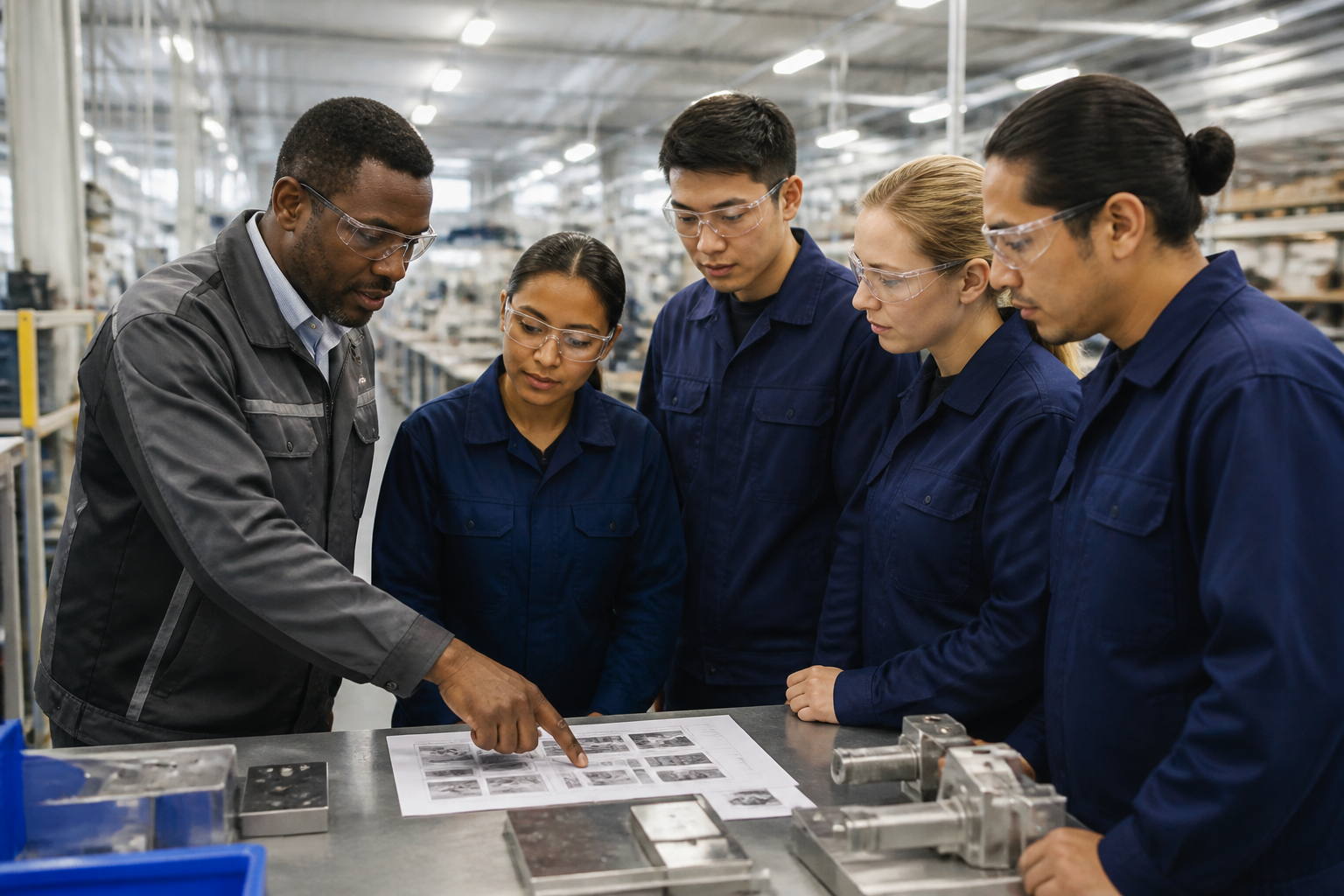
Allow rising bilingual talent to shadow quality assurance technicians, maintenance leads, or safety coordinators for a few hours each week. This exposure helps workers understand administrative workflows, exposes them to specialized technical vocabulary, and reinforces their long-term future within your company.
Build an Internal Succession Pipeline for Leadership
Focusing on long-term mobility ensures retaining bilingual employees becomes a permanent competitive advantage for your facility. Instead of constantly recruiting expensive outside supervisors who lack familiarity with your equipment or crew culture, cultivate your leadership pipeline from within.
Bilingual leads who rise through your own plant floor carry unmatched credibility. They understand the physical demands of the job, command the respect of the frontline workforce, and possess the dual-language skills necessary to execute management directives flawlessly.
By investing in structured workplace language training alongside technical career paths, you reduce turnover costs, retain vital tribal knowledge, and create a resilient workplace culture where every employee sees a future.
Partner with New Heights Languages to Secure Your Pipeline
Building visible career pathways requires workplace language training tailored specifically to your plant's machinery, safety protocols, and operational workflows. New Heights Languages designs customized, on-site and online ESOL and Spanish programs that equip frontline workers and supervisors with the practical communication skills needed for promotion.
Help your top talent take the next step in their careers while keeping your production lines running safely and efficiently. [Book a free consultation](/contact) with our team today to discuss your workforce development goals.
<!-- featured image alt: A plant manager reviewing a career advancement chart with a bilingual machine operator in a modern manufacturing facility. -->