Visual Work Instructions Manufacturing & Language Training
By New Heights Languages ·
Pair visual work instructions in manufacturing with targeted workplace ESOL training to speed up onboarding, reduce scrap, and empower plant workers.
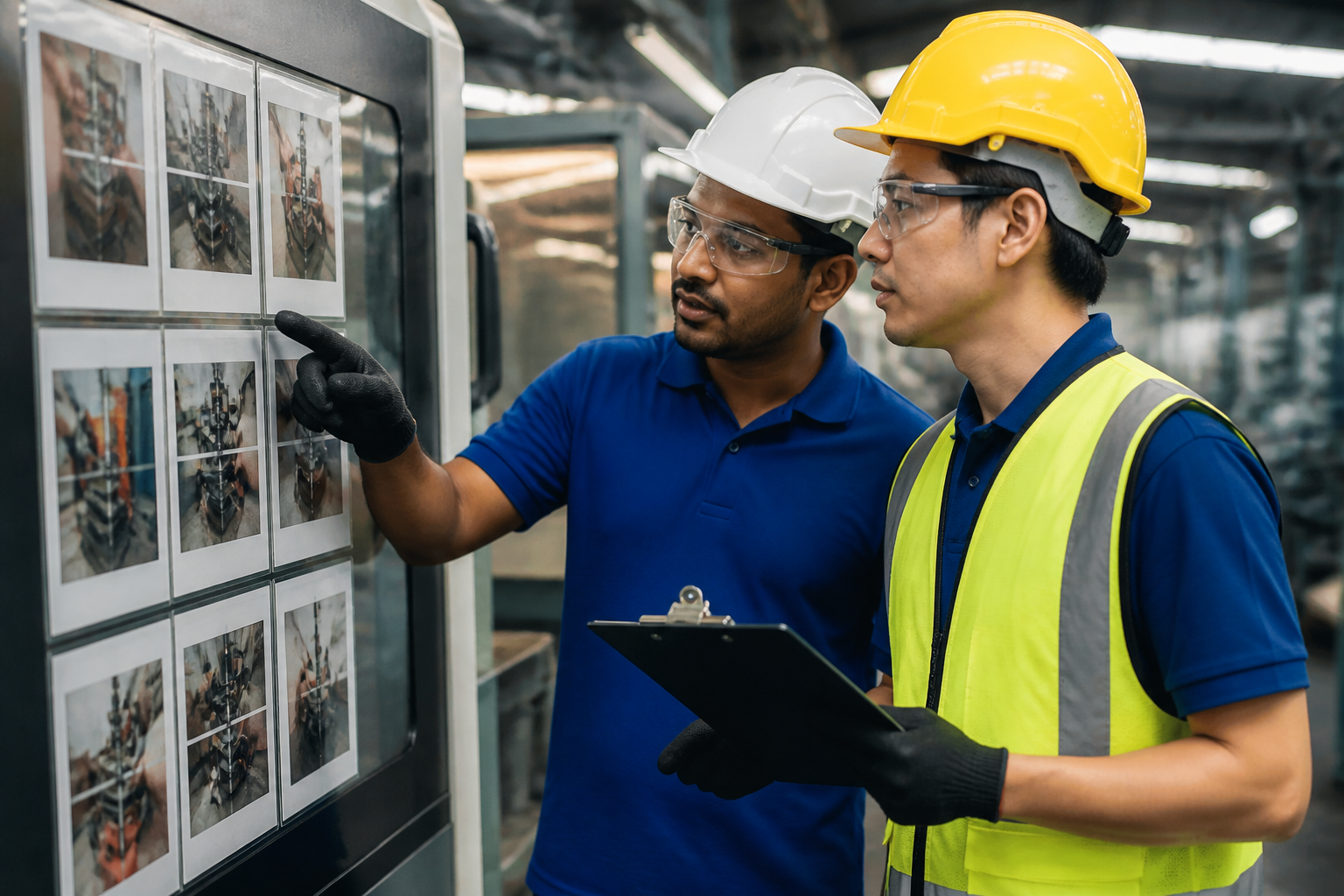
When updating standard operating procedures on the plant floor, many operations managers turn to visuals to bridge communication gaps. While photo diagrams, color-coded callouts, and step-by-step videos dramatically reduce ambiguity, static images alone cannot resolve complex production challenges. Combining visual work instructions manufacturing systems with targeted workplace English language training creates a dual-layer strategy. This approach ensures frontline employees not only recognize what a task looks like, but also master the specific vocabulary, safety warnings, and quality parameters required to execute it reliably.
When workers understand both the visual cue and the technical language behind it, plants experience fewer line stops, faster cycle times, and significantly lower scrap rates.
The Limits of Standalone Visual Instruction Sheets
Visual aids are essential on modern plant floors. They reduce cognitive load and provide an immediate reference point for complex assemblies. However, relying exclusively on images creates unseen operational risks.
Photos show what a correctly finished part looks like, but they cannot explain why a specific tolerance matters. Diagrams can illustrate a lockout/tagout point, but they cannot help an employee explain an intermittent equipment failure to a maintenance technician who speaks a different language.
Without paired language training, visual work instructions can lead to several common floor issues:
- Superficial Compliance: Employees mimic the physical action shown in the photo without understanding underlying safety or quality protocols.
- Inability to Escalate Issues: When a part deviates slightly from the visual standard, workers lack the precise technical English required to report the defect immediately.
- Over-Reliance on Bilingual Peers: Monolingual workers rely on informal translations from bilingual co-workers to explain what the visual diagrams actually mean, creating bottlenecks.
How Language Training Amplifies Visual Tools
Language training should never exist in a vacuum. It delivers the maximum return on investment when customized directly around your facility's physical assets, operating tools, and visual SOPs.
When implementing visual work instructions manufacturing leaders often notice an immediate jump in initial understanding. By introducing language classes that pull terms directly from these visual boards, plants convert passive visual recognition into active, verbal competence.
Instead of teaching generic English grammar, customized workplace ESOL classes focus on the exact verbs, nouns, and conditional statements printed on your plant's visual boards. For example, employees learn to pair the visual image of a torque wrench with actionable phrases like "calibrate to 25 foot-pounds" or "check seal for tears before mounting."
4 Steps to Integrate Visual SOPs into Language Curriculum
To build an effective training program that combines visual guides with language instruction, follow a structured rollout on your shop floor.
1. Audit Existing Visual Boards for Key Terminology
Before launching language instruction, review your current visual work instructions on the floor. Identify the recurring action verbs (e.g., align, clamp, inspect, torque), directional words (e.g., flush, parallel, adjacent), and critical safety alerts (caution, pinch point, PPE required).
2. Embed Visual Assets into Classroom Materials
Provide your language training partner with high-resolution photos of your actual machinery, visual instruction cards, and quality control boards. Instructors use these exact images as teaching aids. When workers study the identical visuals they see at their workstations every day, context retention increases exponentially.
3. Implement Visual "Show-and-Tell" Verification
Move beyond written or multiple-choice tests. Validate learning by having employees stand at a visual work station and walk an instructor or supervisor through the process aloud. The employee points to the visual step and explains the action using correct technical English. This process confirms functional comprehension on the floor.
4. Train Supervisors to Reinforce Dual Cues
Supervisors must reinforce the connection between visuals and language during daily huddles. When pointing out an error on a visual board, supervisors should use the exact terminology taught in class. Consistent phrasing across management and instructional materials solidifies standard operating procedures.
Operational Benefits of Dual-Layer Workplace Training
Integrating visual work instructions manufacturing workflows with custom ESOL instruction produces immediate operational benefits across safety, quality, and throughput.
Reduced Onboarding Time
New hires facing both a language barrier and complex machinery face a steep learning curve. Dual-layer training accelerates onboarding by providing visual anchors alongside immediate vocabulary instruction. New workers achieve production quotas faster and with fewer initial errors.
Lower Scrap and Rework Rates
Quality defects frequently stem from misread parameters or missed callouts on visual boards. By teaching workers the exact English vocabulary associated with tolerance limits and inspection points, employees catch defects early before high-value materials are wasted.
Stronger Safety Culture
Warning labels and visual hazard notices are only effective if workers fully comprehend their meaning. Combining visual hazard icons with language instruction ensures employees understand the severity of potential hazards and know how to communicate safety risks to supervisors immediately.
Build a Safer, More Productive Plant Floor
Visual instruction boards and workplace English training are not competing strategies—they are complementary tools. By pairing clear visual work instructions with targeted language training, you give your multilingual workforce the confidence and skill needed to maintain high quality standards and keep production moving.
New Heights Languages designs fully customized, on-site and online workplace English programs built specifically for manufacturing and construction operations. We incorporate your plant’s visual work instructions, safety signs, and SOPs directly into our curriculum to deliver immediate operational results.
Ready to elevate your frontline communication and operational efficiency? [Book a free consultation with our team today](/contact).
<!-- featured image alt: A manufacturing supervisor pointing to a clear visual work instruction board while explaining standard operating procedures to a line worker. -->