Union Steward Communication Language Barriers Plant
By New Heights Languages ·
Resolve union steward communication language barriers plant wide to clarify grievances, CBA terms, and safety rules for multilingual workers.
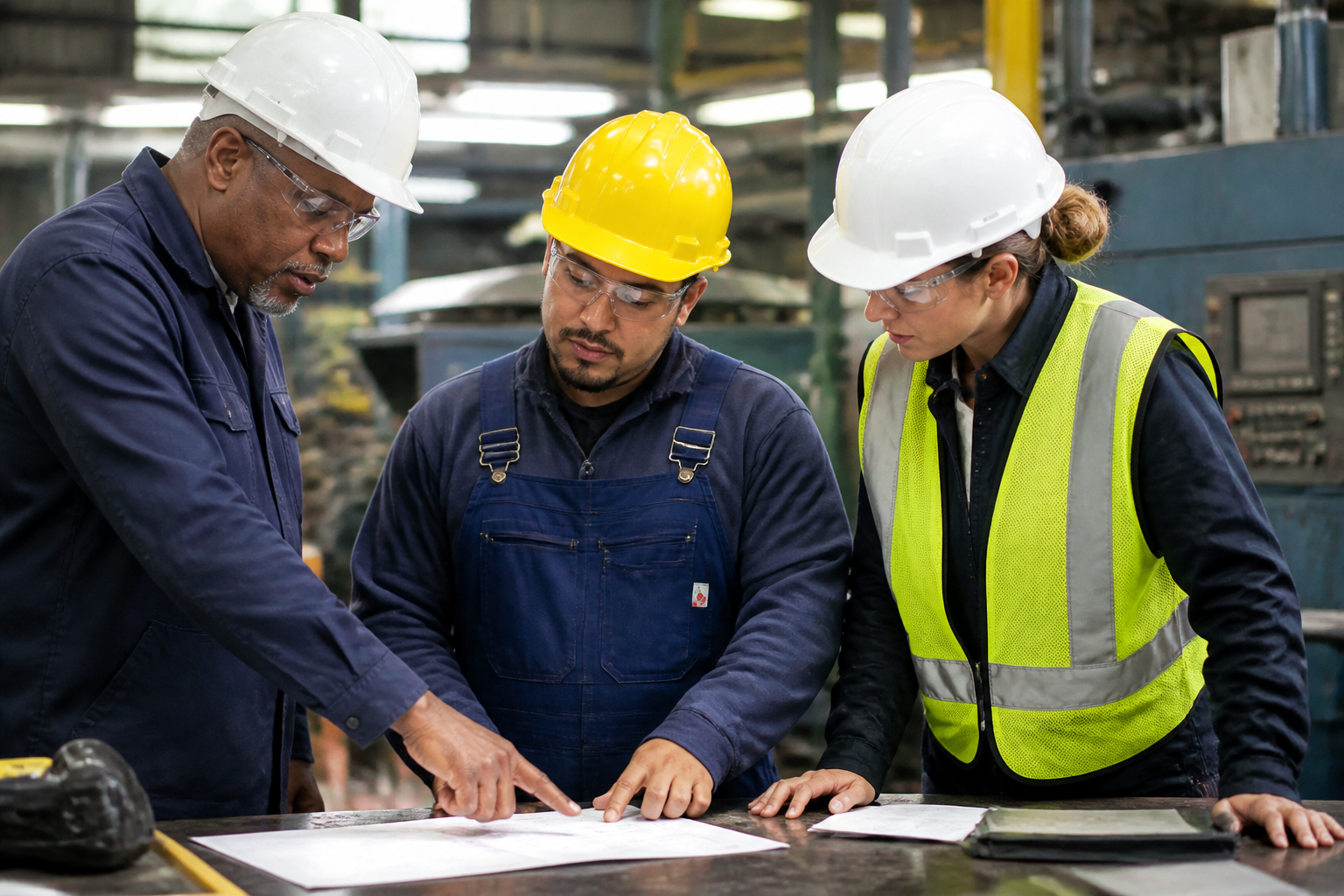
In a unionized manufacturing facility, clear communication is essential for maintaining safety, operational efficiency, and constructive labor relations. However, when shop floor employees possess limited English proficiency (LEP), routine contract administration, daily task assignments, and safety protocols can quickly break down. Addressing union steward communication language barriers plant wide requires a structured strategy that bridges the gap between labor representatives, supervisors, and a multilingual workforce.
When language barriers exist on a union shop floor, simple misunderstandings can escalate into formal grievances, safety violations, or low morale. Employers and union leadership must work together to build practical communication pathways that protect both operational goals and worker rights.
The Unique Challenges of Multilingual Union Shops
In union facilities, workers rely heavily on shop stewards to represent their interests, clarify Collective Bargaining Agreement (CBA) provisions, and guide them through workplace disputes. When workers cannot fully understand English, critical union and management communications get lost in translation.
This dynamic creates several operational friction points across the plant:
- Misunderstood Weingarten Rights: Non-native English speaking employees may not understand when or how to request union representation during investigatory interviews, leading to confusion or perceived unfairness.
- Job Bidding Disconnects: Limited English workers often miss out on seniority-based job postings because posting notices are written in dense, legalistic English.
- Grievance Escalation: Minor miscommunications regarding attendance policies or overtime distribution escalate into formal grievances simply because the worker and supervisor could not talk through the issue directly.
- Safety Protocol Gaps: Crucial safety directives relayed during union briefings or joint committee meetings may not be fully understood by LEP employees.
Resolving union steward communication language barriers plant leadership faces isn't just about translating printed union contracts. It requires building practical, job-specific English communication skills across the entire production team.
Standardizing Shop Floor Contract Terminology
Collective Bargaining Agreements are notoriously complex documents filled with dense legal jargon. For non-native English speakers, understanding terms like "bumping rights," "past practice," "just cause," or "mandatory overtime" is difficult without context.
Simplifying Key Labor Terms
Management and union leadership should collaborate to create a standardized glossary of common labor and operational terms used in the facility. This glossary should translate contractual concepts into clear, plain language that aligns with everyday shop floor activity.
Joint Clarification Sessions
Rather than relying solely on bulletin board postings, hold brief joint briefings featuring plant supervisors and union stewards. When supervisors and stewards present policy updates together using visual aids and simplified English, workers receive a unified, clear message that eliminates misinterpretation.
Up-Skilling Union Stewards and Lead Workers
Union stewards are typically elected based on tenure, leadership qualities, or technical expertise, but they may lack experience managing language differences across diverse teams.
Peer-to-Peer Workplace English Training
Providing targeted workplace English training for limited English employees empowers workers to express concerns directly to their stewards and supervisors. Concurrently, offering stewards training in clear communication techniques ensures they listen actively and avoid unnecessary jargon when assisting colleagues.
Reducing Over-Reliance on Informal Interpreters
While bilingual coworkers often step in as informal interpreters on the shop floor, relying on them for sensitive union grievances or disciplinary meetings can lead to errors, confidentiality breaches, or peer friction. Stewards and management need structured support—including access to clear documentation and workplace language instruction—to ensure representation remains accurate and impartial.
Overcoming Safety and Attendance Disputes
A significant portion of union grievances in manufacturing stems from disciplinary actions around attendance, shift call-outs, or safety protocol non-compliance.
When plants address union steward communication language barriers plant operations experience a noticeable drop in unnecessary disciplinary filings. When workers clearly understand attendance call-out procedures and mandatory overtime rotation rules, unexcused absences and scheduling friction decrease.
Key areas where targeted language training directly impacts union shop floor operations include:
- Overtime Mandates: Ensuring non-native English speakers understand how shift overtime is assigned, tracked, and accepted or declined under the CBA.
- Safety Infractions: Distinguishing between intentional safety non-compliance and a true lack of comprehension regarding lockout/tagout or personal protective equipment (PPE) mandates.
- Disciplinary Sign-Offs: Ensuring employees fully understand what they are acknowledging when reviewing written warnings or performance evaluations with their steward present.
Co-Sponsoring Language Programs with Union Leadership
When plant management and union leadership collaborate on workforce development, employee participation and trust skyrocket. Co-sponsoring site-specific workplace English programs demonstrates a shared commitment to worker safety, career advancement, and mutual respect.
Plant managers and union representatives can work together to schedule training sessions that fit production shifts, ensuring workers can participate without losing pay or impacting line output. Customized workplace language programs focus specifically on the real terminology used on your shop floor—combining machinery vocabulary, safety rules, and key employment rights.
Strengthen Your Shop Floor Communication Strategy
Managing a unionized manufacturing facility requires clear alignment between management, union representatives, and production workers. Eliminating language barriers on the shop floor reduces grievances, improves safety compliance, and fosters a more collaborative working environment.
To learn how customized, job-specific ESOL training can resolve communication bottlenecks in your manufacturing facility, [book a free consultation at /contact](/contact) with the New Heights Languages team today.
<!-- featured image alt: A union steward and plant supervisor discussing shop floor contract terms with a bilingual manufacturing employee. -->