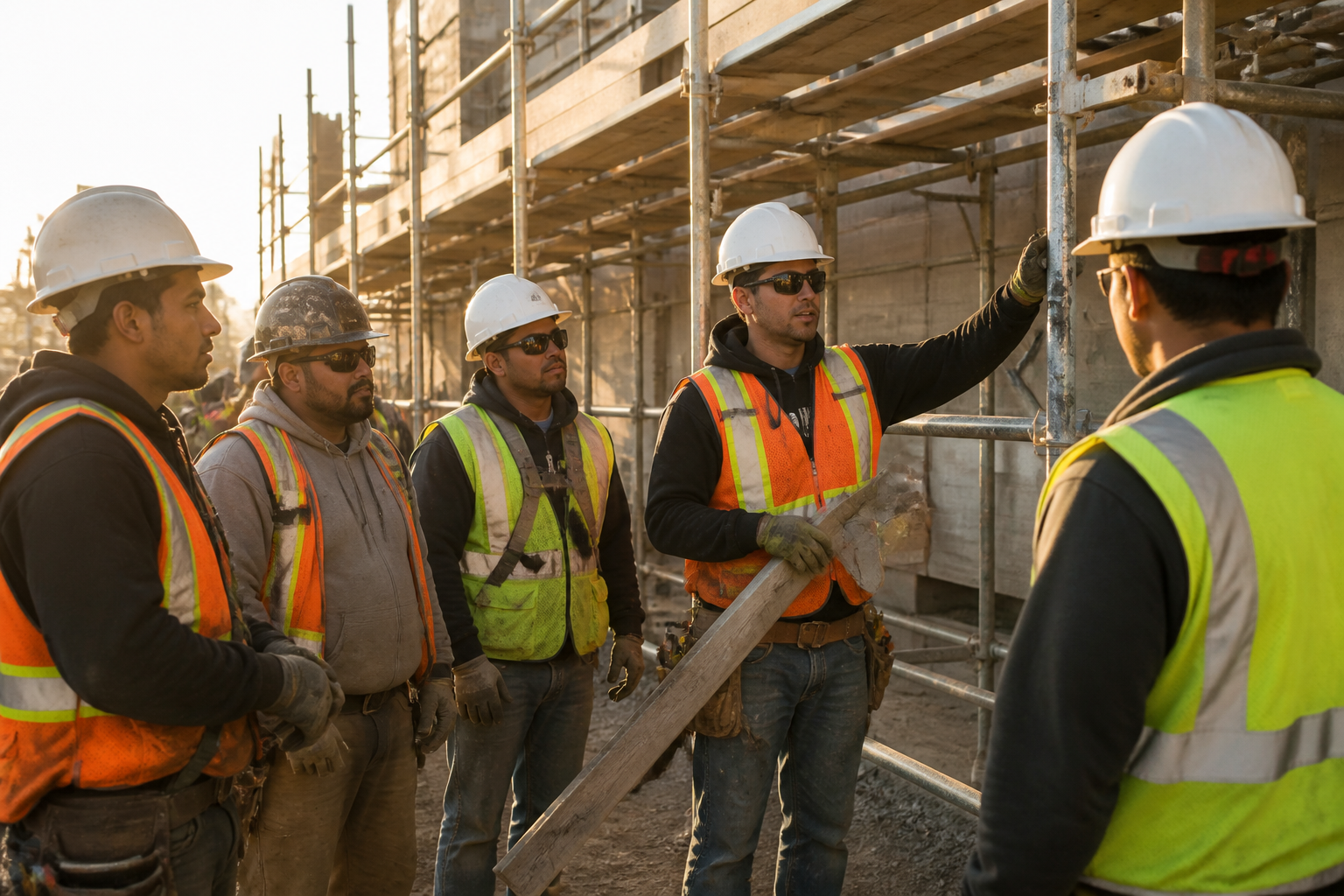
Winter Construction Safety Spanish Crew Guide
By New Heights Languages ·
Prevent slips and falls on freezing jobsites. Train Spanish-speaking construction crews on de-icing protocols, boot traction, and winter safety.

High-Stakes Hazards: Why Cold Weather Demands Clear Site Communication
When freezing temperatures hit outdoor jobsites, daily hazards change dramatically within hours. Overnight rain turns into black ice, frozen mud creates rigid trip hazards, and slick scaffold walkboards endanger every trade on site. For superintendents and general contractors, maintaining a comprehensive winter construction safety spanish crew plan requires moving far beyond generic signs or translated warning posters.
Language barriers significantly increase slip, trip, and fall risks during winter months. If Spanish-speaking workers do not fully understand who is responsible for spreading salt, which chemical melters to use on newly poured concrete, or how to report unseen ice patches, injuries spike. Effective winter safety relies on real-time, bi-directional communication across every shift.
Practical Vocabulary: Bridge the Gap on Cold-Weather Risks
General site warnings often fail because terms like "black ice" or "slush" do not translate directly into literal Spanish equivalents that convey actual risk. Supervisors need functional, work-specific vocabulary to ensure immediate understanding during daily briefings.
Equipping foremen and workers with shared terminology creates immediate clarity on the jobsite. Key workplace terms include:
- Black Ice / Hielo Negro (Invisible): Thin, transparent ice layers on asphalt, trailer ramps, or metal decking that look like wet pavement.
- De-Icer / Ice Melt (Sal / Derretidor de hielo): Chemical compounds or rock salt applied to melt ice and provide foot traction.
- Slip Hazard / Riesgo de resbalón: Any surface condition—such as frozen slush, icy ladders, or slippery temporary walkways—that reduces traction.
- Traction Cleats / Grampones de tracción: Slip-on rubber soles with metal studs worn over work boots for walking on ice.
- Snow Path / Camino despejado: Designated, salted walking corridors that workers must use to navigate the site safely.
Using these terms consistently during morning huddles ensures that every employee recognizes hazards before stepping onto freezing work decks or staging areas.
Distinguishing Chemical De-Icers from Rock Salt
Workers must understand which melting agent to use on specific surfaces. Spreading coarse rock salt on cured concrete can cause pitting, while using magnesium chloride incorrectly can damage tools or equipment. Teach your crew to differentiate between standard rock salt (sal gema) and non-corrosive chemical ice melt (derretidor químico) to protect both personnel and jobsite materials.
Protocol Execution: De-Icing Duties and High-Risk Zones
Clear communication stops winter accidents before they start. On a busy jobsite, de-icing cannot be an ad-hoc task left to chance. Implementing a structured winter construction safety spanish crew routine means assigning explicit responsibilities before the first snowfall hits.
Identifying Daily High-Risk Areas
Certain jobsite locations consistently trap moisture and freeze before main walkways. Supervisors must train crews to identify and prioritize these critical areas every morning:
1. Jobsite Trailer Steps and Ramps: Metal treads and plywood ramps hold moisture and freeze instantly overnight.
2. Scaffold Walkboards and Formwork: Wooden and aluminum staging platforms collect frost, making foot placements extremely hazardous.
3. Rebar Grids and Ground Mesh: Walking across exposed rebar covered in thin ice leads to severe ankle twists and puncture risks.
4. Equipment Boarding Steps: Metal steps on excavators, skid steers, and boom lifts turn slick, risking falls during mounting and dismounting.
Standardizing the Morning De-Icing Routine
Designate specific workers on each shift to execute pre-work site conditioning. Establish a simple three-step protocol:
- Inspect: Designated bilingual leads check primary site entrances, gang ladders, and staging areas at 6:00 AM.
- Apply: Crews spread ice melt evenly across high-traffic walking corridors before the general workforce arrives.
- Mark: Red flagging tape or bilingual signs ("Peligro: Hielo") are placed around untreated or shaded zones that remain frozen throughout the day.
Equipment Verification: Boot Traction and Cold PPE
Worn work boots lose rubber elasticity in freezing conditions, turning soft treads into hard, slippery surfaces. Physical safety checks must include footwear inspections as part of winter site readiness.
Boot Tread Standards and Cleats
Inspect your team's boots for tread depth. When working on ice or packed snow, standard steel-toe boots often fail to provide sufficient friction. Provide strap-on traction cleats for employees working on exposed, un-heated decks. Ensure workers know when to remove cleats—such as when entering jobsite trailers or walking on polished concrete—to avoid creating new slip hazards on smooth indoor floors.
Cold-Weather Gloves and Dexterity
Cold hands lead to poor grip strength. When employees keep their hands in their pockets to stay warm, they lose their natural balance mechanism during a slip. Supply insulated, high-grip work gloves so workers keep their hands free to use handrails and maintain three points of contact on ladders.
Pre-Shift Huddles: Moving Beyond Head Nods
Traditional safety talks often end with a supervisor asking, "Does everyone understand?" followed by silent head nods from non-native English speakers. Improving your winter construction safety spanish crew engagement starts with changing how pre-shift briefings are delivered.
Using Action-Based Verification
Instead of asking yes/no questions, use open-ended prompts that require workers to demonstrate understanding:
- Instead of: "Did you put salt on the ramp?"
- Ask: "Show me which walkway you salted this morning, and where the extra ice melt is stored."
- Instead of: "Be careful on the scaffold, it's icy."
- Ask: "What is the condition of the north scaffold deck, and what PPE do we need before climbing it today?"
This verification method ensures that safety directives are fully comprehended and executed across all language skill levels.
Build a Safer, Multilingual Jobsite This Winter
Preventing seasonal accidents requires clear, practical communication tailored to your frontline workforce. Investing in targeted language training for your construction leads and Spanish-speaking crews reduces injuries, eliminates downtime, and keeps projects moving on schedule through harsh winter conditions.
New Heights Languages provides customized, industry-specific language programs designed for outdoor construction and industrial workplaces. To learn how we can help your field leaders and crews communicate seamlessly this winter, [book a free consultation with our team today](/contact).