5 Why Root Cause Analysis ESL Workers: Plant Guide
By New Heights Languages ·
Engage limited-English machine operators in 5-Why root cause analysis. Learn visual RCA methods and floor language strategies to solve production defects.

When a high-speed packaging line jams or a CNC lathe produces an out-of-tolerance run, frontline machine operators are the first to notice the anomaly. They hear the shift in motor pitch, notice the oil buildup, and feel the thermal variation on the housing. Yet during formal root cause analysis (RCA) sessions, these critical operator insights are frequently missing. Integrating 5 why root cause analysis esl workers can actively participate in requires bridging the gap between practical mechanical knowledge and English communication skills.
Without intentional language support, non-native English speakers often stay silent during continuous improvement huddles. Quality engineers or plant supervisors end up filling out corrective action reports based on assumptions rather than direct floor observations. To eliminate recurring defects, manufacturing plants must equip limited-English proficient (LEP) operators with the specific language tools and visual frameworks needed to drill down to true root causes.
The Language Barrier in Floor-Level Problem Solving
Conducting a successful 5-Why analysis requires abstract reasoning and precise cause-and-effect language. An operator cannot simply state what broke; they must explain why it broke, when the condition changed, and what precursor events led to the failure.
For an employee building English proficiency, constructing complex causal sentences under pressure is daunting. Standard English syntax requires manipulating conjunctions ("because," "due to," "resulting in") and past-tense verb structures that are rarely covered in general ESL courses.
Common failure points during multilingual RCA huddles include:
- Reluctance to speak up: Workers worry that incorrect grammar will make them appear unskilled or responsible for the machine failure.
- Over-reliance on head nods: Operators agree with a supervisor's diagnostic guess just to conclude an uncomfortable exchange.
- Misinterpreted technical terms: Standard terms like "drift," "play," "backlash," or "clearance" may not translate directly into an operator's primary language.
- Superficial root causes: Without the language to explain secondary factors, discussions stall at step one (e.g., "the part broke") rather than reaching systemic causes (e.g., "the PM schedule was delayed due to inaccurate inventory tags").
Structuring 5-Why Sessions for Multilingual Operators
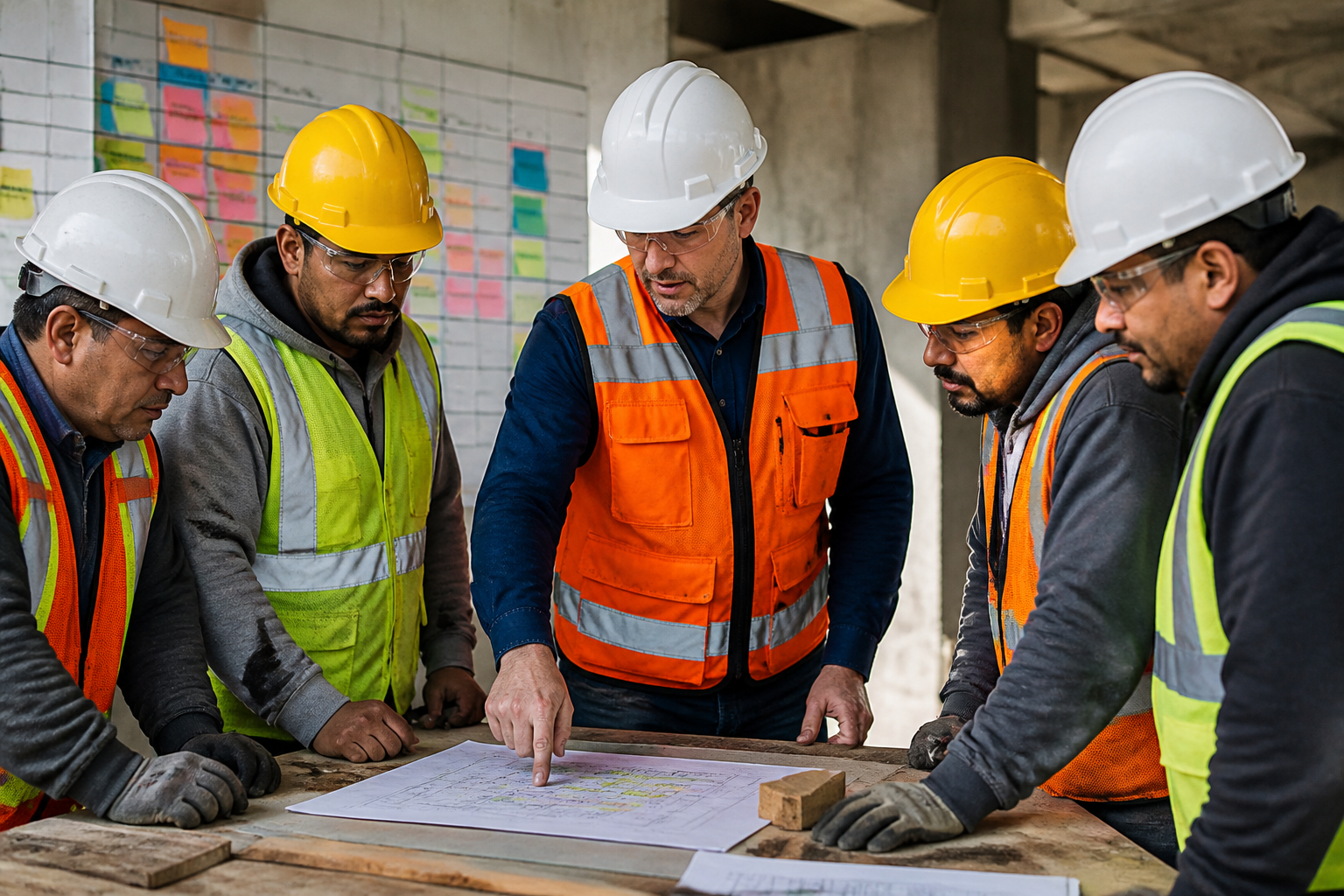
Adapting your continuous improvement process for non-native English speakers does not mean simplifying the methodology. It means structuring the facilitator's approach so technical logic isn't blocked by vocabulary limits. When facilitating a 5 why root cause analysis esl workers understand best when visual anchor charts replace blank whiteboards.
1. Utilize Standardized Visual Flowcards
Replace open-ended whiteboards with pre-printed visual templates. Use graphic organizers that feature directional arrows and color-coded blocks separating the Problem, the Direct Cause, and the Systemic Cause. Visual structures allow operators to point, sketch, or place physical tags representing machine components before putting the explanation into words.
2. Scaffold the "Why" Progression with Fixed Sentence Stems
Provide frontline teams with repeatable sentence prompts displayed directly on the shop floor continuous improvement board:
- Statement 1: "The machine stopped because [part name] was [damaged/hot/loose]."
- Statement 2: "It was [damaged/hot/loose] because [precursor event]."
- Statement 3: "This happened because we did not have [tool/time/material]."
Providing pre-formatted sentence stems reduces the cognitive load of sentence construction, allowing the operator to focus entirely on technical accuracy.
3. Separate Technical Identification from Cause Assessment
Allow operators to demonstrate physical evidence before verbalizing the cause. Let the operator show the worn seal, point to the burnt sensor, or demonstrate the manual workaround they were forced to use. Once the physical evidence is clear to the team, build the English phrases around that concrete item.
Targeted Workplace Language: The Vocabulary of Cause and Effect
General English training rarely touches on root cause analysis logic. To enable meaningful contribution during corrective action preventive action (CAPA) investigations, targeted workplace language training must focus on the functional phrases of industrial problem solving.
Key language building blocks include:
- Causal Connectors: Teaching the distinction between caused by, led to, and so that helps operators link sequential events accurately.
- Sequence Identifiers: Words such as prior to, during, immediately after, and gradually establish precise timelines.
- Descriptive Condition States: Specific adjectives like misaligned, overheated, clogged, frayed, and intermittent replace vague descriptors like "bad" or "broken."
When supervisors structure 5 why root cause analysis esl workers can build real confidence, moving from passive listeners to active participants in plant-floor problem solving.
Facilitation Tactics for Shift Supervisors and Quality Engineers
Supervisors leading RCA huddles on multilingual shop floors should adjust their facilitation techniques to maximize engagement and capture ground-truth data.
Increase Processing Time (The 7-Second Rule)
After asking a "Why" question, pause for at least seven seconds before prompting again or offering an answer. Non-native speakers must translate the question, analyze the mechanical issue, formulate their response in their native language, and translate that response back into English. Interrupting too quickly stops this analytical process.
Implement Peer-to-Peer Clarification
Allow operators with higher English proficiency to briefly clarify concepts in their primary language with peers during the session. Brief native-language exchanges often unlock precise technical explanations that can then be stated in English for the record.
Verify Understanding with Read-Back Protocols
Never close a 5-Why step by asking, "Do you understand?" Instead, use read-back verification: "Juan, please explain step three back to me using your own words," or "Show me on the line where this step happens."
Business ROI: Solving Floor Problems at the Source
When limited-English operators participate directly in problem solving, facilities see immediate operational improvements:
- Faster CAPA Turnaround: Root causes are identified during the shift they occur, reducing reliance on long secondary investigations.
- Lower Repeat Defect Rates: Correcting true systemic root causes prevents identical machine failures across shifts.
- Increased Operator Ownership: Operators who help identify root causes are significantly more likely to adhere to standard operating procedures (SOPs) created from those findings.
Developing structured channels for 5 why root cause analysis esl workers to use daily ensures that your most knowledgeable floor personnel are active contributors to plant productivity and quality controls.
Empower Your Frontline Teams with Industry-Specific Language Training
Building an inclusive continuous improvement culture requires language training tailored to your plant floor's unique machinery, processes, and quality protocols. New Heights Languages designs custom, on-site and remote English programs specifically for manufacturing and construction workforces.
Help your limited-English operators articulate root causes, communicate safety risks, and contribute to daily problem solving. [Book a free consultation with our language training experts today](/contact).
<!-- featured image alt: A manufacturing plant supervisor and a limited-English machine operator analyzing a 5-Why root cause diagram on a shop floor whiteboard. -->