Cross Training ESL Machine Operators: Plant Floor Guide
By New Heights Languages ·
Learn how to overcome language barriers when cross-training ESL machine operators in manufacturing to boost plant flexibility and productivity.
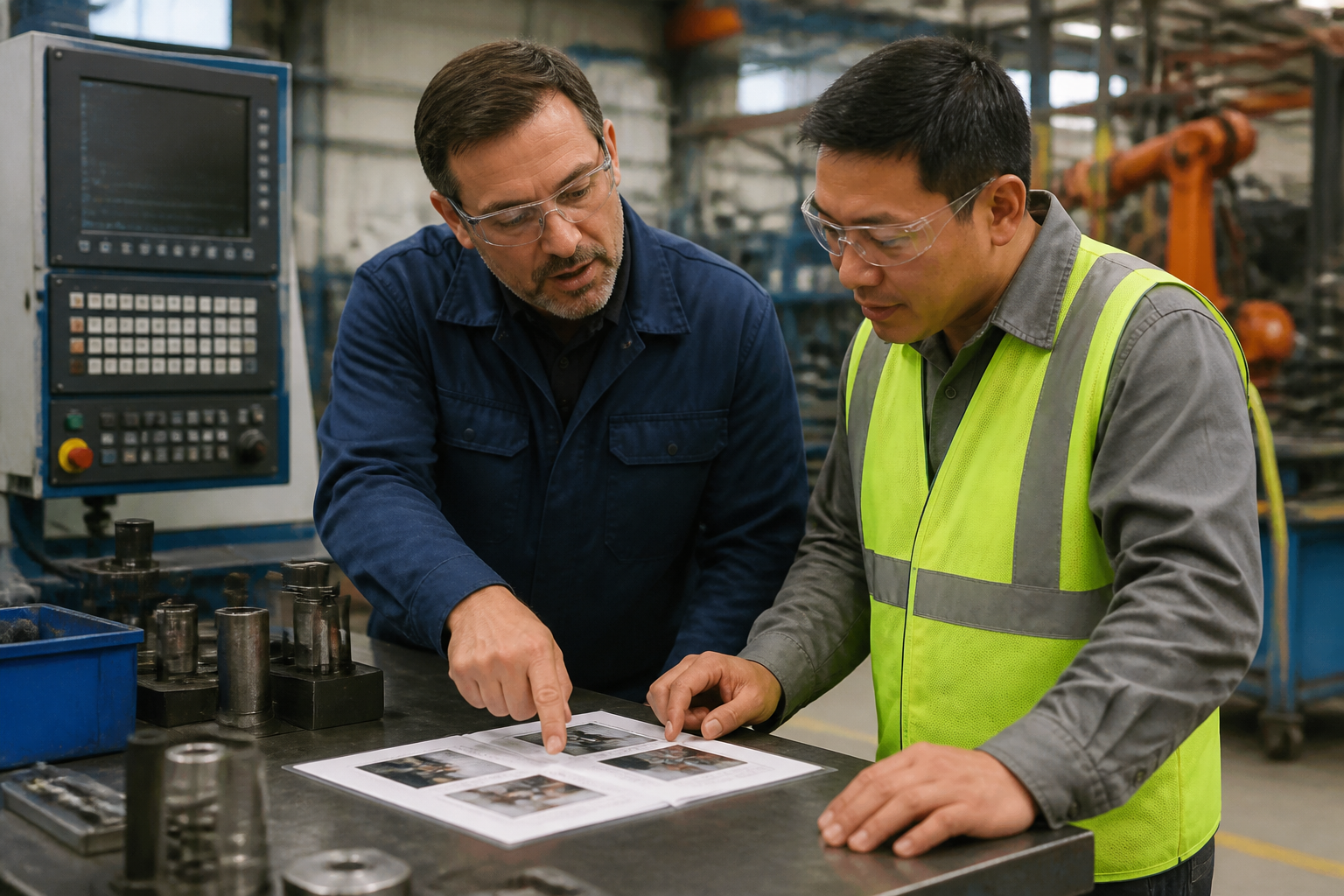
Plant managers and production leads often hit a wall when expanding multi-skilling programs. While an operator may excel at their primary station, cross training esl machine operators on secondary equipment frequently stalls due to specialized vocabulary, complex human-machine interface (HMI) screens, and nuances in setup parameters.
When a worker moves from a familiar stamping press or manual assembly station to an automated packaging cell or CNC machine, the learning curve is steep. If the operator lacks targeted English vocabulary for that specific machine, the cross-training process slows down, downtime increases, and scrap rates rise.
Overcoming communication gaps in your multi-skilling initiative requires aligning technical training with job-specific language support.
Why Conversational Fluency Fails on New Equipment
Supervisors often assume an employee who speaks basic conversational English on the plant floor is ready for multi-skill rotation. However, everyday English does not prepare a worker to decipher specialized machinery concepts like "spindle speed," "tolerance offset," "backpressure," or "purge cycle."
The HMI Control Panel Barrier
Modern production equipment relies on dense HMI screens filled with English abbreviations, technical prompts, and system alarms. An operator who successfully operates one machine by memory may struggle when presented with a different interface. If they cannot read menu sub-screens quickly, routine parameter adjustments become major bottlenecks.
Fast-Paced Peer Instruction
Cross-training usually relies on senior operators shadowing trainees. Native English-speaking mentors frequently use informal plant jargon, speak at high speeds, and skip explanation of steps they perform by muscle memory. Non-native workers may nod to acknowledge respect rather than understanding, leaving dangerous gaps in procedure.
Mapping Machine-Specific Vocabulary Before Rotation
To keep multi-skilling programs on schedule, production teams must define the essential vocabulary for each machine family before cross-training begins. Do not overwhelm workers with general grammar; focus on operational terms.
Key areas to isolate for each workstation include:
- Interface Terminology: Words displayed on HMI buttons, fault screens, and digital readouts (e.g., calibrate, override, feed rate, reset).
- Action Verbs: Specific terms used during setup and operation (e.g., clamp, align, torque, purge, disengage).
- Defect Descriptors: Precision words to describe operational issues (e.g., burr, misalignment, chatter, flash, warping).
- Component Names: Specific part labels (e.g., sensor, valve, collet, die, guide rail).
When cross training esl machine operators across high-volume lines, providing visual glossaries at the workstation connects the spoken term directly to the mechanical action.
Implementing the Teach-Back Verification Method
Standard sign-off sheets and simple verbal confirmations ("Do you understand?") are insufficient for verifying multi-skilling progress. A worker might agree verbally to avoid causing friction or losing face, only to make mistakes during a live run.
Replace passive confirmation with the structured Teach-Back Method during equipment evaluations:
Step 1: Supervisor Demonstrates and Explains
The lead operator performs the task while speaking the actions aloud using standard machine terminology.
Step 2: Worker Demonstrates and Explains
The trainee performs the task on the machine while verbally explaining what they are doing and why, using the target English vocabulary.
Step 3: Fault Simulation Scenarios
The supervisor presents hypothetical equipment errors (or safe simulated alarm states) and asks the worker to read the HMI prompt and describe the correction steps.
This approach verifies both technical competency and language comprehension simultaneously, ensuring safety before the worker operates the machine unsupervised.
Standardizing Job Instruction Sheets (JIS)
Written Standard Operating Procedures (SOPs) buried in binder folders do little to support cross-training on the floor. Transition to concise, visual Job Instruction Sheets placed directly at the workstation.
Format these sheets with clear step-by-step imagery paired with standardized English text. Highlight key action words in bold. When all trainers use identical wording for every step, non-native workers absorb the language faster through repeated exposure.
By focusing on job-specific language during rotation cycles, cross training esl machine operators becomes faster, safer, and far more reliable across multi-line operations.
Build an Agile, Multi-Skilled Workforce
Language gaps should never hold back your facility's operational flexibility. New Heights Languages delivers customized, on-site and online workplace English programs designed around your plant's specific machinery, HMI screens, and SOPs.
Help your operators master the vocabulary they need to run multiple lines efficiently. [Book a free consultation](/contact) with our workplace language specialists today.
<!-- featured image alt: A manufacturing supervisor demonstrating machine control panel operations to a line worker on a busy factory floor. -->