5S Lean Manufacturing Bilingual Workforce Guide
By New Heights Languages ·
Implement 5S methodology on bilingual production floors. Bridge language gaps in red tagging, visual controls, and daily lean audits.
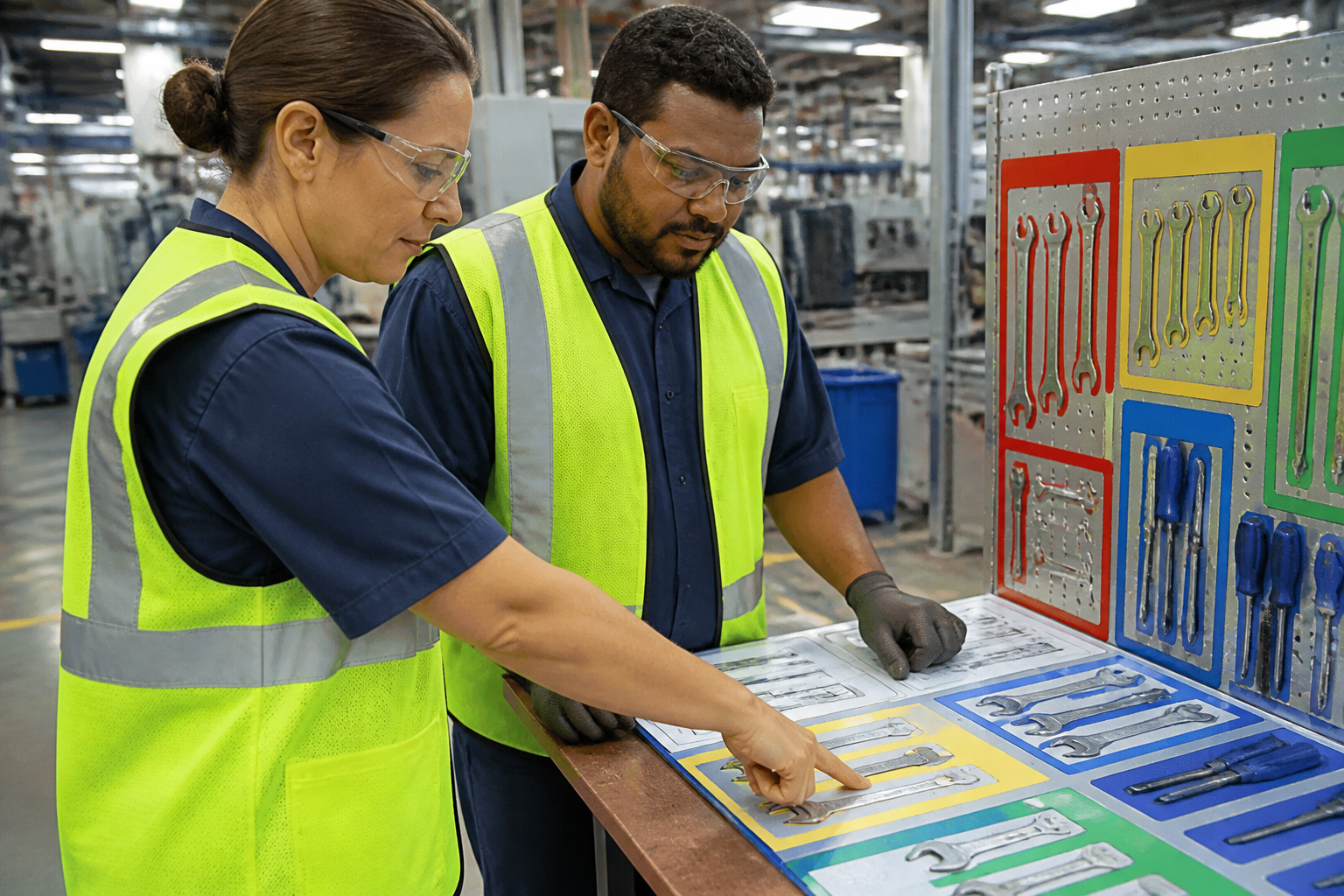
Lean manufacturing relies heavily on discipline, standardized work, and clear visual management. However, when plant leadership rolls out 5S methodology without addressing language differences, the system quickly degrades. Red tags accumulate without action, shadow boards lose their structure, and daily audits become source points of frustration rather than improvement. Building a successful 5S lean manufacturing bilingual workforce requires moving beyond simple English signage to create shared understanding across every pillar: Sort, Set in Order, Shine, Standardize, and Sustain.
When operators speaking different primary languages work on the same line, standard work habits must be reinforced through targeted workplace language training. Aligning your operational language with lean principles transforms your 5S program from an occasional cleanup exercise into an embedded operational culture.
Sort: Overcoming Miscommunication During Red Tag Operations
The first step of 5S—Sort (Seiri)—requires operators to evaluate every item in their workspace and eliminate unneeded tools, scrap, and excess inventory. On a bilingual shop floor, language barriers can halt this process entirely.
Non-native English-speaking workers may hesitate to red-tag machinery or tools if they cannot clearly explain why an item is unnecessary. Conversely, they may worry that disposing of an item will lead to reprimand if they misunderstood its production value.
Clear Criteria for Tagged Items
To establish a reliable red-tag process, employers must standardize the language used on physical tags and holding area logs. Tag categories should use clear, direct terms that both English and Spanish speakers recognize instantly.
Tag Log Vocabulary
Operators need the specific workplace vocabulary required to log items accurately. When workers learn terms like defect, obsolete, excess, and relocate in practical context, red-tag holding areas no longer become dumping grounds for unidentified materials.
Set in Order & Shine: Visual Controls Beyond English Signage
Visual management is the backbone of Set in Order (Seiton) and Shine (Seiso). Many plants assume that painting floor lines and installing English label makers is sufficient for maintaining a 5S lean manufacturing bilingual workforce. Visual cues are powerful, but they lose effectiveness if workers cannot read the associated descriptions or safety notes.
Labels should incorporate standardized icons alongside dual-language descriptions. More importantly, workers must practice speaking and identifying these location markers during daily floor routines.
Essential bilingual 5S vocabulary includes:
- Staging Area / Zona de Preparación
- Scrap Bin / Contenedor de Desecho
- Raw Materials / Materia Prima
- Pneumatic Line / Línea Neumática
- PPE Station / Estación de Equipo de Protección
When line operators and material handlers use identical terms for tool locations, searching for equipment drops significantly, directly boosting overall equipment effectiveness (OEE).
Standardize: Creating Accessible Standard Work Instructions
Standardization (Seiketsu) fails when work instructions exist only as dense English binders tucked inside a supervisor's desk. For a 5S lean manufacturing bilingual workforce, standard work documents must be visual, concise, and accessible to every shift.
Simplifying Written SOPs
Standard operating procedures (SOPs) for daily cleaning and machine maintenance should use short sentences and active verbs. Avoid complex jargon that confuses limited English employees. Focus on bulleted, sequential steps supported by clear photographs of acceptable workspace conditions.
Pairing Dual-Language SOPs with Hands-On Practice
Document translation is only the starting point. True standardization happens when plant supervisors conduct brief, practical practice sessions directly on the shop floor. Workers need to hear, speak, and demonstrate the standard cleaning and organizing sequences until the routine becomes second nature.
Sustain: Conducting 5S Audits Across Language Lines
Sustain (Shitsuke) is consistently the hardest 5S pillar to maintain. Daily or weekly 5S audits often fail because line auditors and floor operators cannot communicate effectively about non-conformance issues.
If an auditor marks a work cell down for unorganized fixtures, but the Spanish-speaking operator does not understand the feedback, the exact same issue will appear on the next audit. This creates friction and lowers team morale.
Audit Conversations That Drive Ownership
Train your supervisors and auditors to deliver 5S audit feedback using direct, constructive language. Simultaneously, equip non-native English workers with the phrases needed to explain operational barriers. If an employee cannot return a tool to its shadow board because the bracket is broken, they must have the confidence and language tools to communicate that maintenance need immediately.
Peer-Led 5S Audits
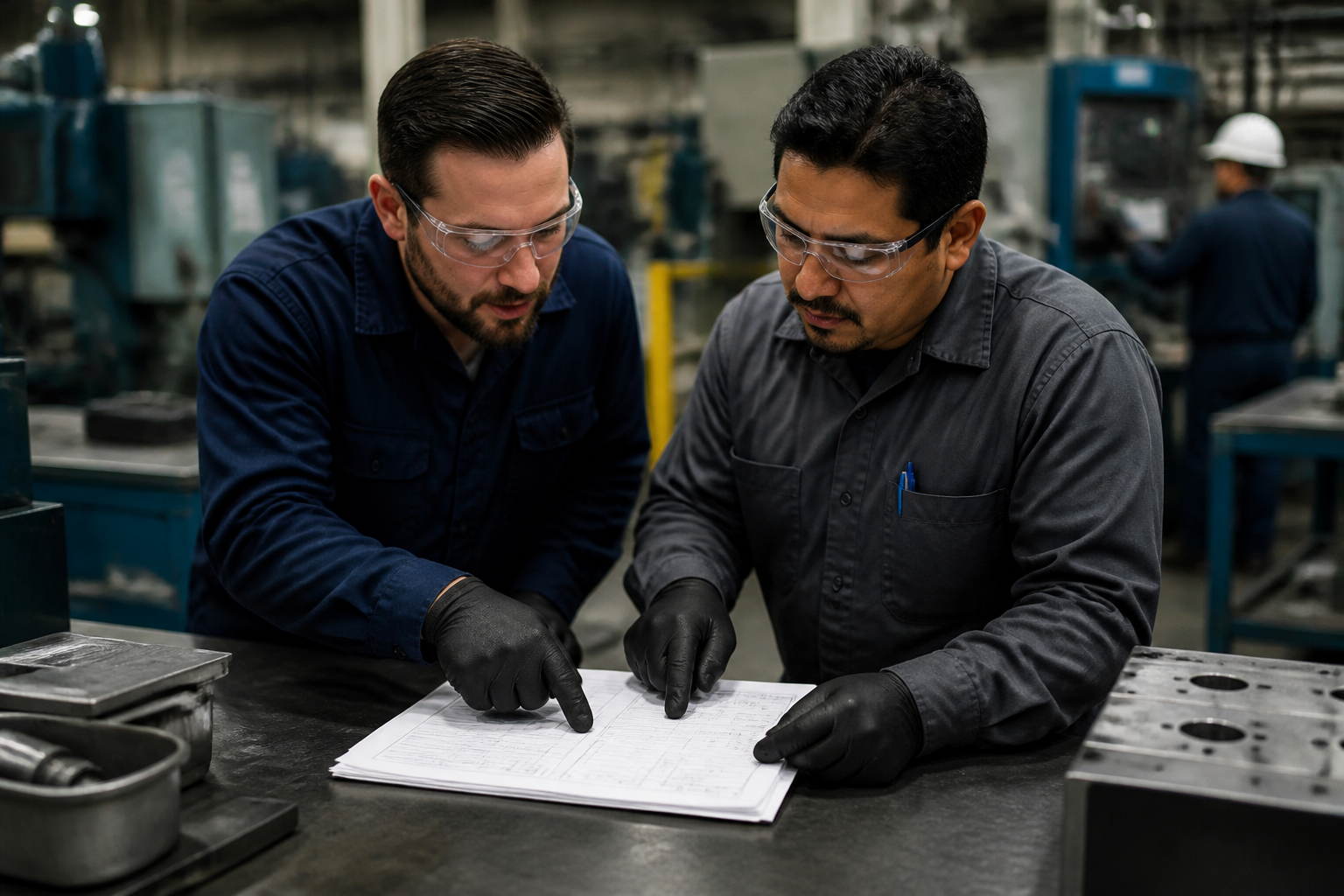
Incorporate bilingual leads into your audit rotations. When lead operators assist in scoring neighboring workstations, they reinforce lean principles among their peers while bridging language gaps naturally during floor walks.
Upskilling Your Team for Long-Term 5S Adherence
Applying lean tools to a diverse production floor requires more than passive signage—it requires active communication skills grounded in your specific manufacturing environment. On-site or remote workplace language training tailored to your facility's exact 5S terminology ensures that every employee, regardless of native language, actively contributes to waste reduction and safety compliance.
By teaching target English or Spanish vocabulary directly through your plant's red-tag forms, audit sheets, and standard work images, you eliminate shop floor ambiguity and build a lasting culture of lean excellence.
Build a Safer, Leaner Shop Floor
If language barriers are slowing down your 5S implementation or impacting your plant's operational consistency, New Heights Languages can help. We design customized workplace English and Spanish courses built around your facility's real-world processes and lean standards.
Contact us today to [book a free consultation](/contact) and learn how our targeted language training transforms bilingual manufacturing teams.
<!-- featured image alt: A plant supervisor and bilingual worker reviewing a color-coded 5S shadow board in a manufacturing facility. -->